Why Does Cabin Heating Affect EV Battery Temperature?
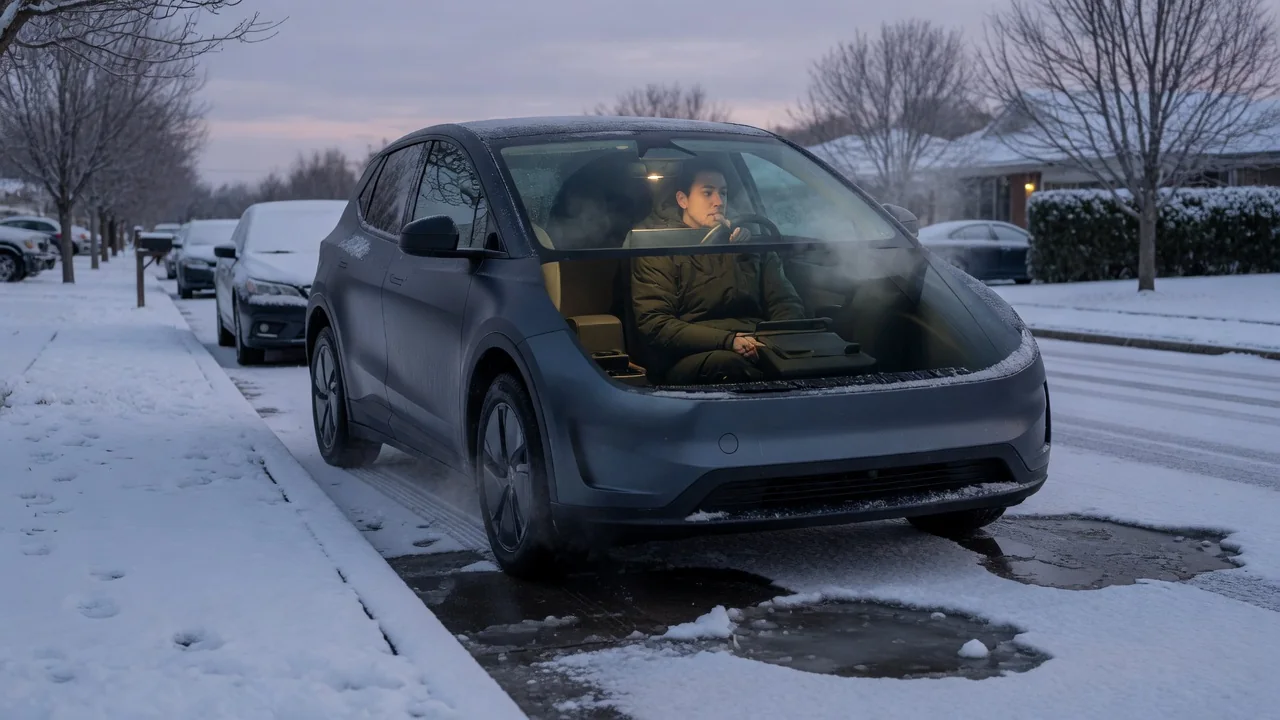
Turning on the heat in an electric vehicle changes more than cabin comfort. The range estimate may drop, the battery may take longer to warm up, and charging can behave differently on a cold day. Cabin heating and battery thermal management are rarely fully separate. They often share hardware, they always draw from the same high-voltage pack, and the same control software coordinates them. That interaction between cabin and battery explains much of what an EV does in cold weather.
Shared thermal system
Most modern EVs manage battery temperature with a liquid coolant loop that runs through or around the battery modules. In many designs, that loop is connected to the climate control system rather than standing alone. Common shared components include electric coolant pumps, multi-way valves, heat exchangers, and a refrigerant circuit with an electric compressor. A component often called a chiller transfers heat between the refrigerant circuit and the battery coolant. With this arrangement, one heat source, such as a high-voltage coolant heater or a heat pump, can be routed to the cabin, the battery, or both. When both ask for heat at the same time, the system has to split a limited amount of thermal output between them.
A heat pump makes the link even closer. It moves heat from one place to another rather than generating all of it from electricity. Depending on the design, it may draw heat from outside air, from waste heat in the motor and power electronics, or from the battery coolant loop itself. If the system pulls heat out of the battery loop to warm the cabin, the battery ends up cooler than it otherwise would. In other configurations, valves can merge loops so that heat produced for the cabin also passes through the battery. Layouts vary widely between manufacturers and sometimes between model years of the same vehicle, so the owner's manual or official service information is the only reliable guide to a specific car.
Some vehicles keep the systems more separate, using a resistive air heater for the cabin and a dedicated coolant heater for the battery. The physical link is weaker in these designs, but the two functions still share one energy source and one set of control logic. Both of those connections matter.
Power use
Every bit of heat in an EV ultimately comes from the traction battery unless the car is plugged in. A resistive heater turns electrical energy into heat at close to a one-to-one ratio. A heat pump can deliver more heat than the electrical energy it consumes when conditions are favorable, though that advantage generally shrinks as outside temperatures fall. Either way, cabin heating places an electrical load on the pack. Drawing current through a battery produces some heat inside the cells because of their internal resistance, so any load warms them slightly. At the power levels typical of climate control, this self-heating is usually small compared with the heat produced during hard acceleration or fast charging. It is not an effective way to warm a cold battery.
A larger effect is competition for a limited heat budget. Each heater or heat pump has a maximum output, and a cold battery may also limit how much power the car can draw. Lithium-ion cells deliver and accept power less readily when they are cold. When the cabin claims most of the available heat, less remains to bring the battery toward its preferred temperature range, so warm-up takes longer. Until the battery warms, the car may restrict regenerative braking, limit available power, or accept a lower charging rate at a DC fast charger. In this way, cabin heating can indirectly affect performance and charging time, not only comfort.
Energy is also a fixed account. Whatever the pack spends on heating the cabin is no longer available for driving or for warming the battery, which is why range estimates often fall when the heater is running hard.
Controls
A thermal management controller, usually part of the vehicle's broader control software, decides how heat is distributed. It weighs several requests at once: the cabin temperature setting, windshield defrost, the battery's target temperature, cooling needs of the motor and inverter, and whether the car is charging. It then sets valve positions, pump speeds, compressor speed, and heater power. Each manufacturer sets its own priorities. Many systems give windshield defrost high priority for visibility. Battery protection rules generally override comfort requests. For example, the system may limit charging power until the cells reach a safe temperature regardless of what the cabin needs.
Operating context also changes the logic. When a fast charger is set as a navigation destination, some vehicles begin warming the battery in advance, which can divert heat from the cabin or raise total energy use for a while. Scheduled departure or preconditioning features can use grid electricity while the car is plugged in, warming both the cabin and the battery without drawing down the pack. Some vehicles offer economy climate settings that limit cabin heater output or favor heated seats and steering wheels, which warm occupants directly and generally use less energy than heating all of the cabin air.
The controller also works in the opposite direction. If the battery becomes too warm, such as after sustained fast charging in mild weather, the refrigerant circuit may be needed to cool it, and cabin climate output can be adjusted to compensate. Because this coordination lives in software, it can change with updates, and two vehicles with similar hardware may behave differently.
Practical implications and limits
For everyday driving in cold weather, the most useful habit is to do as much heating as possible while the car is still connected to a charger. Using the vehicle's departure scheduling or remote climate functions as described in the owner's manual lets grid power handle the initial warm-up. On the road, relying more on heated seats and a moderate cabin setting can leave more energy and heater capacity for the battery. Before a planned fast-charging stop, using the vehicle's built-in charger routing, where available, gives the system its best chance to prepare the pack. Short trips in very cold conditions tend to be the least efficient because a large share of energy goes into warming the cabin and battery before either reaches a stable temperature.
Some behavior that looks unusual may be normal. Pumps or a compressor may run while the car is parked or charging, cabin heat may build slowly during a cold start, or the range estimate may change after the heater is switched on. These can reflect the controller managing competing requests rather than a fault. Still, this article covers general mechanisms only. Actual results depend on the specific thermal architecture, software version, outside temperature, state of charge, and driving pattern, and many vehicles do not display battery temperature at all. Owners should not try to bypass or override thermal management functions. Persistent warning messages, a heater that produces no warmth, or charging that stays limited after the battery should have warmed up deserve diagnosis by a qualified service provider using the manufacturer's procedures.