Why Does Automotive Sealant Need to Remain Flexible?
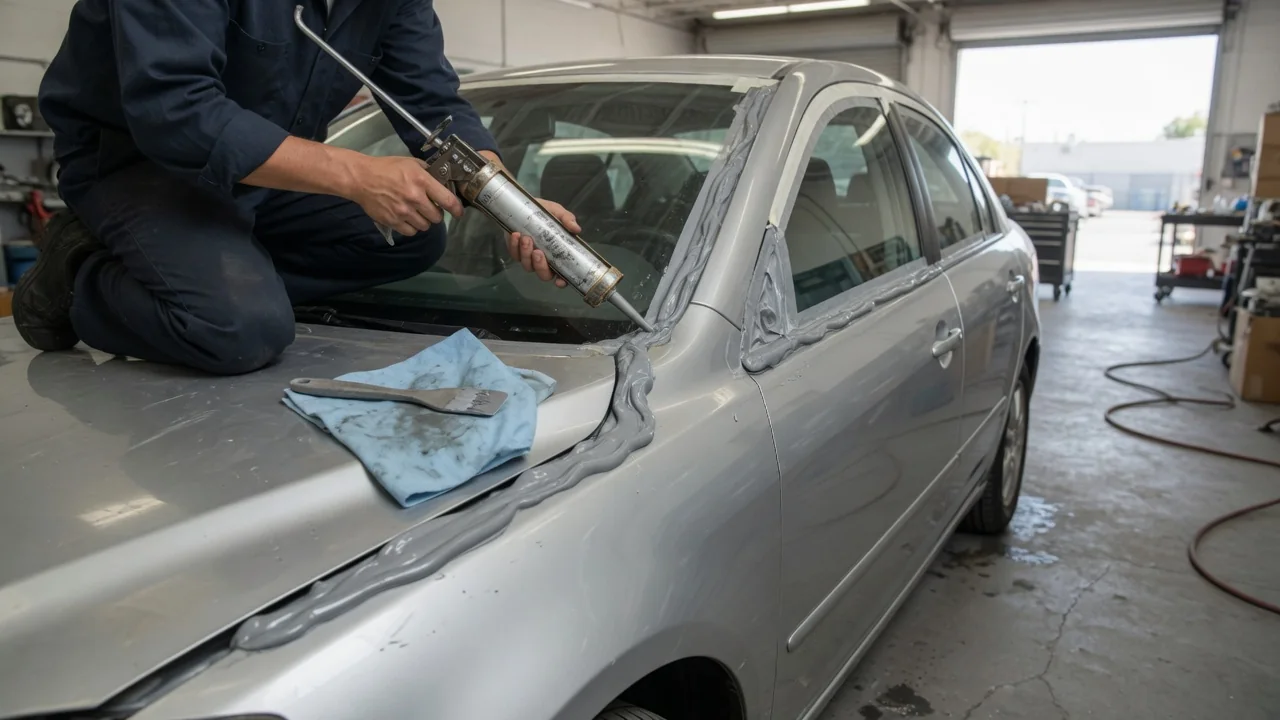
Automotive sealant does more than fill a gap. A vehicle body flexes, vibrates, heats up and cools down every time it is driven or parked, and the seams between panels move with it. A sealant that hardens and stops moving with those joints eventually cracks or pulls away. This article explains why a flexible car seam sealant matters. It covers body movement, temperature changes and the practical goal of keeping water, dust and fumes out.
Body movement
A car body is not a rigid box. Even a unibody structure designed to be stiff bends slightly under load. Cornering, braking, accelerating, driving over potholes and climbing curbs all twist and bend the shell by small amounts. Opening and closing doors, hoods and trunk lids sends forces into the hinge areas and surrounding panels. The engine, drivetrain and road surface add constant vibration on top of these larger movements. The motion at any one seam may be small, but it repeats thousands of times over the life of the vehicle.
Seam sealers are applied where these movements concentrate. Typical locations include overlapping sheet metal joints, spot-welded flanges, roof and drip rail seams, floor pans, wheel houses, and the joints around the trunk and firewall. When two panels shift relative to each other, the bead of sealant bridging them is stretched, compressed or sheared. A flexible material can deform and recover with the joint while staying attached to both surfaces. A brittle material has little ability to stretch, so the stress either cracks the bead itself or breaks the bond at the edge where sealant meets metal or paint. Either kind of failure opens a path that was supposed to be closed. Flexibility can also help damp vibration passing through a joint, which may reduce some noise. That is a secondary benefit, not the main reason the material needs to stay elastic.
Temperature
Temperature adds a second, independent source of movement. Metals, plastics and composites expand when heated and contract when cooled, and different materials do so at different rates. That difference matters wherever dissimilar materials meet in one joint. A roof panel in direct summer sun can become much hotter than the surrounding air, then cool quickly in a rain shower or after sunset. Areas near the engine and exhaust go through a heat cycle every time the vehicle runs. In cold climates, the same seams may spend long periods below freezing. Each swing changes the width of a joint slightly, and the sealant has to accommodate that change without tearing or letting go.
Temperature also affects the sealant itself. Many materials become stiffer and more brittle as they get colder, and some soften or degrade under sustained heat. Sunlight on exposed seams can speed up aging. A sealant formulated for automotive seams is meant to stay reasonably elastic across the conditions it will see in service. It should not turn glass-like in winter or slump and lose adhesion in summer. Once an aging sealant has lost much of its elasticity, cold weather can be a demanding test: the material is at its stiffest just as the joint contracts. That combination is one reason older, hardened seam sealer may develop cracks after a cold spell.
Leak prevention
The main job of most body seam sealers is to keep things out. Water is the obvious concern, since rain, car wash spray and road splash can find their way into any gap. Seams also need to resist dust, road salt, exhaust fumes and wind noise. Once water gets past a seam, it can collect inside body cavities and soak carpet and padding. It can also cause musty odors and window fogging, and reach bare metal at a joint edge where corrosion protection may be thinnest.
Flexibility is what keeps this barrier continuous over time. A seal only works if it is unbroken along its entire length and firmly bonded on both sides of the joint. A hairline crack or a short section of lifted edge can let water in, especially in tight overlapping seams where moisture can be drawn along the gap. Body movement and temperature cycling never stop, so a sealant that cannot flex will gradually develop these openings, often in places that are hard to see. A flexible bead absorbs the movement instead of resisting it, so it keeps contact with both panels and the joint stays closed.
Corrosion makes this especially important. Overlapping panels and welded flanges create crevices where moisture can be trapped against metal. Sealing them limits how much water and salt can enter. If the seal fails and moisture gets in but cannot easily drain or dry, corrosion can begin inside the joint and progress before anything is visible from the outside.
Practical implications and limits
For owners and repairers, the practical point is that sealant choice and application matter as much as covering the gap. Products sold for automotive seams vary in chemistry and intended use. Some are meant to be brushed on, some to form thicker beads, some to be painted over, and some to reproduce a factory seam texture. The product's own instructions and the vehicle manufacturer's repair information are the right places to confirm suitability, cure time, paint compatibility and surface preparation. General principles cannot replace those specifics. Surfaces also need to be clean, dry and properly prepared, because even a very flexible sealant will fail if it never bonded well in the first place.
Flexibility also has limits. A seam sealer is designed to handle small, normal movements, not to hold together a joint with structural damage, rust-through or poor panel fitment. If panels are misaligned or a joint moves far more than it was designed to, the sealant will eventually fail regardless of its elasticity. Seam sealers are also not structural adhesives. Some repairs call for bonding products intended to carry loads, and a sealer should not stand in where the manufacturer specifies an adhesive or welding. Sealants age as well. Checking accessible seams for cracking, lifting or hardening during routine cleaning, especially around the roof, trunk, floor and wheel houses, helps catch problems before water damage develops. If the condition of an original seam is uncertain or the area is structural, a qualified body repairer can judge whether resealing alone is appropriate.