Why Does an EV Make a Whine When Accelerating?
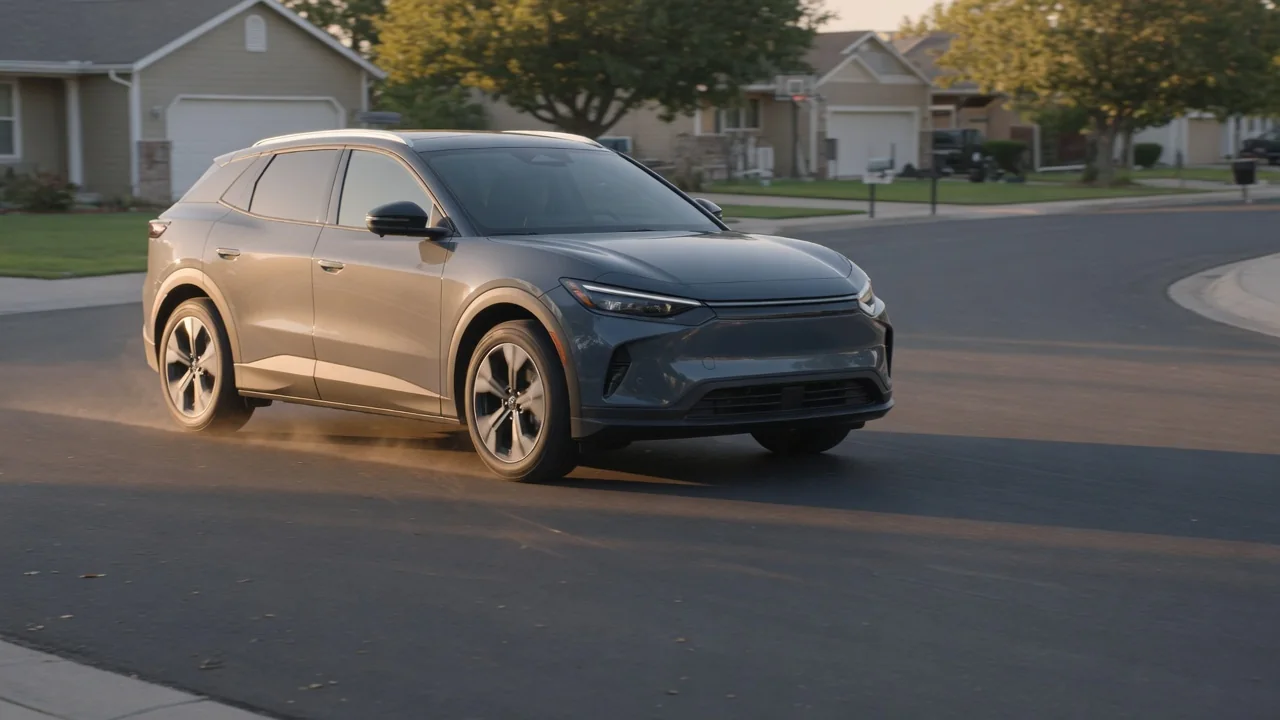
If you drive an electric vehicle, you have probably noticed a thin, rising whine when you press the accelerator. Many new EV owners ask about this sound. In most cases it comes from two ordinary sources: the electric motor and inverter working together, and the reduction gears that carry torque to the wheels. Knowing where each tone comes from makes it easier to tell a normal operating sound from one worth having checked.
Motor frequency: how the motor and inverter create a tone
An EV battery supplies direct current, but most traction motors run on alternating current. The inverter converts one to the other by switching power semiconductors on and off very rapidly, usually with a technique called pulse-width modulation. Each switching event slightly changes the current in the motor windings, and that changes the magnetic forces inside the motor. These forces pull on the stator teeth and laminations, and the steel itself changes dimension very slightly in a magnetic field, an effect known as magnetostriction. The result is a small, fast vibration that the motor housing and surrounding structure can radiate as sound. When the switching frequency, or one of its by-products, falls within human hearing, it can be heard as a high-pitched tone.
A second part of the whine rises and falls with speed. The electrical frequency the inverter produces is tied to how fast the rotor turns and to the number of magnetic poles in the motor. The interaction between the rotor's magnets or conductors and the slots in the stator also creates harmonics and a small, regular fluctuation in torque called torque ripple. Because the motor is connected to the wheels through a fixed gear ratio, these tones climb in pitch as road speed increases. They also grow louder under hard acceleration, because the motor is drawing more current and the magnetic forces acting on its structure are stronger.
Designers face trade-offs here. Raising the inverter's switching frequency can push some noise above the audible range or make it less noticeable, but more switching generally means more losses and heat in the power electronics. Some inverters change their switching strategy depending on speed and load. That is one reason an electric motor whine in a car can seem to step, shift character, or change pitch at certain points rather than rising perfectly smoothly.
Gear noise from the reduction gearbox
Electric motors typically spin much faster than the wheels, so most EVs use a single-speed reduction gearset and a differential between the motor and the axles. Gear teeth never transfer motion with perfect smoothness. Tiny deviations in tooth shape, spacing and deflection, collectively called transmission error, create a vibration each time a pair of teeth comes into mesh. The frequency of that vibration, the gear mesh frequency, equals the number of teeth multiplied by the shaft's rotational speed, along with multiples of that frequency. Because the input shaft turns quickly, the mesh frequency of the first gear stage often lands in a range the ear is quite sensitive to.
Load changes the sound. When the motor delivers torque, the gear teeth bend slightly and the contact pattern between them shifts. Under acceleration the teeth push on one face, and during coasting or regenerative braking they push on the opposite face. That is why some vehicles whine more on acceleration, others more during regen, and some at specific speeds only. Helical gears, precision grinding, careful bearing selection and a stiff housing all reduce gear whine, but they cannot remove it entirely.
The absence of an engine also matters. In a combustion vehicle, broadband engine and exhaust noise tends to cover gear and electrical tones. In a quiet EV cabin, there is little to mask them, and a narrow, steady tone is easier for people to pick out than a wider spread of noise at a similar level. So the whine is not necessarily louder than in other vehicles; it is often simply more exposed.
Is the whine normal?
In general, yes. A smooth tone whose pitch rises and falls predictably with speed, and becomes somewhat louder when you accelerate harder, is consistent with normal motor, inverter and gear operation. The volume and character of this sound differ between drive unit designs, so hearing more or less whine than in another EV is not, by itself, a reliable sign of a fault. It also helps to separate the drive unit's sound from the low-speed pedestrian warning sound that many EVs produce through an external speaker. That warning sound is generated on purpose and is unrelated to motor or gear noise.
Some patterns deserve attention. A whine that becomes noticeably louder over weeks or months, or that changes into grinding, clicking, knocking or a low rumble, may indicate wear or damage. A noise that changes when you turn left or right can point toward wheel bearings rather than the drive unit. Have the vehicle inspected promptly if a noise comes with vibration, warning messages, reduced power, an unusual smell or fluid beneath the drive unit. A constant-pitch hum that does not follow road speed may come from an auxiliary component, such as a coolant pump or the air-conditioning compressor, instead of the motor.
Practical implications and limits
If you want a sound checked, a clear description saves time. Note the speed range where it appears, and whether it happens during acceleration, steady cruising, coasting or regenerative braking. Note whether the pitch tracks speed, whether it is more noticeable inside or outside the vehicle, and whether it began after new tires, a service visit or a software update. A short phone recording made by a passenger, with the speed noted, can help a technician reproduce the condition. Never record while driving yourself.
Listening has limits. Several sources can produce tones in overlapping frequency ranges, and tire tread patterns, road surfaces and wind can imitate or hide a drive unit noise. A diagnosis needs inspection, not just a description. The drive unit and inverter operate at high voltage, so their housings and connections should only be opened by trained technicians with proper procedures. For behavior specific to your vehicle, the owner's manual and the manufacturer's service information are the authoritative references. Inverter control is largely defined in software, so updates can change the sound. A moderate whine is usually a by-product of how electric drive systems work rather than a defect.