Why Does an EV Charger Reduce Current? Heat, Limits and Diagnosis
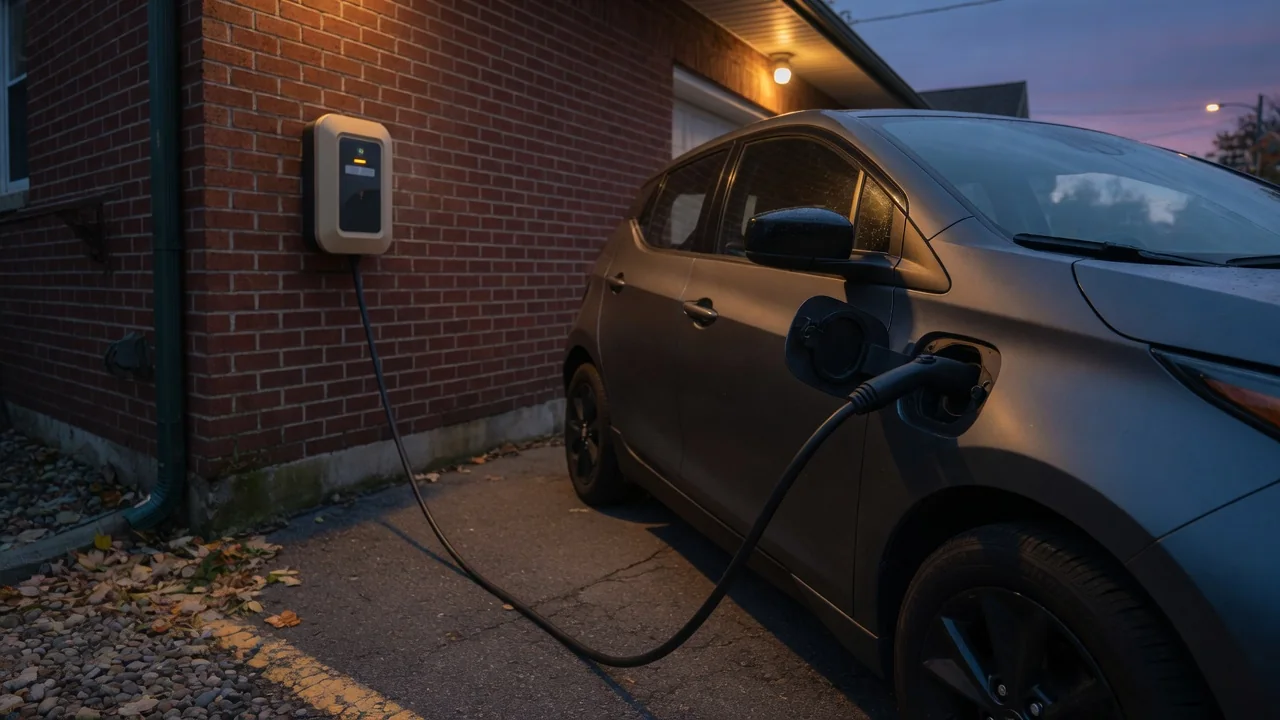
When charging speed drops below what the charger label or vehicle display suggests, the cause is usually deliberate. The charging equipment and the vehicle continuously negotiate how much current is safe to deliver, and either side can lower it. EV charger current reduction typically comes from heat, a limit in the electrical supply or hardware, or a setting. Knowing which one applies tells you whether slower charging is normal protection or a sign of a problem.
Temperature: Why Heat and Cold Trigger Derating
Electrical current produces heat in every conductor, contact and electronic component it passes through. Charging equipment is designed for a certain temperature range, and many units include temperature sensors in the power electronics, near the relay or contactor, and sometimes in the connector or plug. When a sensor reports rising temperature, the equipment can lower the current it offers instead of shutting down entirely. This is called thermal derating. Common contributors include direct sun on a wall unit or cable, high ambient temperature in a garage, poor ventilation around the enclosure, and a worn or loose connection that adds resistance. A plug-in unit connected to a household receptacle can be especially sensitive, because the receptacle contacts may heat up during hours of continuous load.
The vehicle side matters just as much. The onboard charger, which converts AC from a home or public Level 2 station into DC for the battery, has its own thermal limits and may reduce its draw if it runs hot. The battery itself is often the larger factor. Lithium-ion cells accept charge less readily when cold, and charging a very cold battery at high current can damage it, so the battery management system restricts current until the pack warms. A pack that is already hot can also be limited. At DC fast chargers, where currents are much higher, cable and connector temperature, along with battery temperature, frequently determine how quickly power ramps up and when it falls back.
Grid or Equipment Limits That Cap Charging Current
On AC charging, the station does not push current into the car. It uses a control pilot signal to advertise the maximum current the vehicle may draw, and the onboard charger draws up to that amount or up to its own rating, whichever is lower. The effective limit is therefore the smallest value in a chain: the circuit, the station's configured setting, the cable or adapter, the onboard charger and any limit set in the vehicle. A station capable of a high rating installed on a smaller circuit should be configured to advertise a lower maximum, which is a correct and necessary reduction rather than a fault.
Electrical codes generally treat EV charging as a continuous load, so in North America the charging current is typically limited to 80 percent of the circuit breaker rating. Beyond that fixed limit, some installations use load management. A home system may monitor total household demand and lower charging current when an electric range, dryer or heat pump is running, keeping the electrical service from being overloaded. Workplaces and public sites with several chargers often share a fixed supply, so each connector's current drops as more vehicles plug in. Some utility programs can also reduce charging during periods of high grid demand when the owner has enrolled. Low supply voltage can be another trigger, since some equipment and vehicles reduce current when they detect voltage sag that suggests a weak or overloaded supply.
At DC fast chargers, the station's power cabinet may be shared between dispensers, and the vehicle requests current based on battery condition. As the battery's state of charge rises, the requested current tapers, usually most noticeably in the upper part of the charge range. This taper is a normal part of protecting the cells, not a sign that the station is failing.
Diagnosis: Finding Out What Is Limiting the Current
Start by comparing three numbers: what the station is configured to deliver, what the vehicle reports it is receiving, and what the vehicle's own settings allow. Many vehicles show charging current or power on the dashboard or in a companion app, and many networked stations log session data. Check whether a charge current limit has been set in the vehicle menu or the station's app, and whether a scheduled or reduced-rate mode is active. If a portable charger uses interchangeable plug adapters, the adapter in use may tell the unit to offer a lower current.
The timing of the reduction is a strong clue. A charge that starts low and stays low points to a configured limit, a circuit rating, a cold battery or a shared supply. A charge that starts at the expected rate and drops after some time suggests heat building up in the equipment, the connection or the vehicle. A reduction that coincides with other large appliances running suggests load management, and one that appears only as the battery nears full reflects normal taper. Trying the vehicle on a different charger, or a different vehicle on the same charger, helps separate a vehicle-side cause from an equipment or supply cause.
Some findings call for stopping and involving a qualified electrician rather than further troubleshooting. These include a plug, receptacle, connector or wall plate that is hot to the touch, discoloration or melting, a burning smell, repeated breaker trips, or fault indicators on the station. Measuring voltage under load and inspecting terminations inside equipment or panels is work for a licensed professional.
Practical Implications and Limits
In everyday use, reduced current mainly changes how long a session takes. Charging time scales roughly with power, so lower current at the same voltage stretches the session. For overnight home charging this often makes no practical difference if the vehicle reaches the needed level before departure. Owners who need faster turnaround usually gain more from addressing the specific limiting factor, such as shading a hot enclosure, avoiding simultaneous heavy appliance use, or preconditioning the battery before a fast-charging stop where the vehicle supports it, than from replacing equipment.
These protections should not be defeated. Raising a station's configured current above what the circuit and wiring were designed for, using extension cords or unrated adapters, or bypassing a load management device removes safeguards that exist to prevent overheating. A higher-rated station also cannot exceed what the vehicle's onboard charger accepts, so upgrading hardware does not always shorten AC charging time. Conversely, when the circuit, equipment and vehicle are all capable of more, an electrician can assess whether the installation can safely be configured for higher current.
Exact behavior differs between vehicles and charging equipment. Thermal derating thresholds, how charging current is displayed, and which settings are available are defined by each manufacturer, so the owner's manual and the station's documentation remain the authoritative references for specific limits.