Why Does an EV Battery Warm Itself Before Charging?
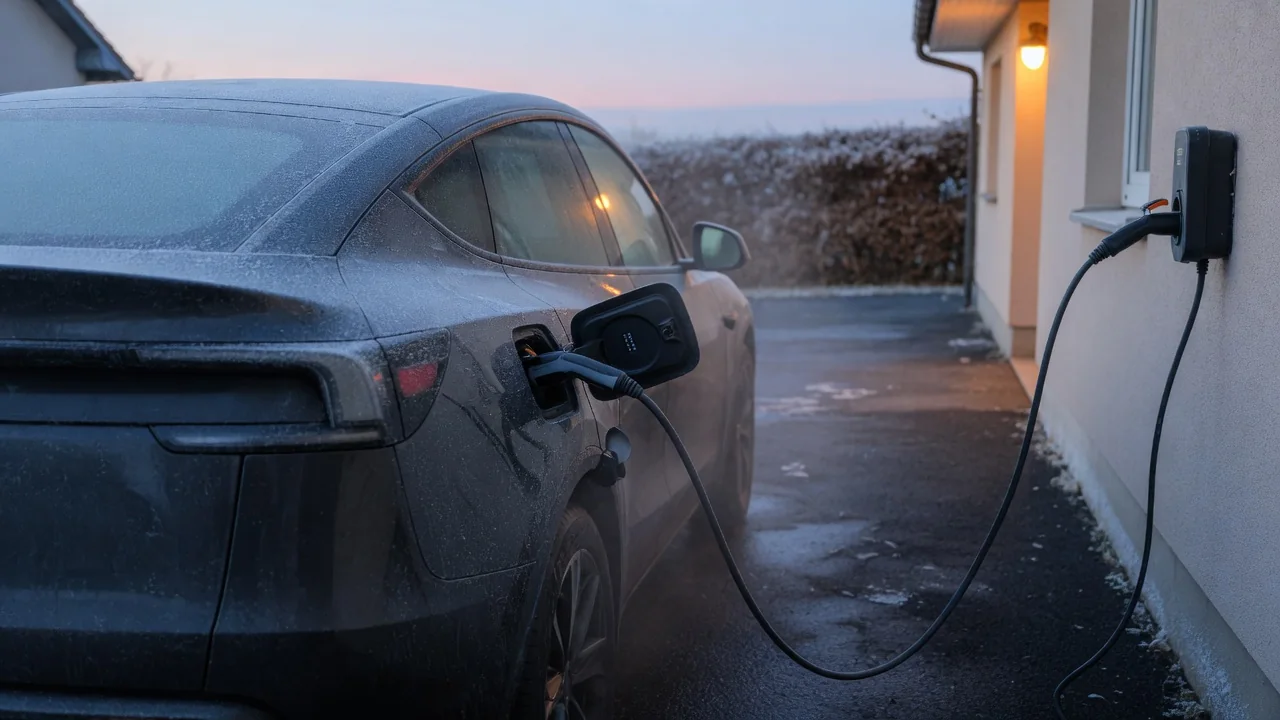
If you have plugged in an electric vehicle on a cold morning, or set the navigation to a DC fast charger, you may have noticed the car using energy to heat its own battery. It does this on purpose. Lithium-ion cells charge poorly and less safely when they are cold, so the thermal management system raises pack temperature first. Here is why battery heating before a fast charge happens, what it costs, and what it gains.
Cold limitation
Charging a lithium-ion battery moves lithium ions out of the cathode, through a liquid electrolyte, and into the graphite anode, where they fit between layers of carbon. Every step depends on temperature. As a cell cools, the electrolyte thickens, ions move more slowly, and the reactions at the electrode surfaces slow down. Together these changes raise internal resistance. The same charging current then produces a larger voltage rise and more wasted heat, and the cell reaches its voltage limits sooner.
The more serious concern is lithium plating. If the anode cannot absorb incoming ions fast enough, some of the lithium deposits as metal on the anode surface instead of entering the graphite. Plating is more likely when the cell is cold and the current is high. Plated lithium is partly lost from usable capacity, and severe or repeated plating can form structures that raise safety concerns. The damage builds up over time and is hard to reverse, so battery management systems handle cold charging conservatively.
The battery management system monitors cell temperatures and limits the current it requests from the charger. In a cold pack, that limit can fall far below what the charger and the car could otherwise handle. Discharging generally tolerates cold better than charging does. That is why a car may drive normally in winter yet charge slowly when it reaches a station. Exact thresholds and limits depend on the cell chemistry and on how the manufacturer has calibrated the system.
Energy use
Warming a pack takes real energy because a large battery has substantial thermal mass. Vehicles do it in several ways. Many liquid-cooled packs pass coolant through an electric resistance heater, often a PTC type, before it flows through plates or channels near the cells. Some systems use a heat pump to move heat into the coolant loop. Others use waste heat from the electric motor and power electronics, and certain designs run the drive unit in a deliberately inefficient mode to generate heat without moving the car. Air-cooled or passively managed packs may have little or no ability to heat themselves.
The source of that energy matters. When the car is plugged in, the charger or wall connection can supply the heating load instead of the battery. When the car preconditions while driving to a fast charger, the energy comes from the pack itself, so slightly less range remains on arrival. During a cold fast-charging session, part of the power drawn from the station may go to heating rather than into the cells, especially in the first minutes.
In effect, the system spends a modest amount of energy to save time and protect battery health. The software estimates how much warming will help, based on the starting temperature, the expected session, and the arrival time. Heating too early wastes energy because the pack loses heat to cold surroundings. Heating too late leaves the battery cold when the plug goes in. How well a particular vehicle strikes this balance depends on its software, so no universal rule applies.
Faster charging
Once the pack reaches its preferred temperature range, internal resistance falls, ions move faster, and the risk of plating at a given current drops. The battery management system can then allow much higher current, and the car can follow its normal fast-charging curve instead of a cold-limited one. This is the main reason a car warms its battery before a DC fast charge: higher peak power and a shorter session.
Warmth also shapes how the session progresses. Charging generates heat inside the cells, so a pack that starts cold will warm gradually as it charges. Even so, a cold start can spend a meaningful part of the stop at low power before that self-heating catches up. Starting warm skips that slow phase. Charging speed still tapers as the state of charge rises, whatever the temperature, because cell voltage approaches its upper limit.
Heat management works in both directions. A pack that is too hot is also restricted, because high temperatures speed up degradation, so the thermal system aims for a target range rather than the highest possible temperature. The same coolant loop that delivered heat before the session may switch to removing heat during high-power charging. Thermal management therefore controls both how fast charging starts and how long a high rate can be sustained.
Practical implications and limits
How preconditioning is triggered varies by vehicle. Some cars start warming automatically when the built-in navigation is set to a compatible fast charger. Others offer a manual button or app control, and some have no dedicated preconditioning feature. Third-party navigation apps may not trigger the vehicle's own routine. The owner's manual is the reliable source for whether and how a specific model does this, and software updates can change the behavior.
The effects are greatest with DC fast charging. Level 2 AC charging usually delivers power at rates a cool battery can accept. In very cold weather, though, a car may still divert some incoming power to heating, which can lengthen overnight charging and raise total energy use. If you leave the car plugged in during cold weather, wall power can cover battery warming and scheduled departure heating instead of drawing from the pack.
Keep expectations realistic. Preconditioning takes time, and a short drive in freezing weather may not bring a large pack into its ideal range. A low charging rate at the start of a winter session is often the battery protecting itself, not a fault in the charger. Still, consistently slow charging in mild weather, or warnings about the thermal system, are worth having a qualified service provider inspect. The heater, coolant pump, and temperature sensors can fail like any other component.