Why Does an EV Battery Need Temperature Control?
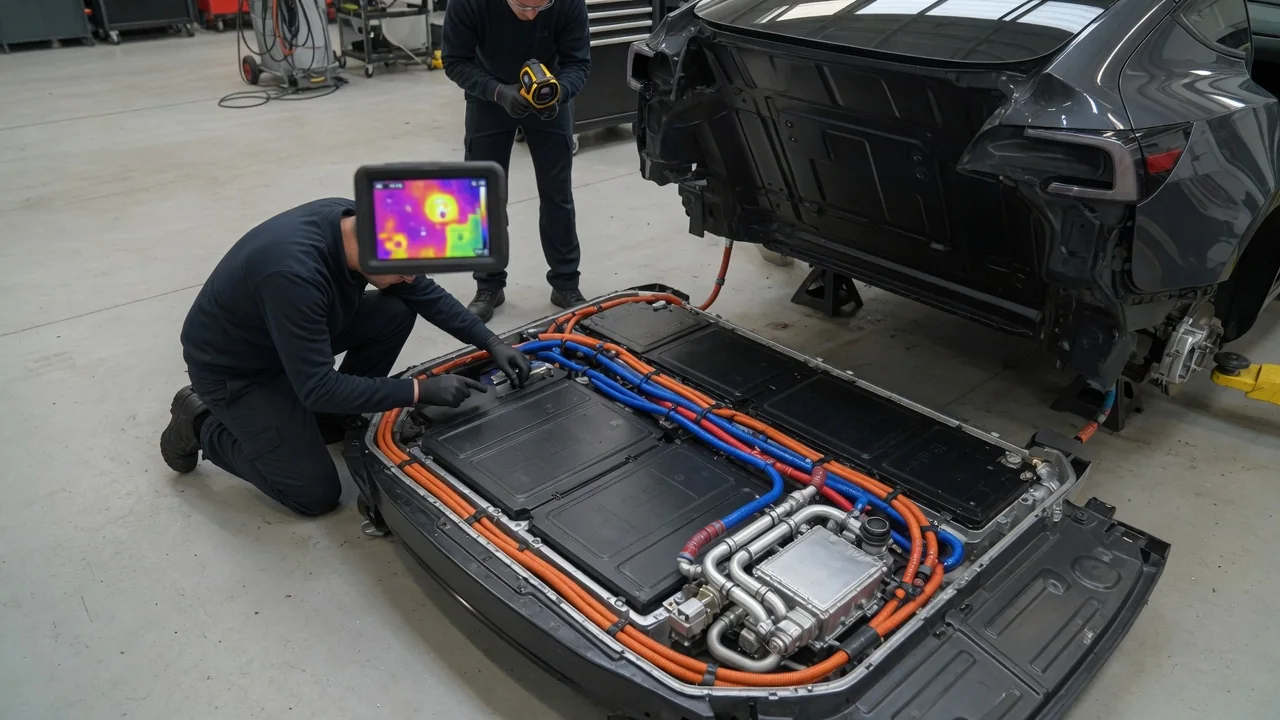
Lithium-ion cells in an electric vehicle work best within a fairly narrow temperature window. When they are too cold, the chemistry slows down. When they are too hot, they wear out faster and are harder to manage safely. That is why EV battery temperature management is built into most modern packs. The short answer to why an EV battery needs temperature control comes down to three things owners notice directly: how fast it charges, how much power it delivers, and how long it lasts.
Charging Speed
Charging an EV battery means moving lithium ions out of the cathode, through the electrolyte, and into the anode, which in most current cells is based on graphite. How quickly that can happen depends heavily on temperature. In the cold, the liquid electrolyte becomes more viscous, ions move more slowly, and the cell's internal resistance rises. The battery cannot accept charge as readily as it does when it is warm, even if the charger can supply far more power.
The bigger concern is what happens if a cold battery is charged hard anyway. When ions arrive at the anode faster than it can absorb them, they can deposit on its surface as metallic lithium. This process is called lithium plating. Plating permanently removes lithium from use, which reduces capacity, and in severe cases it can form structures that raise safety concerns. To prevent this, the battery management system limits charging current when cell temperatures are low. That is why a car that has sat outside on a cold day may charge noticeably slower at a DC fast charger. It is also why many EVs can warm the pack in advance, a feature usually called preconditioning.
Heat sets a limit at the other end. Every cell has some internal resistance, so high charging currents generate heat inside the pack. During a fast-charging session, the cooling system has to carry that heat away. If the pack approaches its upper temperature limit, the management system reduces charging power to protect the cells. The shape of a charging curve, and how long a vehicle can hold its peak rate, therefore depends on both the starting temperature and how well the system removes heat. The exact thresholds vary with cell chemistry and with each manufacturer's design choices.
Power Output
Temperature also governs how much power the battery can deliver to the motors. When a cell's internal resistance rises in the cold, its voltage drops more sharply under heavy load. Each cell has a minimum safe voltage, so the battery management system caps the available current to keep cells above that floor. The result can be softer acceleration until the pack warms up. Regenerative braking is affected too, because recovering energy while slowing down is a form of charging, and the same cold-charging limits apply. Some vehicles show a message or gauge indicating that regeneration is temporarily reduced.
Sustained high output creates the opposite problem. Repeated hard acceleration, long climbs, high-speed driving, and towing all draw large currents and generate heat in the cells. If temperatures climb past the limits set by the manufacturer, the system reduces power to keep the pack within a safe range. Effective cooling lets the battery sustain demanding output for longer before any reduction is needed.
Uniformity matters as well. A pack contains many cells, and cells at different temperatures behave differently. The warmest or weakest cells often reach their limits first. Because the pack is typically managed around those limiting cells, a good thermal system aims to keep the average temperature in range and also to minimize differences across modules.
Longevity
Over the long term, heat is a major driver of battery aging. Elevated temperatures speed up unwanted chemical side reactions inside the cell. One of the best known is growth of the solid electrolyte interphase, a thin layer on the anode. It forms naturally but keeps thickening over time, consuming lithium and electrolyte as it grows. Electrolyte breakdown and changes in the cathode also tend to accelerate with heat. The visible results are capacity fade, which shows up as reduced range, and rising internal resistance, which reduces available power and charging performance.
Aging is not limited to driving and charging. Batteries also degrade while parked, a process known as calendar aging. It generally proceeds faster when a pack is both hot and held at a high state of charge. For this reason, some vehicles can run their cooling systems while parked in hot conditions, especially when plugged in. Cold-weather damage works differently. In the cold, the main long-term risk is lithium plating during charging, so the charging protections described above matter for longevity as well as speed.
Temperature control also supports safety. Excessive heat, whether it comes from the environment, heavy use, or an internal fault, increases stress on the cells. In extreme cases it can contribute to thermal runaway. Thermal management is one layer of protection among several, alongside cell design, pack construction, and electronic monitoring. It is not a standalone safeguard.
Practical Implications and Limits
For drivers, these mechanisms explain several everyday observations. Range is typically lower in cold weather, partly because the battery is less efficient and partly because energy goes into heating the pack and the cabin. Fast-charging sessions can take longer in winter, and also in very hot conditions after a hard drive. Where a vehicle supports it, setting a fast charger as a navigation destination can let the car precondition the battery before arrival. Scheduling a departure time while plugged in can do the same, and when the car is connected, much of that warming energy can come from the grid rather than the pack.
Temperature control has limits of its own. Heating and cooling consume energy, so the system has to balance battery protection against range. It cannot change the underlying chemistry; it can only keep the cells closer to their preferred conditions. Hardware also differs widely between vehicles. Some packs use liquid cooling with dedicated heaters or heat pumps, while others rely on air cooling or largely passive designs, and these approaches move heat at different rates. Whether preconditioning starts automatically, has to be triggered manually, or is available at all depends on the specific vehicle and its software version.
Because of these differences, the owner's manual is the right reference for vehicle-specific recommendations, such as preferred charge limits, behavior in extreme temperatures, and how to use preconditioning features. Where the manufacturer recommends it, parking in shade or a garage during hot spells and staying plugged in during temperature extremes can help the system do its job. Temporary reductions in charging speed or power in cold or hot conditions are normal protective behavior. Persistent warnings about battery temperature, however, should be checked by a qualified service provider.