Why Does an EV Battery Heat Up During Fast Charging?
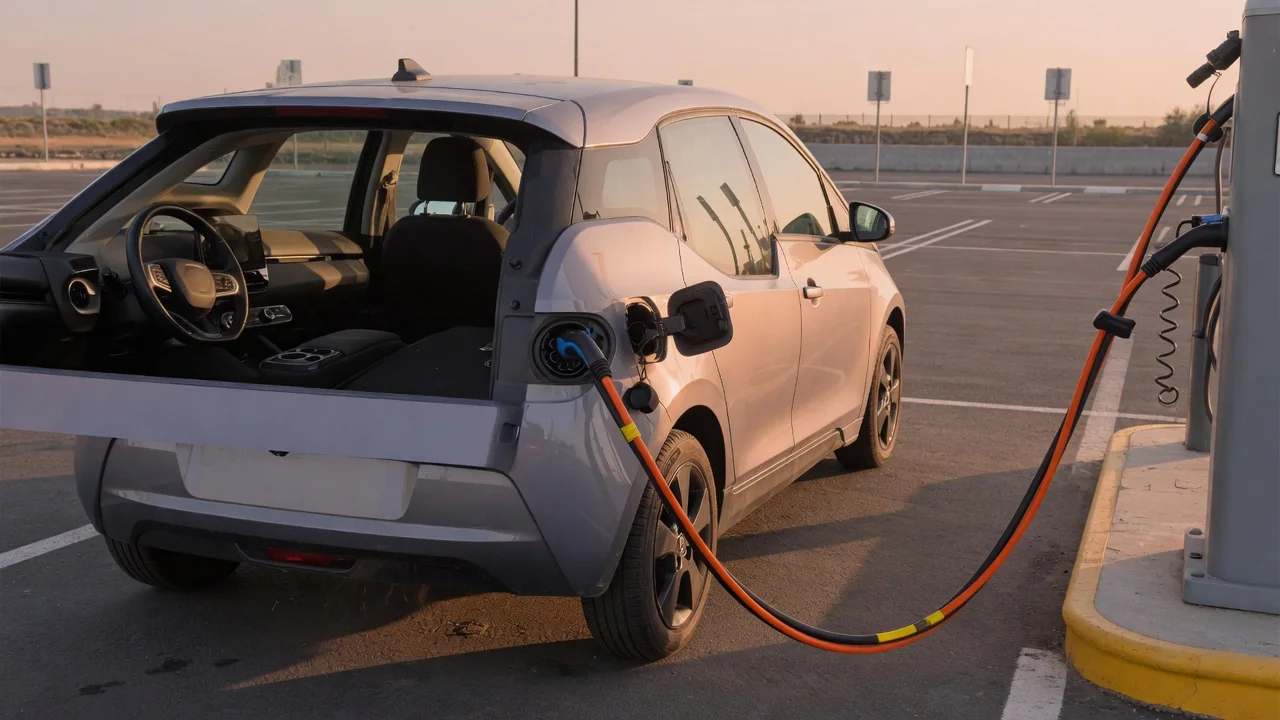
Fast charging pushes a large amount of energy into an EV battery in a short time, and some of that energy turns into heat instead of being stored. Understanding why a battery fast charge produces heat helps explain why charging speed changes during a session, why the car may run fans or pumps while plugged in, and why thermal management matters. The answer comes down to three linked factors: electrical resistance, high current, and how well the system removes heat.
Electrical resistance inside the battery
No battery is a perfect conductor. Every lithium-ion cell has internal resistance, and it comes from several sources at once. Electrons meet resistance as they travel through the metal current collectors, tabs, and welds. Lithium ions meet resistance as they move through the electrolyte and the porous separator between the electrodes. There is also resistance at the surfaces where ions enter and leave the active materials of the anode and cathode, a process that involves electrochemical reactions rather than simple conduction. Each of these barriers converts part of the charging energy into heat. Outside the cells, the pack adds more resistance through busbars, connectors, fuses, contactors, and cabling, and the charging cable and inlet contribute their own losses before current even reaches the cells.
Internal resistance is not a fixed number. It typically rises when the battery is cold, because the electrolyte becomes more viscous and the electrochemical reactions slow down. It also varies with state of charge, and it generally increases gradually as a battery ages. This is one reason the same charger can produce noticeably different heating and charging behavior from one session to the next. The chemical reactions inside the cell also release or absorb some heat on their own, but during fast charging the resistive losses are usually the part that grows most dramatically, because of how they scale with current.
High current and the squared effect
Resistive heat follows a basic physical relationship: the heat generated equals the current squared multiplied by the resistance. The squared term is the key to the whole question. If the current through a given resistance doubles, the heat produced there roughly quadruples. Fast charging is fast precisely because it delivers far more current than a typical home charger, so even modest internal resistance becomes a substantial heat source. A battery that barely warms during slow overnight charging can heat up considerably at a high-power DC station, even though the cells and their resistance are the same.
Voltage plays a role as well. For the same charging power, a higher-voltage pack architecture needs less current, which reduces resistive losses in cables, connectors, and conductors. This is a general engineering trade-off rather than a guarantee about any particular vehicle, since cell design, pack layout, and cooling all shape the final result. Charging intensity is also often considered relative to battery capacity: pushing the same current into a smaller battery places a heavier load on each cell than pushing it into a larger one, so per-cell current matters more than the power figure on the charger display.
Heat is not spread perfectly evenly either. Cells near connections, in the middle of a module, or farther from the cooling path can run warmer than their neighbors. For that reason, the battery management system monitors temperatures at multiple points and treats the hottest measured areas, not just the average, as an important limit on how much current it allows.
Cooling and thermal management
Since heat cannot be avoided, the thermal management system has to remove it. Many modern EVs use liquid cooling, circulating a coolant mixture through plates or channels in contact with the cells or modules. The warmed coolant carries heat to a radiator or to a heat exchanger connected to the air-conditioning circuit, which can chill the coolant below outside air temperature when needed. Some vehicles rely on air cooling or more passive designs, which generally have less capacity to shed heat during sustained high-power charging. The exact layout and strategy vary by manufacturer and model.
Cooling capacity sets a practical ceiling. If the battery produces heat faster than the system can carry it away, temperature keeps rising, and the battery management system reduces charging current to protect the cells. This is one major reason fast-charging speed often tapers during a session. Taper is also driven by cell voltage limits as the battery fills, so a slowdown does not always mean overheating. Thermal management works in both directions: in cold conditions, many systems warm the battery before or during charging, because cold cells have higher resistance and are more vulnerable to lithium plating if charged too aggressively.
Practical implications and limits
For owners, the practical takeaway is that heat during fast charging is normal and expected, not a sign of a fault by itself. Fans or pumps running loudly at a charging station, a warm charging handle, and a falling charge rate later in the session are typically signs of the system doing its job. The vehicle manages temperature automatically within its design limits. If the car displays a battery temperature warning, or charging is repeatedly restricted far more than usual, the owner's manual and an authorized service center are the right resources, since thresholds and behavior differ between vehicles.
Several habits can work with the thermal system rather than against it. If the vehicle offers battery preconditioning, using it while navigating to a fast charger can bring the pack into a better temperature range before arrival. Charging right after hard, high-speed driving may start with an already warm battery, which can reduce the available charging rate. Back-to-back fast-charging sessions on a hot day give the system less time to recover. On long trips, stopping to charge in the lower and middle portion of the battery's range, where many vehicles accept current more readily, is often more time-efficient than waiting through the slow final stretch.
Any general explanation has limits. Manufacturers set their own charging curves, temperature windows, and protective strategies, and these can change with software updates. Frequent fast charging and high battery temperatures are generally associated with faster battery aging, but the real-world effect depends on chemistry, cooling design, climate, and usage patterns, so the vehicle's own guidance remains the most reliable reference for how often to fast charge.