Why Does a Transmission Use a Pump? Pressure, Lubrication and Faults
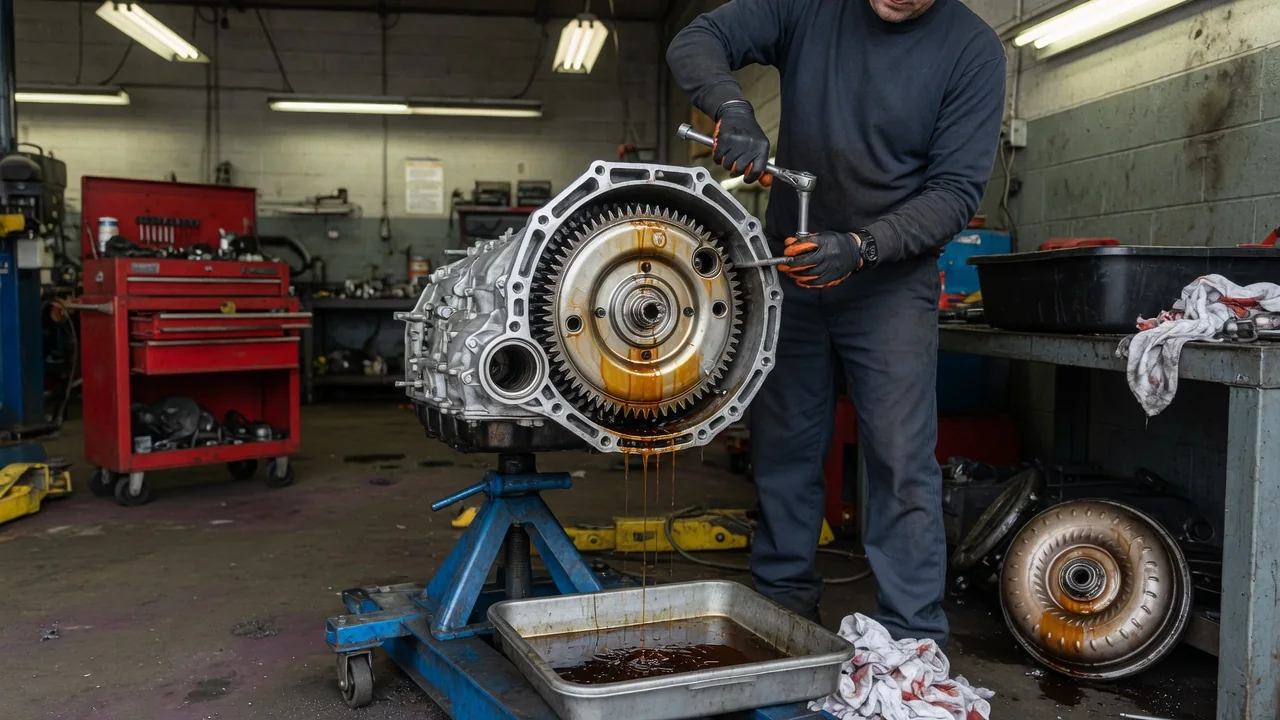
An automatic transmission does far more than mesh gears. It relies on pressurized fluid to apply clutches, fill the torque converter, carry away heat and lubricate moving parts. The automatic transmission pump is the component that creates that flow. Without it, the hydraulic controls have nothing to work with and internal parts run dry. Here is why a transmission uses a pump, what the pump supplies and how pump-related problems tend to show up.
Hydraulic pressure: the force behind every shift
In a conventional automatic, gear changes happen when clutch packs or bands are applied and released. Each is applied by a hydraulic piston that moves only when pressurized fluid reaches it. The pump draws fluid from the pan through a filter or screen and delivers it to the pressure regulating system. Its regulated output is usually called line pressure, the main supply from which the other hydraulic circuits are fed. A pressure regulator valve keeps line pressure within a controlled range, typically raising it under heavier load so clutches hold firmly and lowering it under light load to reduce losses. In electronically controlled transmissions, solenoids in the valve body adjust pressures according to commands from the control module, but they can only shape and direct pressure the pump has already produced.
In many traditional designs, the pump sits at the front of the transmission and is driven by the torque converter hub, so it turns whenever the engine runs, even in Park or Neutral. That is why the transmission is ready to engage a gear as soon as the selector moves. Pump construction varies. Gear-type pumps, including crescent and gerotor designs, move a fixed volume of fluid per revolution, while variable-displacement vane pumps adjust their output to demand, which can reduce the engine power spent driving the pump. Continuously variable transmissions also depend heavily on pump pressure, because the belt or chain is held between the pulleys by hydraulic clamping force. Some vehicles with hybrid drive or engine stop-start add an electric auxiliary pump to maintain pressure while the engine is stopped.
The pump also keeps the torque converter filled. A converter needs a constant supply of fluid to transmit torque smoothly, and the fluid circulating through it absorbs a large share of the heat the transmission generates. Where a lockup clutch is fitted, it too is applied and released hydraulically. Fluid leaving the converter is commonly routed to the transmission cooler.
Lubrication and cooling: protecting moving parts
Planetary gearsets, bushings, thrust washers, bearings and clutch plates all need a steady supply of oil while the vehicle moves. In many automatics, lubrication fluid is fed through drilled passages in the shafts and housing, often after it has passed through the cooler, so it reaches the points that carry load. Released clutch packs still have plates rotating against each other at different speeds, and the film of fluid between them limits drag and heat. Where a manual gearbox may depend largely on gears splashing through oil, an automatic generally depends on pump-fed flow delivered to specific locations.
Cooling and lubrication are closely tied. Fluid picks up heat from the converter, the applying clutches and the gear mesh, then gives it up in a cooler, which may be built into the radiator or mounted separately. Because the lubrication circuit sits downstream of the pump, anything that reduces pump output reduces cooling and lubrication at the same time as it reduces apply pressure. Fluid condition matters too: oxidized or contaminated fluid protects surfaces less effectively and can change how friction elements engage, even when the pump delivers normal volume.
Faults: what happens when pump output drops
Pump output can drop for several reasons. A low fluid level lets the pump draw in air, which produces foamy, compressible fluid and unstable pressure. A clogged filter or a cracked or loose pickup can starve the pump inlet. Wear between the pump gears or rotor and the housing allows fluid to leak back internally, so less reaches the circuits. A worn converter hub, bushing or front seal can cause external leaks, and a sticking pressure regulator valve can hold pressure too low or too high. Internal leaks elsewhere, such as worn sealing rings in clutch circuits, can also bleed off pressure and make a healthy pump appear weak.
Typical symptoms include a whine or hum that rises and falls with engine speed rather than road speed, delayed engagement when shifting into Drive or Reverse, slipping, unusually soft or harsh shifts, overheating, and fluid leaking from the area between engine and transmission. On vehicles that monitor transmission behavior, a warning light, stored fault codes or a reduced-function mode may appear. None of these signs proves the pump is at fault, because many overlap with valve body, solenoid, clutch or converter problems. Diagnosis usually starts with fluid level and condition, then moves to scan data and, where test ports exist, a hydraulic pressure test with a gauge.
Low pressure tends to start a chain reaction. Clutches that cannot be held firmly slip, slipping creates heat and friction material debris, and that debris circulates through the filter, valve body and pump itself. Worn parts then leak more, pressure drops further, and the damage spreads. That is why pressure-related symptoms deserve early attention.
Practical implications and limits
Because the pump in most automatics is driven by the engine, it supplies nothing when the engine is off. If a vehicle is towed with its drive wheels on the ground, parts of the transmission can turn without fresh lubrication, which is why many owner's manuals restrict flat towing or call for a dolly or flatbed. The rules differ by drivetrain and model, so the manual is the authority. The same dependence explains why an automatic generally cannot be push-started: until the engine turns the pump, there is no pressure to apply the clutches that would connect the wheels to the engine.
Pump operation also shapes routine maintenance. Since the pump circulates fluid through the converter, cooler and passages, the level reading depends on whether the engine is running and on fluid temperature, and many procedures specify both. Some transmissions have no dipstick and require a set service procedure for checking and filling. Using the fluid the manufacturer specifies matters because pressure control and shift calibration assume particular viscosity and friction characteristics. A slightly different shift feel on a cold start can simply reflect thicker fluid.
The principles here are general. Pump type, location, drive method, the presence of an auxiliary electric pump and the correct diagnostic steps all vary between transmission designs, and service information for the specific unit should guide any repair. In conventional layouts, reaching the pump often means removing the transmission, and replacing a worn pump will not restore clutches or other components already damaged by low pressure or contaminated fluid.