Why Does a Transmission Need a Breather?
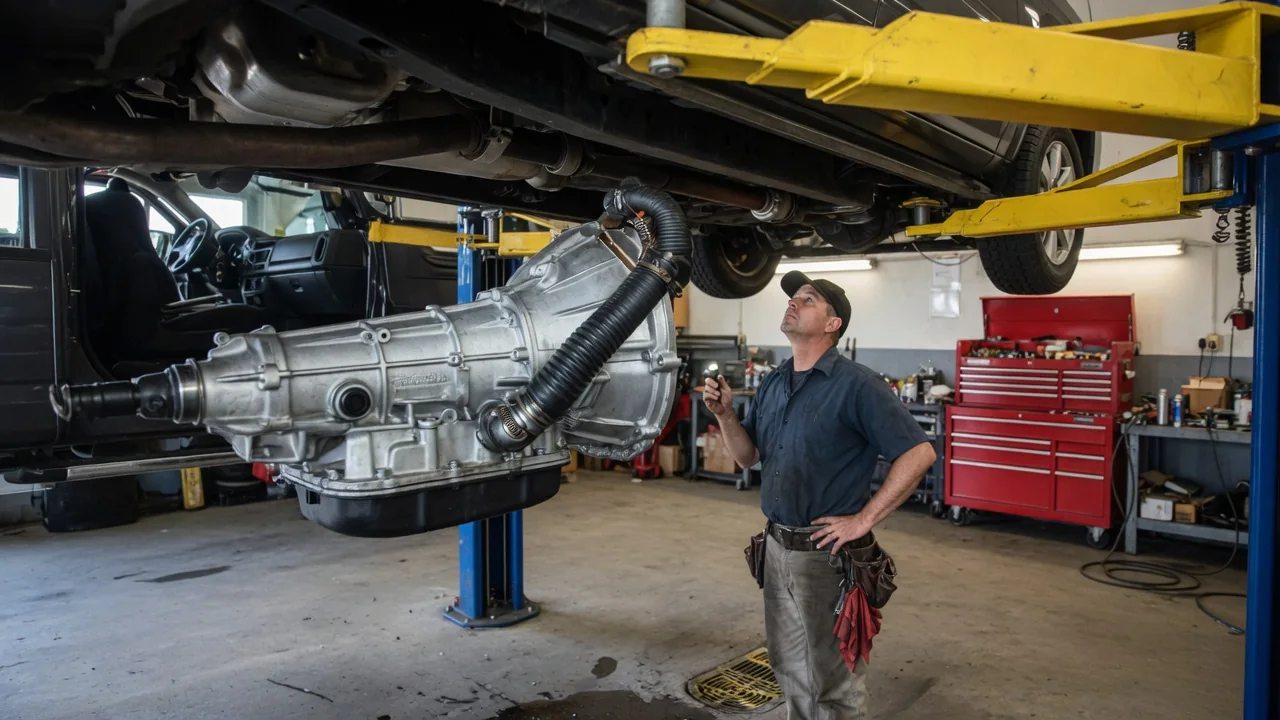
A transmission breather is a small vent that lets air move in and out of the gearbox case. It looks minor, yet it directly affects how well the transmission holds its fluid and keeps contaminants out. To see why a transmission needs a breather, it helps to look at three linked issues: how heat changes the air and fluid inside the case, how pressure affects the seals, and what happens when the vent becomes blocked.
Heat expansion inside the transmission case
An automatic transmission produces a lot of heat during normal operation. Fluid shearing in the torque converter, clutch packs engaging and releasing, gears meshing, and the pump circulating fluid all add thermal energy. As the transmission warms up, both the fluid and the air above it in the case expand. The case is a largely closed housing, so if that expanding air had nowhere to go, pressure inside it would rise. The breather gives the air a controlled exit, so the pressure in the case stays close to the pressure outside.
The process reverses once the vehicle is parked. As the transmission cools, the air inside contracts, and without a vent the case would develop a partial vacuum. The breather lets outside air flow back in to fill that space. This warm-up and cool-down cycle repeats every time the car is driven, so the vent works constantly. Churning parts can also whip the fluid into foam, which takes up more volume than settled fluid. For this reason many breathers use a baffle, a winding internal passage, or a raised hose, so air can pass while most fluid splash stays inside. In short, the main gearbox breather function is to equalize pressure. It does not cool the transmission.
How the breather protects seals
A transmission depends on several seals and gaskets to hold its fluid in. These include lip seals around the input and output shafts or axle shafts, seals on the shift linkage shaft, and gaskets on the oil pan and covers. It helps to separate two kinds of pressure. The pump creates high hydraulic pressure inside the valve body, passages, and clutch circuits. The case and sump around those parts, however, are meant to sit at roughly atmospheric pressure. Shaft seals are designed for that low-pressure environment. If air pressure builds up in the case, it can push the seal lip away from its shaft and force fluid past it. It can also push fluid out through gasket joints or up the dipstick tube where one is fitted.
Vacuum is a problem too. A lip seal is shaped to keep fluid in, not to block suction from outside. When the cooling case pulls a vacuum, it can draw air, dust, and moisture inward past the seal lips and through tiny gaps at gasket surfaces. Moisture and grit in transmission fluid can weaken its lubricating and friction properties and speed up wear and corrosion inside. By relieving both pressure and vacuum, the breather lets the seals work under the conditions they were designed for. This helps them last longer and keeps the fluid cleaner.
What happens when a breather is blocked
Breathers are usually placed at or near a high point on the transmission, or connected to a hose routed upward. Depending on the design, a breather may be a small cap with fine passages, a fitting with a vent tube, or a vent with a filter element. Any of these can become restricted. Common causes include road dirt and mud, sludge built up from fluid mist, ice in cold weather, undercoating or paint sprayed over the opening, and a vent hose that was kinked, pinched, or left disconnected after other repair work.
When the vent cannot pass air, the pressure and vacuum cycles described above act directly on the seals. Typical signs include fluid seeping from seals that otherwise look healthy, a wet film around the vent or dipstick area, and leaks that show up or get worse after long drives, towing, or other heavy use. These signs are not unique to a blocked breather. An overfilled transmission, the wrong fluid, overheating, or simply worn seals can produce similar leaks, so the vent is one item to check, not an automatic diagnosis. A missing or broken breather causes the opposite problem: the case is left open to dust and splashed water.
Water is a particular risk. If a hot transmission is driven into deep water, the case cools quickly and the air inside contracts sharply. The case then draws in whatever surrounds the vent opening. If the opening is underwater, that means water. This is why vents are placed high, and why some vehicles intended for wading or off-road use route the vent line higher still. Fluid that looks milky or foamy after water exposure is a commonly cited sign that water has entered the transmission.
Practical implications and limits
For an owner, the breather is mainly something to look at during fluid service or an underbody inspection. Check that the cap is present and not caked with debris. Check that any vent hose is attached at both ends, follows its original routing, and is not crushed against the body or exhaust. When washing the underside, avoid aiming a high-pressure stream straight at the vent. Never plug or seal a breather to stop a leak, because that usually moves the leak to a seal instead. After any transmission or nearby repair, it is worth confirming the vent and its hose were refitted. Cleaning or replacing a restricted breather should follow the vehicle's service procedure. Forcing compressed air into the vent can push debris into the case rather than clearing it.
A breather also has clear limits. It only balances air pressure. It cannot restore hardened or damaged seals, correct an incorrect fluid level, or prevent overheating. Fluid coming out of the vent often points to overfilling, excessive foaming, or very high fluid temperature rather than a fault in the vent itself, and those causes need to be addressed directly. Vent location, design, and features such as filters or one-way valves vary between transmissions. Some units without a dipstick still rely on a vent. The vehicle's own service information is the reliable reference for where the breather is and how it should be serviced.