Why Does a Steering Rack Have Boots? Purpose, Protection and Leak Clues
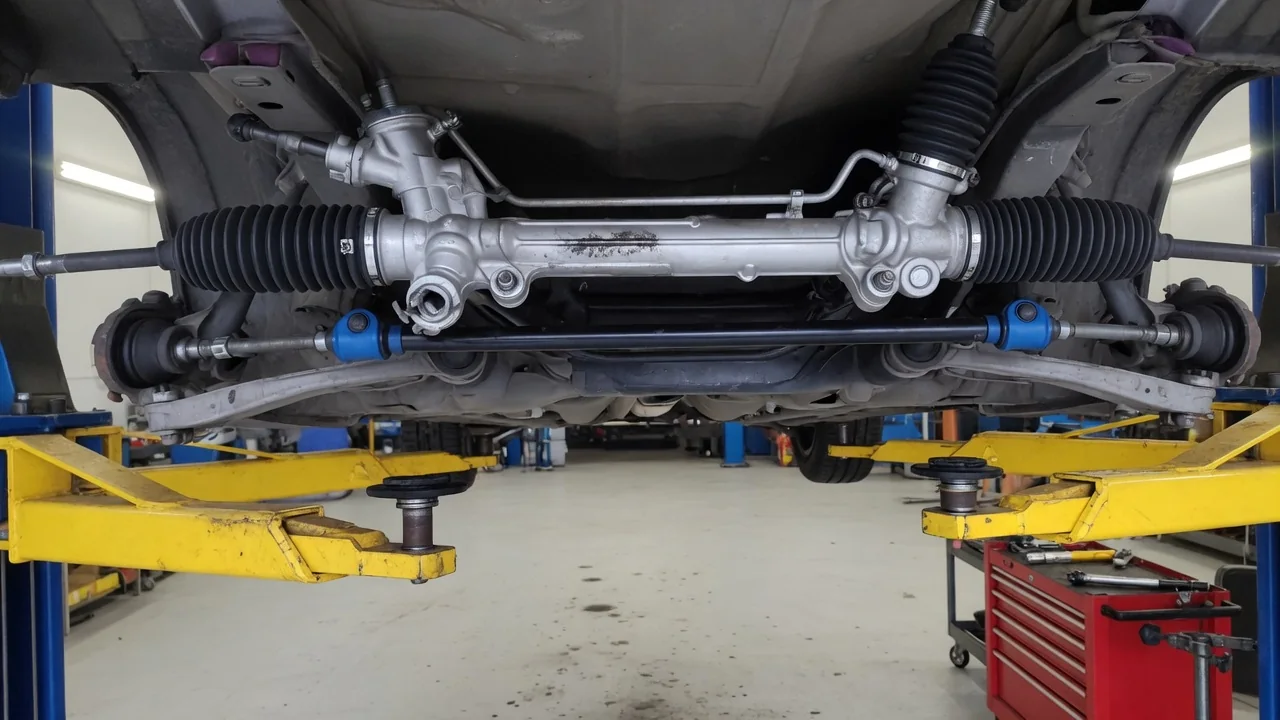
A steering rack converts the turning of the steering wheel into side-to-side movement that steers the front wheels. At each end of the rack housing, a flexible rubber or plastic boot, usually shaped like an accordion bellows, covers the point where the rack connects to the tie rods. These boots look like minor parts, but they do real work. The purpose of steering rack boots is to protect precision parts, keep contamination out, and make some problems visible early.
Protect tie rods
In a typical rack-and-pinion system, the rack is a toothed steel bar that slides inside a housing. Each end of the rack carries an inner tie rod, attached through a ball-type joint that lets the tie rod pivot as the suspension moves up and down and as the steering turns. The outer end of each tie rod links to the steering knuckle through a separate outer tie rod end. The inner joint sits right where the rack exits the housing, which puts it among the most exposed moving parts at the front of the vehicle.
The boot wraps around this inner joint and is usually clamped to the rack housing at one end and to the tie rod at the other. Its folds let it stretch and compress as the rack moves in and out, and flex as the tie rod changes angle with suspension travel. The inner joint and the exposed rack shaft depend on lubrication and clean, smooth surfaces. The boot helps hold lubricant around the joint and shields it from water spray, gravel and other debris.
This is where the boot connects to steering geometry. The tie rod assemblies set toe, the alignment angle that determines whether the front wheels point straight ahead relative to each other. A worn inner joint develops free play, which can show up as vague steering, knocking over bumps or toe that shifts under load. Keeping the joint healthy helps the steering hold its intended alignment.
Keep dirt out
The underside of a car is a harsh environment. The tires constantly throw up road grit, sand, mud, water and, in many regions, winter road salt. Without a cover, this material would land directly on the rack shaft and the inner tie rod joints. Grit mixed with grease becomes an abrasive paste that speeds up wear on joint surfaces, while water and salt promote corrosion on steel parts that were designed to stay clean and lubricated.
The rack shaft itself is also vulnerable. As the steering turns, the shaft slides through bushings and, on hydraulic power steering racks, through seals that keep pressurized fluid inside the housing. A scratched, pitted or rusty shaft surface can wear those seals every time it passes through them. Over time, a contamination problem can turn into an internal leak or binding. Electric power steering racks do not rely on hydraulic seals in the same way, but they still contain gears and bearings, and some designs place motor or electronic components near the rack, so keeping moisture and debris out remains important.
Some racks also use a vent or balance tube between the two boots so that air can move from one side to the other as the bellows change volume during steering. This lets the boots breathe without drawing in outside air and dirt each time the wheel turns. A split, a loose clamp or a missing boot defeats this protection, and contamination can then reach the parts the boot was meant to isolate.
Leak clues
Boots also serve as a useful diagnostic window. On a hydraulic power steering rack, fluid is contained by seals inside the housing. When a seal near the end of the rack starts to leak, fluid often travels along the shaft and collects inside the boot instead of dripping straight to the ground. A boot that looks swollen, feels heavy or squishy when gently squeezed, or shows fluid weeping from its small end can point to a leaking rack seal rather than a problem with the boot itself.
Interpreting these signs takes care. Fluid on the outside of a boot does not always come from inside it. Power steering hoses, line fittings, engine oil leaks or other components above the rack can drip onto the boot and make it look wet. Tracing the wet area to its highest point, and checking whether the inside of the boot actually holds fluid, helps separate an external drip from an internal rack leak. A falling power steering fluid level, pump whine or heavier steering effort can support the diagnosis, but none of these alone proves where a leak starts.
Electric power steering systems have no hydraulic steering fluid, so a wet boot on these racks points elsewhere: water that entered through damage, grease escaping through a tear, or fluid from another system dripping onto it. On any steering type, visible cracks, splits along the folds, a boot that has slipped out of its groove, or missing or loose clamps are direct clues that the protection has already been compromised.
Practical implications and limits
Boots are easiest to inspect when the front of the vehicle is raised or the wheels are turned fully to one side, which stretches the folds and exposes cracks that stay hidden in the straight-ahead position. A quick look during oil changes, tire rotations or alignment service is a reasonable habit. Catching a torn boot early usually means replacing a relatively simple part before contamination causes lasting damage, whereas ignoring it can lead to a worn inner tie rod or, on hydraulic systems, a leaking rack that needs more extensive repair.
On many vehicles, replacing a boot involves disconnecting the outer tie rod end, and on some designs removing the inner tie rod as well. Because these parts set toe, an alignment check after the work is generally recommended, even when the tie rod position was carefully marked. The exact procedure, clamp type and whether the rack uses a balance tube vary by vehicle, so the service manual for the specific model remains the reference for steps and torque values.
A boot inspection also has limits. An intact, dry boot does not guarantee that the inner tie rod is free of play, and it says nothing about the condition of the pinion, steering column or outer tie rod ends. Confirming looseness requires a hands-on check of the joints with the vehicle properly supported. Replacing a boot that has been torn for a long time also does not reverse wear that has already occurred inside it. A damaged boot is best treated as an early warning: the cover is simple, but the parts it protects are central to precise, predictable steering.