Why Does a Roof Rack Affect Driving Range?
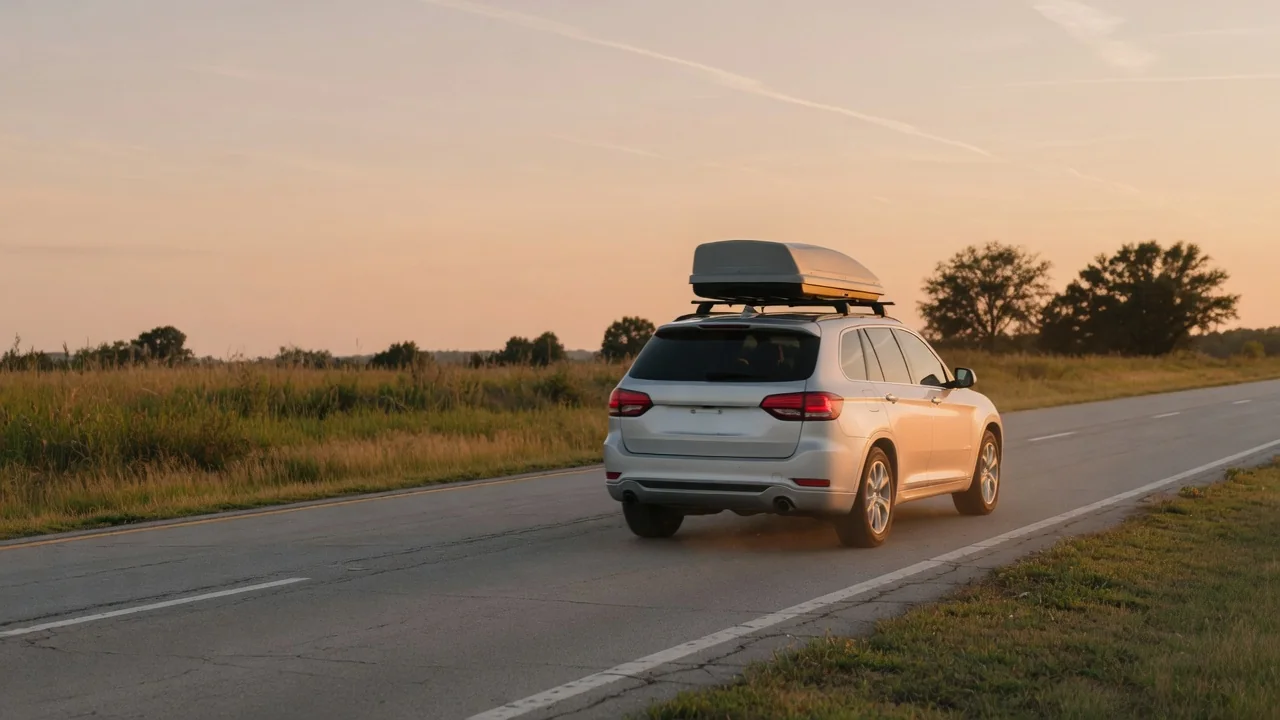
Many drivers ask why does a roof rack affect driving range, especially after noticing an electric vehicle's estimate drop or a gasoline car needing fuel sooner on a familiar trip. The short answer is aerodynamic drag. Crossbars, mounts and cargo sit in fast-moving air above the roof, and the vehicle must spend extra energy pushing them through it every mile.
Airflow
Automakers shape a vehicle's roof so air stays attached to the body, flowing smoothly from the windshield header to the rear glass or spoiler. A roof rack interrupts that path. Each crossbar acts like a small obstacle, forcing the air to split around it and leaving a turbulent wake behind. That churning wake represents energy taken from the vehicle's motion, which the engine or battery has to replace continuously while cruising.
Cargo adds a second effect by increasing frontal area, the size of the hole the vehicle punches through the air. A bicycle standing upright, a kayak, or a square-edged cargo box presents far more surface to the wind than bare bars. Shape matters as well as size: rounded or teardrop-profile bars and tapered boxes usually disturb the air less than square bars or loosely strapped luggage. The result depends on roof height, roofline shape, and where the rack sits.
Speed effect
Aerodynamic drag does not rise in step with speed; it grows roughly with the square of speed, and the power needed to overcome it climbs faster still. A rack that seems to cost almost nothing on a neighborhood errand can therefore become a meaningful drain on a long interstate drive. At low speeds, rolling resistance, accessory loads and stop-and-go acceleration dominate energy use, so the extra drag largely hides within normal variation.
Wind adds to the picture because the vehicle responds to airspeed rather than road speed. Driving into a headwind at a moderate pace can load the rack as heavily as a faster cruise in still air, and crosswinds strike bulky cargo from the side, creating extra turbulence. Drivers often see this on the energy consumption display or trip computer, where highway figures worsen noticeably with a loaded roof while city figures barely change. Easing back slightly on the highway usually recovers some of the loss.
Remove when unused
Empty crossbars still create drag, which is why taking them off between trips is one of the simplest ways to protect range. Many drivers leave bars mounted all year for a few weekends of use, paying a small penalty on every commute. Removing bike trays, ski carriers and cargo boxes matters even more, because those attachments are larger and less streamlined than the bars. Wind noise or whistling at speed is an audible sign that the hardware is disturbing the airflow.
How easy removal is depends on the design. Some vehicles have factory side rails that run front to back and add little drag on their own, with detachable crossbars carrying most of the penalty. Others use clamp-on towers or fixed-point mounts that take longer to refit. Follow the rack maker's instructions for removal and reinstallation, including any tightening guidance, and store the parts where the mounting pads stay clean. If frequent removal is impractical, a lower-profile aerodynamic bar is a reasonable compromise.
Everyday Use and Observations
The clearest way to judge the effect on a particular vehicle is to compare similar trips. Drive a familiar highway route with the rack fitted, note the average consumption, then repeat it in comparable weather with the roof bare. Electric vehicle owners may see the difference in miles per kilowatt-hour or in the arrival charge estimate, while gasoline and hybrid drivers will see it in miles per gallon. Temperature, tire pressure and traffic also shift these numbers, so a single trip proves little.
Results vary widely between vehicles. A low, slippery sedan or an efficiency-focused EV starts with very little drag, so a rack represents a larger proportional change than it does on a tall, boxy SUV or pickup. Electric vehicles also make the loss more visible, because there is less stored energy on board and charging stops take planning. Range estimators generally learn from recent consumption, so the predicted figure may only adjust after some miles with the rack installed.
Limits and Next Steps
Drag is not the only factor. A rack and its cargo add weight, which costs some energy during acceleration and on climbs, though at steady highway speed the aerodynamic penalty usually matters more. No single percentage applies to every car, since the loss depends on the bar shape, the load, speed, weather and the vehicle's own design. Published figures for one model should not be assumed for another, and the owner's manual remains the reference for roof load limits and any rack-related guidance.
For a planned trip, sensible steps include packing heavy or bulky items inside the cabin when space allows, choosing a streamlined box over loose cargo, and mounting loads as low and centered as the hardware permits. A hitch-mounted carrier sits in the vehicle's wake and may disturb the air less, where the vehicle is rated for one. EV drivers should build in an extra charging margin on the first loaded journey, then refine plans once real consumption figures are known.