Why Does a Hybrid Car Use a 12-Volt Battery?
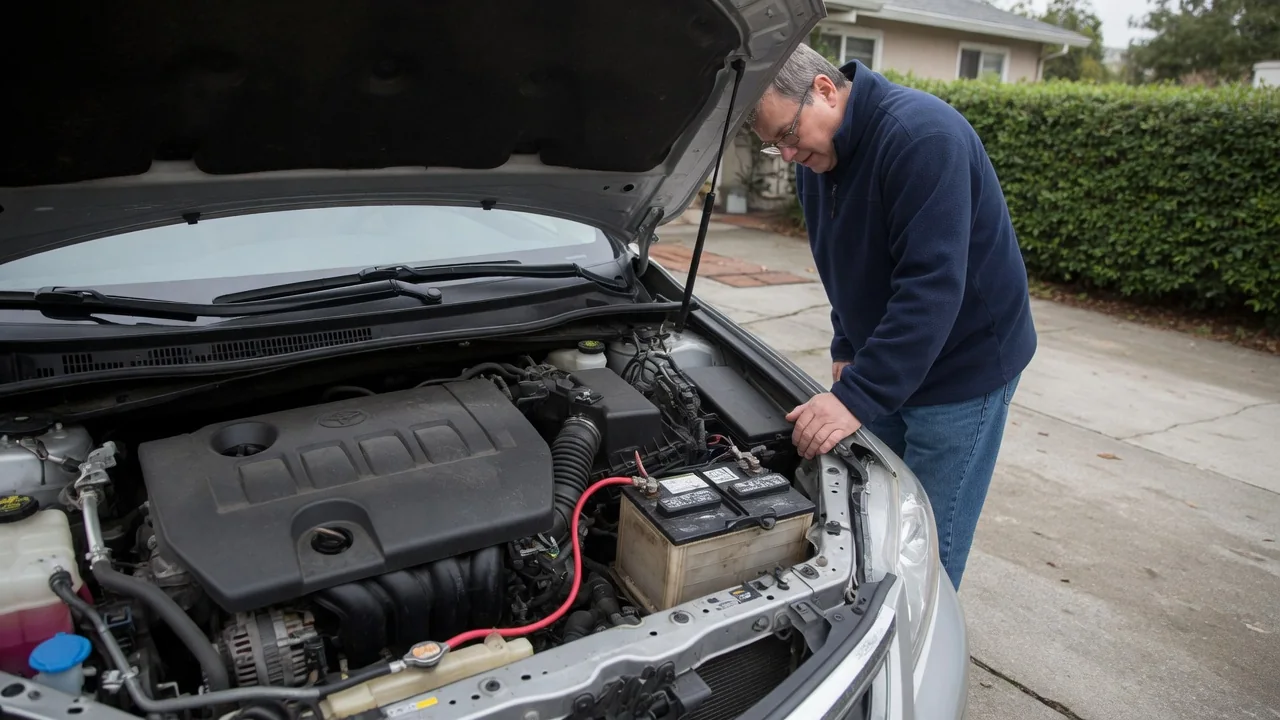
A hybrid carries a large high-voltage pack for propulsion, yet it still depends on a small low-voltage battery. The answer to why a hybrid car uses a 12-volt battery comes down to how the vehicle wakes up, runs its computers, and powers ordinary accessories. The two electrical systems do different jobs, and the smaller one quietly makes the larger one usable and safe.
Control electronics
Every hybrid relies on a network of control modules: the hybrid system controller, engine computer, battery management electronics, brake controller, and body modules. These units are designed around the same low-voltage architecture used across the auto industry, so they run on roughly twelve volts rather than the hundreds of volts found in the traction pack. Keeping them on a separate low-voltage circuit means the computers can stay powered, communicate, and run self-checks even while the high-voltage battery is electrically disconnected from the rest of the car.
That separation is also a safety measure. The traction pack is normally isolated by contactors, which are heavy-duty relays that close only after the control electronics confirm the system is healthy. Those relays and the computers commanding them need a power source that exists before high voltage is available, and the 12-volt battery provides it. Drivers may notice a brief pause and a few clicks before the ready indicator appears; that is the low-voltage side completing its checks. The exact sequence and module layout differ by manufacturer.
Accessory power
Lights, wipers, power windows, door locks, the infotainment screen, the horn, and the instrument cluster all operate on low voltage in a hybrid, just as they do in a conventional car. Using the standard twelve-volt design lets automakers share proven components across many models and keeps dangerous voltage away from switches and wiring that occupants touch. Larger loads are a different story: many hybrids drive the air-conditioning compressor directly from the high-voltage system, though the arrangement depends on the vehicle.
While the car is in its ready state, a DC-DC converter steps high voltage down to feed these accessories and recharge the 12-volt battery, doing the job an alternator performs in a conventional vehicle. When the car is off, the small battery alone supports the alarm, keyless entry receiver, clock, and module memory. This standby drain is small but continuous, which is why a hybrid parked for weeks can end up with a depleted auxiliary battery even when the traction pack holds plenty of charge.
Starting readiness
In most full hybrids the 12-volt battery does not crank the engine. A high-voltage motor-generator spins the engine instead, so the small battery never has to deliver the large burst of current a traditional starter demands. Its starting role is to boot the computers and close the contactors that connect the traction pack. Once that happens, the high-voltage system takes over. Some mild hybrid designs do keep a conventional starter or a belt-driven unit, so confirming the layout for a specific vehicle is worthwhile.
This explains a situation that puzzles many owners: a hybrid with a healthy traction pack that refuses to enter ready mode. If the auxiliary battery is too weak to power the control modules, the car cannot bring the high-voltage system online, no matter how much energy the large pack contains. Because the battery is not sized for heavy cranking, it is often physically small and may sit in the trunk or under a rear seat, with remote jump-start terminals provided under the hood on some models.
Everyday Use and Observations
Day to day, the low-voltage battery in a hybrid gives fewer warnings than one in a conventional car. There is no slow cranking sound to hint at weakness, since the battery is not turning the engine. Instead, owners may see dim interior lights, a sluggish or flickering display, keyless entry that responds inconsistently, or a cluster of warning lamps at startup. These signs can have other causes as well, so they point toward a low-voltage check rather than proving the battery itself has failed.
Driving habits influence how well the battery stays charged. The converter only replenishes it while the car is in ready mode, so sitting in accessory mode with the radio and lights on draws the battery down without putting anything back. Frequent short trips and long periods of storage have a similar effect. Owners who leave a hybrid unused for extended periods often find that the vehicle's manual offers guidance on storage, and following that advice is more reliable than assuming the traction pack will keep everything topped up.
Limits and Next Steps
A 12-volt battery in a hybrid has clear limits. It cannot propel the car, it stores little energy compared with the traction pack, and it ages like any other battery. Stored fault codes that appear after a low-voltage episode deserve careful interpretation, because modules that lose stable power can log communication or voltage-related faults that do not reflect a broken component. A code is a starting point for diagnosis, and its meaning on a particular model should be confirmed with vehicle-specific information.
When problems arise, testing the auxiliary battery and its connections is a sensible first step, and a shop familiar with hybrids can also check whether the converter is charging correctly. Replacement batteries are not interchangeable across all vehicles; some hybrids specify a particular type, such as a sealed design for batteries mounted inside the cabin area, so the manufacturer's requirements matter. Jump-starting procedures differ as well, and the orange high-voltage cables and components should be left to trained technicians with proper equipment.