Why Does a Hybrid Battery Charge While Braking?
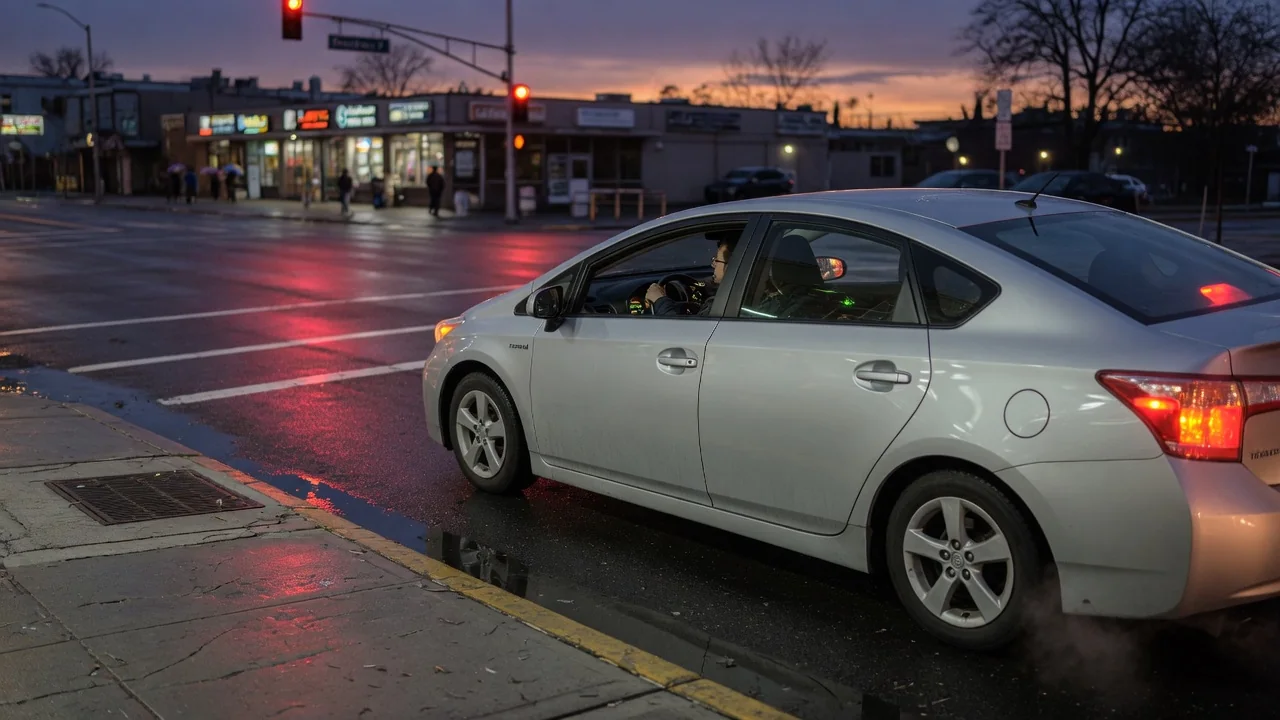
Drivers often ask why does a hybrid battery charge while braking, and the answer lies in energy that conventional cars simply throw away. A moving vehicle carries kinetic energy, and slowing down means that energy must go somewhere. A hybrid redirects part of it through its electric drive system into the high-voltage battery instead of losing all of it as heat at the wheels.
Motor generator
The electric machine that helps propel a hybrid can also work in reverse. When it draws current from the battery, it produces torque and turns the wheels. When the driver lifts off the accelerator or presses the brake pedal, the control system switches its role: the wheels now turn the machine through the drivetrain, and it produces electricity. This is why the component is called a motor generator, and it is the heart of regenerative braking.
Generating electricity is not free. Producing current creates a magnetic resistance inside the machine that opposes rotation, and that drag is what slows the car. An inverter converts the alternating current produced into direct current the battery can store. Drivers may feel this as mild deceleration when coasting, sometimes accompanied by a faint whine. Layouts differ between manufacturers: some hybrids use one electric machine, others two or more, and their placement relative to the engine and transmission varies by design.
Battery state
How much energy the pack can accept during a stop depends on its state of charge and its condition at that moment. The battery management system monitors voltage, current and temperature continuously and tells the hybrid controller how much charging power is allowed. Most hybrids deliberately keep the pack in a middle window rather than filling or draining it completely, which leaves room to absorb energy from the next slowdown and helps protect the cells over time.
When the pack is nearly full, such as on a long downhill grade, the system reduces regeneration because there is nowhere to put the energy. Very cold or very hot cells are also limited in how quickly they can be charged. A driver may see the battery gauge stop climbing, hear the engine spin up to provide engine braking, or notice the car coasting more freely than usual. The exact thresholds and behavior are set by each manufacturer and differ between models.
Friction brakes
Hybrids still carry conventional hydraulic brakes with pads and rotors, because regeneration alone cannot handle every stop. The motor generator can only produce a limited amount of braking torque, and that torque fades as the vehicle approaches a standstill. Hard or emergency stops demand far more force than the electrical system can absorb. In those cases the brake control unit adds friction braking, and the extra energy leaves as heat exactly as it would in a non-hybrid car.
This sharing of work is called brake blending. The pedal position tells the computer how much deceleration the driver wants, and the system decides how much comes from regeneration and how much from the pads. Some drivers notice a slight change in pedal feel during the handoff at low speed. Because pads do less work in gentle driving, they often wear slowly, though rotors that see little use can develop surface rust. Pedal feel and blending strategy vary considerably between vehicles.
Everyday Use and Observations
In daily driving, the energy flow is easiest to see on the instrument cluster or center display. Many hybrids show a power gauge with a charge zone, or an animated diagram with arrows moving from the wheels to the battery during deceleration. Smooth, early braking tends to keep the needle within the charge zone, meaning more of the stop is handled electrically. A sudden hard stop pushes past what regeneration can capture, and the remainder goes to the friction brakes.
Stop-and-go traffic illustrates the benefit well. Each slowdown returns some energy to the pack, and that stored energy then helps launch the car again or power it at low speed with the engine off. This is a large part of why hybrids often perform efficiently in city conditions compared with steady highway cruising, where braking is infrequent. Some models offer a selectable mode or paddles that increase deceleration when the accelerator is released, although availability and naming depend on the vehicle.
Limits and Next Steps
Regenerative braking recovers only part of the energy of motion. Losses occur in the motor generator, the inverter, the wiring and the battery itself, and aerodynamic drag and tire rolling resistance consume energy that never reaches the electrical system. The recovered charge therefore cannot return the car to its previous speed on its own. It is best understood as a way of reducing waste rather than a source of free energy, and results change with speed, terrain, temperature and driving style.
If regeneration seems noticeably weaker than before, the cause may be as ordinary as cold weather or a full pack. A persistent change, a warning light, or an unusual pedal feel deserves attention, since the braking and high-voltage systems are safety critical. Any stored fault code is a starting point for diagnosis rather than proof that a specific part has failed, and its meaning can be manufacturer specific. The owner's manual and a technician qualified in hybrid systems are the right resources for model-specific answers.