Why Does a Differential Need a Vent?
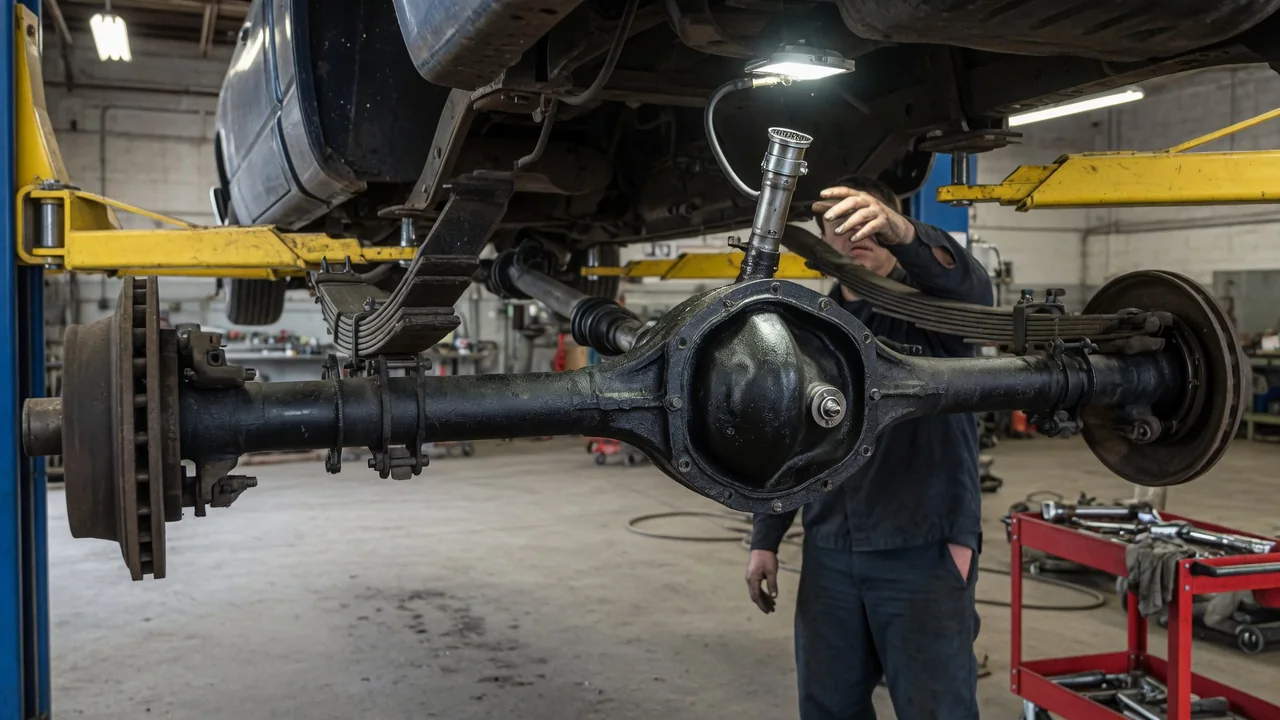
A differential vent, sometimes called a breather, is a small fitting on the axle housing that lets air move in and out as conditions change. It looks insignificant, yet it plays a real part in keeping gear oil inside the axle and contaminants out. To understand why a differential needs a vent, it helps to look at how heat affects the space inside the housing, what the seals can tolerate, and what happens when the vent stops working.
Heat pressure inside the differential
A differential housing is not completely full of oil. Gear oil fills the lower portion, and the rest of the space holds air. When the vehicle is driven, the ring and pinion gears churn the oil and generate friction, particularly with hypoid gears, whose teeth slide against each other under load. Bearings add heat, and so can the surrounding environment: hot pavement, nearby exhaust components, and long periods of towing or climbing. As temperature rises, both the air and the oil expand. In a sealed container, that expansion has nowhere to go, so internal pressure climbs.
The reverse happens when the axle cools. After the vehicle is parked, the air inside contracts and the pressure drops below the outside atmosphere, creating a slight vacuum. This cycle repeats every time the vehicle is driven and then left to cool. The vent exists to equalize these changes. It allows expanding air to escape and lets air back in as the housing cools, so the inside of the axle stays close to atmospheric pressure instead of swinging between pressure and vacuum. A sudden temperature drop, such as driving a hot axle into cold water, can make the vacuum effect much stronger and faster than ordinary cooling.
Seal protection
The axle relies on several seals to keep oil in: the pinion seal where the driveshaft enters, the axle shaft seals near the ends of the housing on many designs, and the gasket or sealant at the differential cover. Most of the rotating seals are lip seals, which use a flexible edge pressed against a shaft surface. They are designed to hold back oil that splashes against them, not to resist a steady pressure difference. When the housing is pressurized, oil is pushed against the seal lips with extra force and can be forced past them, especially if the seals are aged or the shaft surface is worn.
Vacuum causes the opposite problem. When the housing pulls a vacuum, it tries to draw outside material inward. A lip seal that holds oil in reasonably well may let air, moisture, fine dust, or water slip past in the other direction. Contaminated gear oil loses some of its ability to protect gear teeth and bearings, and water can lead to corrosion inside the housing. By keeping pressure balanced, the differential axle vent reduces the load on every seal in both directions, which helps the seals last and helps the oil stay clean.
Where oil goes after it passes a seal also matters. On axles where the shaft seals sit close to the wheel brakes, oil pushed outward can reach brake parts and reduce braking performance. A leaking pinion seal can spray oil across the underside of the vehicle. These consequences are why the vent is treated as a functional part of the axle rather than an afterthought.
Blockage and its warning signs
Because the vent sits on the outside of the axle, it is exposed to mud, road grime, snow, and spray. Over time the opening can clog. Undercoating or paint applied during repairs can seal it shut, and corrosion can seize a cap that is meant to move freely. On axles where the vent connects to a hose routed higher on the vehicle, the hose can kink, pinch against the frame, crack, or come loose. Any of these turns a vented axle into a sealed one, and the pressure and vacuum cycle returns.
A blocked vent rarely announces itself directly. The usual signs are indirect: fresh oil around the pinion seal or the axle ends, seepage at the cover, or gear oil that looks milky or foamy when the fill plug is removed, which suggests water has entered. A new seal that begins leaking soon after installation can also point to a vent problem rather than a faulty part. These symptoms have other possible causes, including worn bearings, damaged sealing surfaces, overfilling, or the wrong lubricant, so a clogged vent is one item to check, not an automatic diagnosis.
Practical implications and limits
For most owners, the practical takeaway is to include the vent in routine inspection. When the differential fluid is checked or changed, it takes little time to locate the vent, confirm it is not caked with debris, and make sure any attached hose is intact and routed without sharp bends. If the vehicle has been driven through deep water, it is sensible to check the axle oil for signs of water afterward. Filling to the correct level matters as well, because excess oil can be pushed out through the vent and give the false impression of a leak or a vent failure.
Vehicles intended for off-road use often route the vent through a hose that ends higher on the body, keeping the opening above water during crossings. Owners sometimes extend vent lines for the same reason. This can be useful, but the line must stay clear, be protected from damage, and be arranged so that water cannot collect in a low loop. The same principle applies to other enclosed drivetrain units, such as front differentials and transfer cases, which also use breathers.
There are limits to what the vent can do. It does not repair seals that are already hardened or cut, and it cannot prevent leaks caused by a worn pinion bearing or a scored shaft. Vent locations, designs, and service recommendations differ between manufacturers and axle types, so the owner's manual or factory service information is the right reference for where the vent is, how it should be cleaned or replaced, and which lubricant and fill level apply.