Why Does a Cooling System Build Pressure?
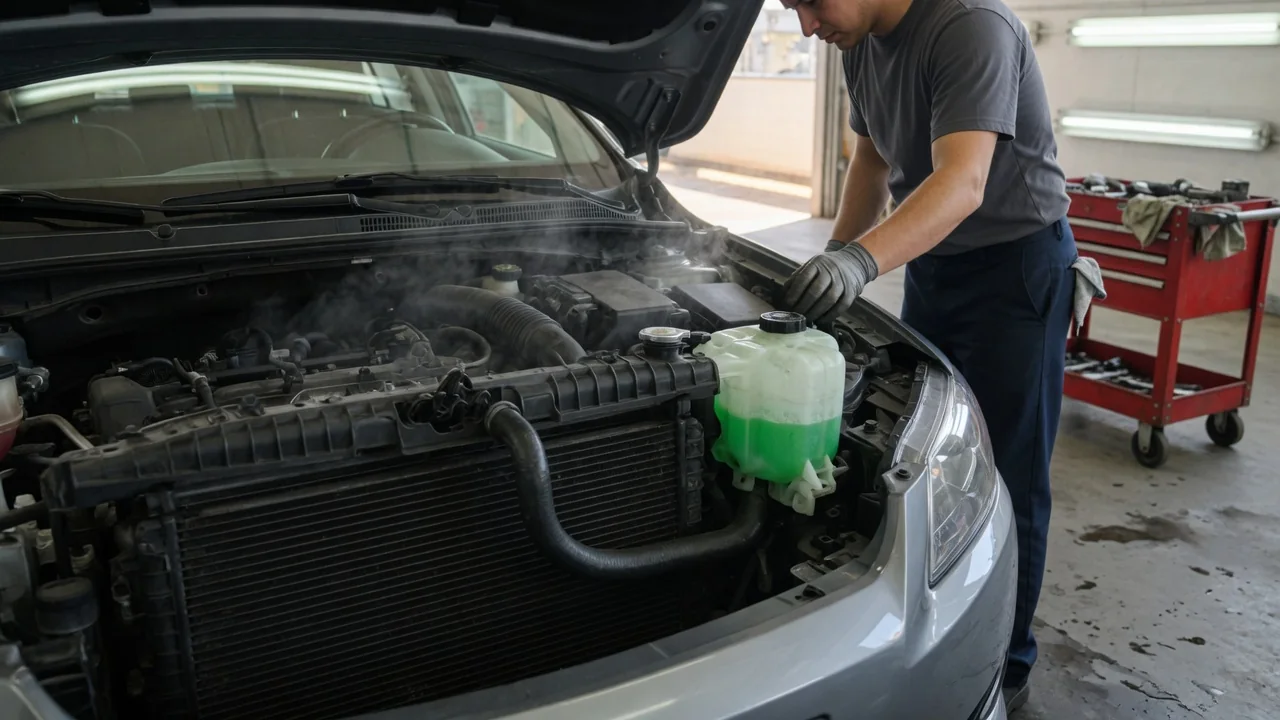
If you have ever squeezed the upper radiator hose on a warm engine and felt it firm and tight, you have felt cooling system pressure at work. That pressure is not a sign of trouble by itself. It comes from coolant expanding as it heats, and the radiator or reservoir cap holds it at a controlled level. Knowing why engine cooling system pressure builds, and what limits it, makes overheating, leaks and cap failures much easier to understand.
Thermal Expansion: Where the Pressure Comes From
A liquid-cooled engine circulates a mixture of water and antifreeze through passages in the block and cylinder head, then through the radiator and heater core. When the engine is cold, the coolant fills a certain volume. As combustion heat soaks into the metal and coolant temperature rises, the liquid expands. Liquids are nearly incompressible, so in a sealed system that extra volume can only squeeze the small remaining air space and push outward on hoses, radiator tanks and passages. The result is pressure that rises with coolant temperature: a cold engine shows little or none, while a fully warmed engine shows much more. Trapped air expands too, and the coolant's vapor pressure climbs as it heats, both adding to the effect.
That is the core answer to why a cooling system builds pressure: it is a sealed container being heated. The water pump moves coolant and creates local pressure differences around the circuit, but it is not the main source of overall system pressure. Engineers keep the system sealed on purpose because pressure raises the coolant's boiling point. Metal surfaces around the combustion chambers and exhaust ports run much hotter than the average coolant temperature. If coolant boiled there, steam pockets would insulate the metal and reduce heat transfer exactly where it is needed most. Keeping the liquid under pressure helps it stay in contact with those hot surfaces and makes the water pump less prone to cavitation.
How the Cap Controls System Pressure
If expansion were the whole story, pressure would keep rising until a hose or seal gave way. The pressure cap prevents that. Depending on the design, it sits on the radiator filler neck or on a pressurized expansion tank, sometimes called a degas bottle. Inside is a spring-loaded valve with a rubber seal pressing against a seat in the neck. The spring is calibrated so the valve stays closed until system pressure reaches the cap's rated value. Below that point, the system stays sealed and pressure builds; at that point, the valve lifts and lets excess coolant or air escape, holding pressure near the rating. The rating is usually marked on the cap and listed in the vehicle's service information. In other words, the cap does not create pressure; it sets the ceiling.
Where the released coolant goes depends on the layout. With a radiator cap, it typically flows through a small hose into a non-pressurized recovery reservoir. With a pressurized expansion tank, the tank itself provides the expansion space and its cap does the regulating. Either way, the cap has a second, smaller valve working in the opposite direction. When the engine is shut off and cools, the coolant contracts and a partial vacuum forms. The vacuum valve opens and lets coolant or air be drawn back in, so the system refills itself instead of pulling hoses flat or drawing air past seals.
Faults That Raise or Lower Cooling System Pressure
Many cooling problems show up as pressure that is too low. A cap with a hardened or cracked seal, or a weakened spring, may open early or fail to seal at all. External leaks at hoses, clamps, the radiator, the water pump seal or the heater core have a similar effect, because the system cannot hold what it builds. With less pressure, coolant boils at a lower temperature, so the engine becomes more prone to boil-over, steam and coolant loss, especially under heavy load or in hot weather. Leaks that let coolant out can also let air in during cooldown, and air pockets reduce heat transfer and can cause erratic temperature readings.
Pressure that is too high, or that rises too quickly, points to different causes. A cap whose pressure valve sticks closed can let pressure exceed the design limit, stressing hoses, radiator tanks and seals, and a blocked overflow hose can stop the cap from venting as intended. A more serious cause is combustion gas entering the coolant through a failed head gasket or a crack in the head or block. Because combustion pressure is far higher than cooling system pressure, gas forced into the coolant can pressurize the system soon after a cold start, before thermal expansion would explain it. Typical signs include steady bubbling in the reservoir, coolant pushed out of the overflow, and hoses that turn hard unusually fast. Overheating from any cause, such as a stuck thermostat, a failed fan or a clogged radiator, also drives pressure up simply because the coolant is hotter.
Vacuum-side faults are easier to miss. If the vacuum valve sticks, coolant may not return from the recovery reservoir after cooldown, so the reservoir stays full while the radiator runs low, and the upper hose may look collapsed on a cold engine. Technicians usually separate these possibilities with a cooling system pressure tester, a cap tester and a chemical combustion leak test rather than relying on one symptom.
Practical Implications and Limits
The most important practical point is safety. A hot system keeps coolant above its normal atmospheric boiling point only because it is pressurized. Opening the cap releases that pressure suddenly, and coolant can flash to steam and spray out, causing serious burns. Let the engine cool fully before removing a radiator or expansion tank cap, and check the level at the reservoir markings, which on many vehicles show separate cold and hot levels. A firm upper hose on a hot engine is normal; a hose that is rock hard right after a cold start is not.
A replacement cap should match the rating specified for the vehicle. A lower-rated cap reduces the boiling margin, while a higher-rated one can push hoses, the radiator and the heater core beyond what they were built to hold, often moving a leak elsewhere instead of fixing anything. Coolant composition matters as well: the correct antifreeze mixture raises the boiling point beyond what pressure alone provides and protects against freezing and corrosion, so repeatedly topping off with plain water gradually weakens that protection.
Finally, the mechanisms described here are general. Cap location, reservoir design, normal operating temperature, rated pressure, air-bleeding procedures and the correct coolant type vary between engines and manufacturers, so the owner's manual or service information is the authority on those details. What stays constant is the principle: heat makes coolant expand, the sealed system turns that expansion into pressure, and the cap decides how much of it the system keeps.