Why Does a Car Lean in a Turn?
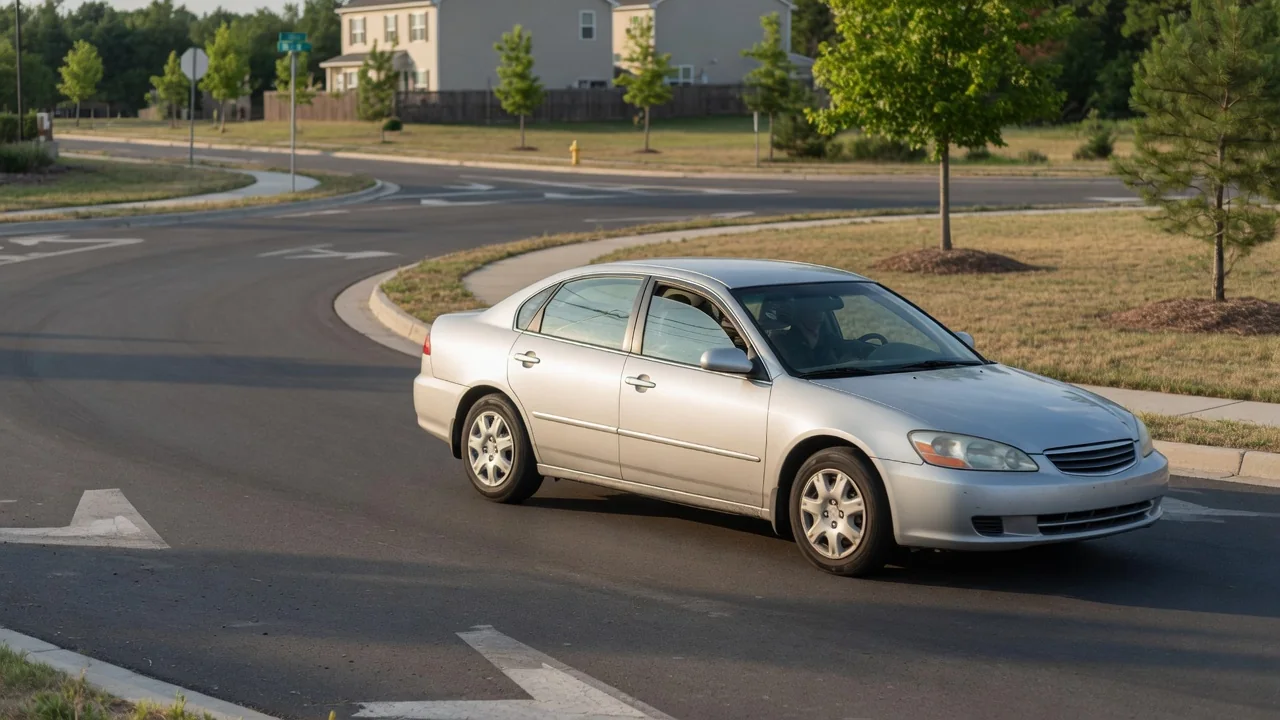
Why does a car lean in a turn? The short answer is that the tires change the vehicle's direction at road level, while most of its mass sits well above the road. That height difference creates a turning effect on the body, shifting load toward the outside wheels and compressing the suspension there. Understanding that process helps separate normal body roll from a problem.
Forces in a curve
A moving car tends to keep traveling straight. When the driver turns the wheel, the tires generate sideways grip at the contact patches, pushing the vehicle toward the inside of the curve. That force acts at ground level, but the center of gravity sits higher, somewhere around the height of the seats or above in taller vehicles. The offset between the two works like a lever, trying to tip the body toward the outside of the turn.
The result is lateral load transfer: the outside tires carry more weight and the inside tires carry less, even though total vehicle weight is unchanged. How much shifts depends mainly on cornering force, center of gravity height, and track width, meaning the distance between left and right wheels. A low, wide sports car transfers less load than a tall, narrow van at the same speed and curve radius, which is why the two feel so different on a highway ramp.
Suspension response
Load transfer would happen even with a rigid chassis, as it does in a go-kart. Visible lean appears because road cars ride on springs. As the outside wheels pick up load, their springs compress, while the inside springs extend, and the body rotates around an imaginary line called the roll axis. Softer springs allow more angle for a given cornering force, which is why comfort-oriented sedans and trucks typically lean more than firmly sprung performance models.
Other components shape how that motion feels. Anti-roll bars, also called sway bars or stabilizer bars, link the left and right sides and resist one side compressing while the other extends. Shock absorbers do not set the final roll angle, but they control how quickly the body gets there, so worn dampers can make lean feel sudden or floaty. Some vehicles add adaptive dampers, air springs, or active stabilizer systems, and their behavior varies by manufacturer and drive mode.
When excessive lean matters
Some roll is useful, since it tells the driver how hard the tires are working. It becomes a concern when the lean is large enough to disturb grip or stability. As the body rolls, suspension geometry changes the angle at which the tires meet the road, and a heavily loaded outside tire gains grip less efficiently than the unloaded inside tire loses it. The practical effect is reduced total cornering grip and slower response in quick direction changes.
Tall vehicles deserve particular attention because a high center of gravity increases both load transfer and rollover tendency in abrupt maneuvers. Roof cargo, a loaded roof box, or heavy items stacked high raise that center further. A change over time also matters: a car that leans noticeably more than it used to, leans more in one direction, or wallows after the turn ends may have worn shocks, tired springs, or damaged stabilizer bar links or bushings, though inspection is needed to confirm any cause.
Everyday Use and Observations
In daily driving, lean shows up most on freeway ramps, roundabouts, and quick lane changes. Passengers feel pushed toward the outside door, loose objects slide across the seat, and the outside front corner of the car visibly dips when cornering and braking combine. Speed matters far more than most drivers expect, because cornering force rises with the square of speed. Taking the same curve a little faster produces a disproportionately larger lean.
Loading and tires change the picture too. A full cabin, a trunk of luggage, or a trailer alters weight distribution and may increase roll, while underinflated tires add sidewall flex that feels like extra lean and vague steering. Checking pressures against the placard on the driver's door jamb is a simple first step. Drivers switching between vehicles will notice that a crossover, pickup, and compact hatchback each lean differently on the same road, by design.
Limits and Next Steps
Body roll cannot be eliminated without tradeoffs. Stiffer springs and thicker stabilizer bars reduce lean, but they can make the ride harsher, reduce wheel independence on rough surfaces, and shift the balance between understeer and oversteer. Electronic stability control helps manage a slide or an abrupt maneuver by braking individual wheels, yet it cannot change the physics of mass, height, and speed. Smooth steering inputs and appropriate entry speed remain the most effective ways to keep lean modest.
When lean seems excessive or has changed, a suspension inspection is the sensible next step. A technician can check shocks and struts for leaks, examine springs, stabilizer links, and bushings, and compare ride height side to side. Clunks over bumps, uneven tire wear, or a warning light on vehicles with adaptive or air suspension are worth mentioning. Anyone considering aftermarket parts to reduce roll should confirm fitment and suitability for their specific vehicle before making changes.