Why Does a Car Jerk When Lifting Off the Accelerator?
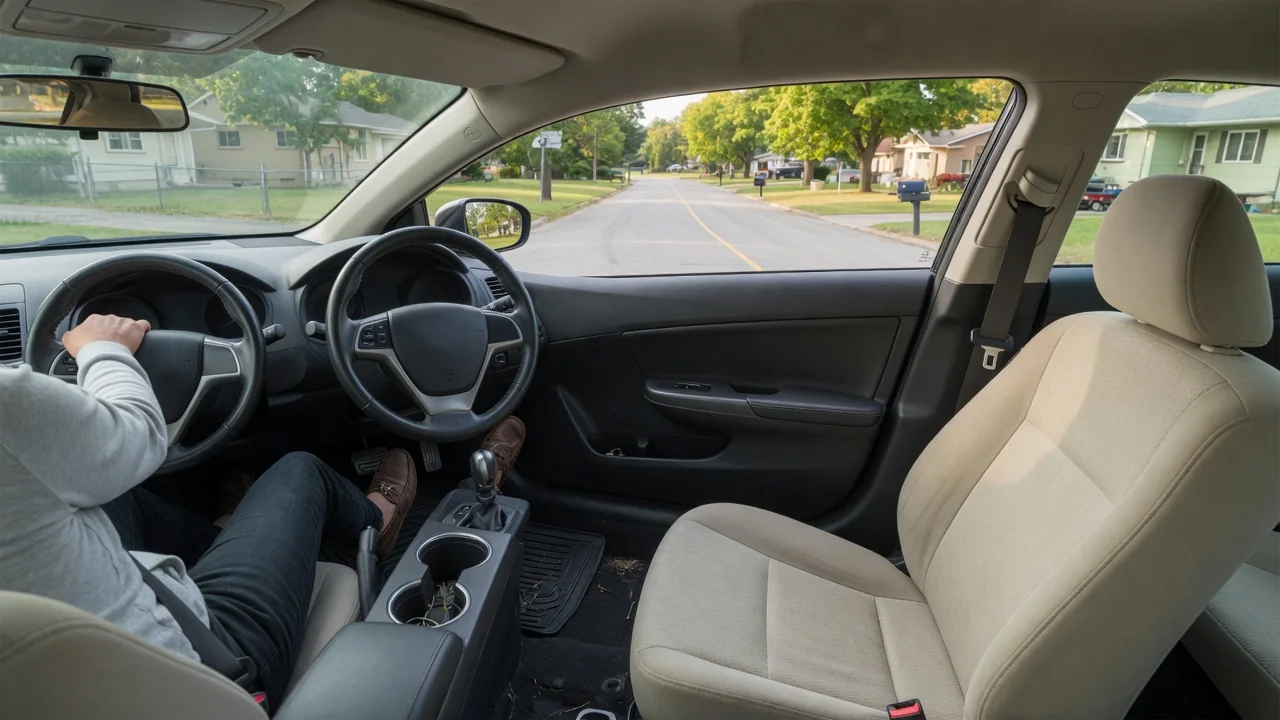
Drivers often ask why does a car jerk when lifting off the accelerator, especially when the lurch feels sharper than it used to. The answer usually sits somewhere between normal engine braking and slack in the driveline being taken up abruptly. Understanding how torque reverses direction when the pedal is released helps separate ordinary behavior from a symptom that deserves a closer look.
Throttle change
When the pedal is pressed, the engine pushes the car forward through the transmission, driveshafts and wheels. Release it, and the flow reverses: the wheels now turn the engine, which resists because the throttle is nearly closed and the cylinders are pumping against vacuum. That switch from drive to overrun happens in a fraction of a second, and every component in the driveline shifts from being loaded on one side to being loaded on the other. The occupants feel that reversal as a nudge or jerk.
How abrupt the transition feels depends heavily on engine management. Many modern cars cut fuel entirely on deceleration, and some close an electronic throttle gradually to soften the change, while others respond more sharply. A snapped-off pedal produces a harder jolt than a gentle roll-off, which is easy to test on a quiet road. Diesel engines, high-compression gasoline engines and vehicles with strong regenerative braking in hybrid or electric form tend to slow more firmly, so the same foot movement can feel very different from one vehicle to another.
Gear
The selected gear changes the strength of engine braking dramatically. In a low gear the engine spins fast relative to road speed, so its resistance is multiplied through the gearing and the car decelerates hard the moment the pedal lifts. In a high gear at the same speed, the effect is far milder. That is why a lift-off jerk is most noticeable in first and second gear in slow traffic, and why it can almost disappear at highway speeds in top gear.
Transmission type also shapes the sensation. A manual gearbox connects the engine directly to the wheels through the clutch, so any backlash between gear teeth, in the differential or in the driveshaft joints is felt immediately. A conventional automatic cushions the reversal through its torque converter, although a locked converter clutch can make it feel more direct. Dual-clutch and automated manual units may behave more like a manual at low speed, and continuously variable transmissions often smooth the change, depending on how the manufacturer has calibrated them.
When to inspect
A mild, consistent tug that has always been present is usually just the character of the car. Inspection becomes worthwhile when the behavior changes: the jerk grows stronger over weeks, a clunk or thud accompanies it, or the gear lever or the whole powertrain appears to rock when the pedal is released and reapplied. Worn engine or transmission mounts allow the assembly to shift under torque reversal, and that movement can turn a soft transition into a noticeable lurch felt through the floor and seat.
Other signs point toward the driveline itself. Clicking or knocking from the front wheels during on-off throttle can suggest wear in constant velocity joints, while rear-wheel-drive vehicles may develop play in universal joints, the propshaft center bearing or the differential. If a warning light appears alongside the jerking, a stored fault code is useful evidence, but it indicates a circuit or condition the control unit disliked rather than proving a particular part has failed. Manufacturer-specific codes need to be interpreted against information for that exact vehicle.
Everyday Use and Observations
Paying attention to when the jerk occurs narrows the possibilities considerably. Note whether it happens only in low gears, only when the engine is cold, or only after a sharp lift rather than a gradual one. A jolt that appears equally when lifting off and when getting back on the pedal hints at mechanical slack, because free play is being taken up in both directions. One that occurs only on lift-off and feels like smooth but strong slowing is more likely plain engine braking.
Engine running quality matters too. A hesitation or stumble just as the pedal is released, perhaps with the revs dipping or hunting, suggests the fueling or idle control is struggling with the transition rather than the driveline. Dirty throttle bodies, vacuum leaks and sensor issues are among the general possibilities, though the actual cause varies by vehicle. Load can change the picture as well: a heavily laden car, a trailer or a steep descent all increase the forces passing back through the driveline on overrun.
Limits and Next Steps
Observation from the driver's seat can only go so far. It can distinguish a harmless trait from a developing problem and provide a clear description for a technician, but it cannot measure play in a joint or confirm a collapsed mount. Those judgments need the vehicle raised safely and checked by someone who knows what acceptable movement looks like for that design. Some backlash is built into every gear set, so the presence of slight free play is not a fault in itself.
A sensible next step is to record the conditions that trigger the jerk, including speed, gear, engine temperature and any accompanying noise, and share them with a qualified workshop. A road test with a technician often reveals more than a description alone, and a scan of stored data may add context. In the meantime, smoother pedal inputs and selecting a higher gear at low speed reduce the shock passing through the driveline. Sudden worsening, loud clunks or vibration under power justify having the car examined promptly.