Why Does a Car Interior Fade in Sunlight?
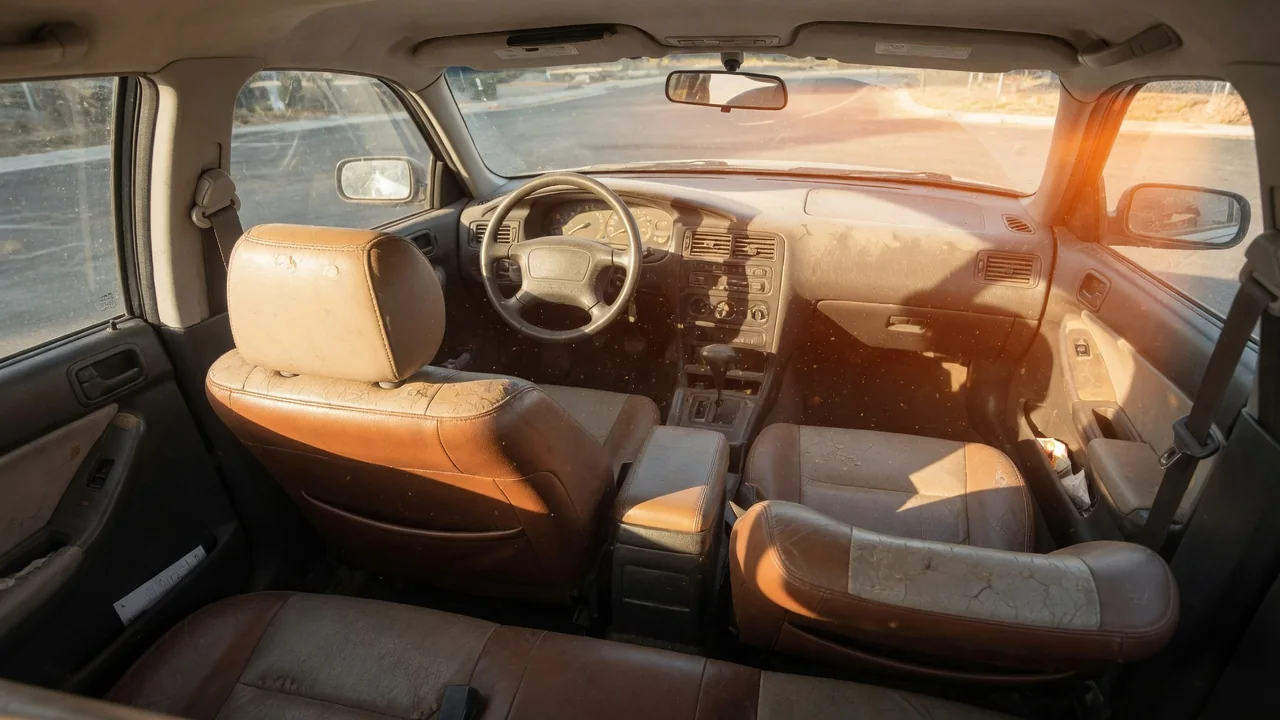
Park a vehicle outdoors for a few summers and the cabin slowly loses its color. Anyone asking why does a car interior fade in sunlight is really asking about two forces working together: light energy that breaks down dyes and pigments, and heat that speeds up the damage. Understanding how both act on plastics, fabric, and leather makes the fading easier to slow down.
Material changes
Ultraviolet light carries enough energy to break the chemical bonds in dyes and pigments that give trim its color. Once those bonds split, the molecules no longer reflect light the same way, so a deep black dashboard drifts toward gray and a rich red seat fabric turns pinkish or washed out. Visible light contributes as well, which is why fading can continue behind glass that filters part of the ultraviolet range. The change is gradual and usually goes unnoticed until a shaded area is compared.
Heat adds a second layer of damage. A closed cabin in direct sun becomes far hotter than the outside air, and that warmth drives plasticizers and oils out of vinyl, plastic, and leather. As those softening agents escape, surfaces dry out, stiffen, and may develop a chalky film or fine cracks alongside the color loss. Leather can feel harder and look lighter, while cloth tends to fade without cracking. How quickly this happens depends on the materials and protective coatings each manufacturer selected.
High-exposure spots
The top of the dashboard takes the heaviest punishment because the windshield is large, steeply raked, and aimed at the sky. Sunlight strikes that surface for hours, and the glass traps the resulting heat directly above it. The rear parcel shelf under the back window faces similar conditions, as do the upper edges of door panels where the side glass meets the trim. Steering wheel rims and the tops of seat backs also sit high in the light path.
Exposure is rarely even, and the pattern often reflects how a vehicle is parked. A car that sits in the same driveway facing the same direction every day may show one faded seat bolster or one lighter door panel on the sunny side. Convertibles, vehicles with panoramic roofs, and models with large upright glass areas let in more light overall. Factory tint levels and glass coatings vary by vehicle, so two cars parked side by side can age quite differently.
Practical prevention
Reducing the amount of light that reaches the cabin is the most effective defense. Parking in a garage, under a carport, or in the shade of a building removes much of the exposure at its source. When shade is unavailable, a reflective windshield sunshade blocks the largest glass opening and lowers the temperature of the dashboard beneath it. Turning the vehicle so the rear faces the afternoon sun, or alternating parking direction, spreads the remaining exposure more evenly.
Surface care supports those habits. Interior protectants formulated with ultraviolet inhibitors can help plastics and vinyl resist drying, and leather conditioners replace some of the moisture that heat drives out. Products should match the material, since a dressing suited to vinyl may not be appropriate for leather or suede-like fabrics. Window tint film can cut incoming light and heat, though legal limits on darkness differ by state, and seat covers or a dash mat offer a simple physical barrier.
Everyday Use and Observations
Fading tends to reveal itself through contrast. Lifting a floor mat, sliding a seat forward, or folding down a center armrest often exposes material that still looks close to original, making the surrounding color loss obvious. A phone mount or parking pass left on the dashboard for years can leave a darker outline when removed. Stitching sometimes fades at a different rate than the panels it joins, because thread and upholstery are dyed with different materials.
Touch gives as much information as sight. A dashboard that feels sticky or tacky on hot days, a steering wheel that has turned slick and shiny, or leather that creaks and feels stiff all point to heat-related breakdown rather than simple dirt. An oily haze on the inside of the windshield can come from compounds released by warm interior plastics. Dark interiors generally absorb more heat, while light colors may show yellowing instead of the graying seen on black trim.
Limits and Next Steps
No habit or product stops fading completely. Dyes and polymers age whenever they are exposed to light and warmth, so the realistic goal is slowing the process rather than preventing it. Protectants wear off and need reapplication according to the product's own directions, and they cannot restore color that has already been lost. Cleaning a faded panel may improve its appearance by removing grime, but the underlying pigment change remains once the chemistry has shifted.
When damage is already visible, the sensible path depends on the material and its condition. Mild fading on leather or vinyl can sometimes be improved with professional re-dyeing, while cracked dashboards or brittle trim usually call for repair, a fitted cover, or replacement. An upholstery or detailing specialist can judge what a specific surface will tolerate. Checking the owner's manual for approved cleaners matters too, because recommended care products differ between manufacturers and trim levels.