Why Does a Car Heater Blow Cool Air at First?
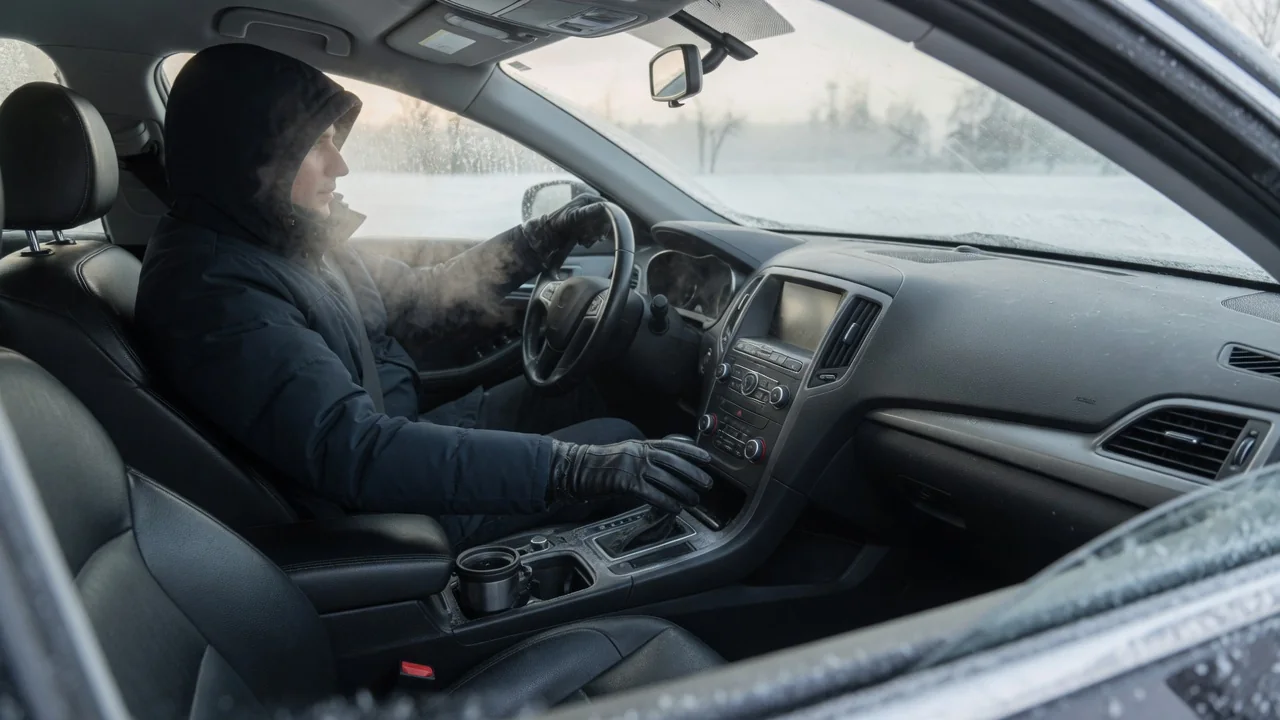
Anyone who has started a cold vehicle on a winter morning has wondered why a car heater blows cool air at first. The short answer is that most cabin heat is borrowed from the engine, and the engine needs time to produce it. Understanding where that warmth comes from makes it easier to tell normal warmup from a genuine problem.
Engine heat
In a conventional gasoline or diesel vehicle, the heater does not create warmth of its own. It relies on engine coolant, which absorbs heat from combustion and circulates through a small radiator behind the dashboard called the heater core. Air pushed across that core picks up heat before reaching the vents. On a cold start, the coolant sits at outside temperature, so the air passing over the core has nothing to absorb and comes out cool.
A thermostat helps the engine warm up by restricting coolant flow to the main radiator until the engine approaches its operating temperature. During that period, the temperature gauge climbs gradually, and vent air warms along with it. How long this takes depends on outside temperature, engine size, and how the vehicle is driven. Hybrids and electric vehicles differ, since many use electric heating elements or heat pumps, so their warmup behavior can feel noticeably different from an engine-driven system.
Fan settings
Blower speed has a real effect on how the first few minutes feel. Running the fan on high immediately after a cold start moves a large volume of unheated air through the cabin, which can feel colder than leaving it off. It also pulls what little heat the coolant has gained out of the heater core. Keeping the fan low until the temperature gauge begins to move usually delivers warmer air sooner once the speed is raised.
Many vehicles with automatic climate control handle this on their own. The system may hold the blower at a low speed, or direct air toward the windshield, until the coolant warms enough to be useful. Drivers sometimes mistake this delay for a fault when it is intended behavior. Manual systems leave the choice to the driver, and the recirculation setting matters too, since reheating cabin air takes less energy than heating fresh outside air, though it can encourage window fogging.
Trouble signs
Cool air at startup is normal; cool air that never turns warm is not. If the vents stay lukewarm after the engine has been driven long enough to reach operating temperature, something is limiting the heat reaching the heater core. Low coolant level is a common possibility, as is a thermostat stuck open, which can keep the engine running cooler than intended. A temperature gauge that stays unusually low on a long drive supports that second explanation.
Other clues point in different directions. Heat that fades at idle and returns at higher engine speed may suggest low coolant, trapped air, or weak circulation. A sweet smell, fogged windows with a greasy film, or damp carpet on the passenger side can indicate a leaking heater core. Warm air on one side and cool on the other may involve a blend door or its actuator. Each symptom is a lead to investigate, not a confirmed diagnosis.
Everyday Use and Observations
Daily driving habits shape how quickly warmth arrives. An engine under light load while driving gently generally warms faster than one left idling in the driveway, because it burns more fuel and produces more heat. Short trips in cold weather may end before the coolant reaches full temperature, so the heater never gets a chance to perform at its best. This can make a healthy system seem weak when the real limit is trip length.
Paying attention to patterns helps establish what is normal for a particular vehicle. Noting roughly where the temperature gauge sits when warm air begins, and how that changes between a mild morning and a frigid one, gives a useful baseline. Small diesel engines and highly efficient gasoline engines often produce less waste heat and may warm the cabin more slowly. Some vehicles add electric auxiliary heaters or heated seats to bridge the gap during those first minutes.
Limits and Next Steps
No setting can make an engine-driven heater deliver warmth before the coolant has it to give. Extended idling to preheat the cabin wastes fuel and warms the engine slowly, and block heaters or remote start features help only where the vehicle is equipped for them. Because designs vary widely, the owner's manual is the best source for how a specific climate system is meant to behave during warmup, including any intentional blower delay.
When heat stays poor after a full warmup, a few safe checks are reasonable. The coolant level in the overflow reservoir can be inspected with the engine cold, but a hot cooling system should never be opened, since it is pressurized and can cause serious burns. If the level is low, the reason needs to be found, not just topped off. Persistent problems, overheating, or signs of a leak warrant a professional inspection, where pressure testing and temperature readings can confirm the cause.