Why Does a Car Have Tie-Down Anchors?
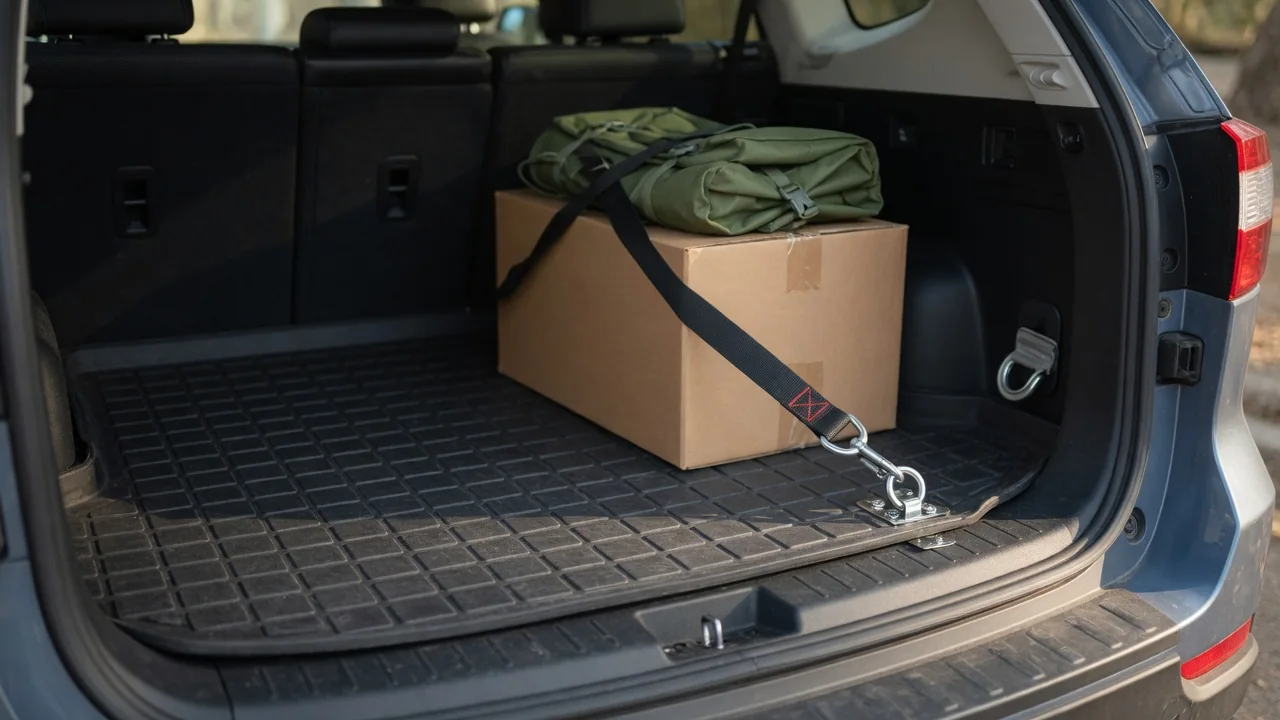
Anyone loading a trunk or cargo area may wonder why does a car have tie down anchors built into the floor or side walls. These small metal loops give straps and nets a strong, purpose-made attachment point, so luggage, tools, and groceries stay in place during braking, cornering, and sudden maneuvers instead of sliding or becoming dangerous projectiles.
Locate anchors
Cargo anchors are usually found near the corners of the load floor in hatchbacks, wagons, SUVs, and minivans, where a strap can pull diagonally across whatever is being carried. In sedans they may sit along the trunk floor or side trim, sometimes hidden under small plastic covers or folded flat into recesses. Pickup beds often place them along the inner walls or near the bed corners, and some trucks add sliding rail systems that let the attachment point move forward or backward to suit the load.
The exact number, position, and style differ from one vehicle to another, so the owner's manual is the most reliable guide to where they are and what they are meant to hold. It also helps to distinguish cargo loops from other hardware that looks similar. Child seat tether anchors on seatbacks, and towing or transport eyes under the bumpers, serve separate purposes and are engineered for different forces. A fitting marked with a child seat symbol should not be treated as a general cargo point.
Appropriate straps
An anchor is only as useful as the restraint attached to it. Ratchet straps suit heavy, rigid items such as toolboxes or appliances because they hold steady tension, while cam buckle straps are gentler and work well for furniture, bicycles, or boxes that could be crushed by overtightening. Elastic cargo nets are convenient for light, loose items like grocery bags and sports balls. Stretchy bungee cords have a place for very light objects, but they allow movement and can snap back sharply when released.
Hook size and shape matter as much as the strap itself. A hook that is too large may not seat fully in a small interior loop, and one that sits on its tip rather than in its curve can slip off under load. Straps normally carry a rating label, and that figure should be read alongside any guidance the vehicle maker gives for the anchors. Webbing that is frayed, cut, sun-faded, or stiff with age deserves replacement, since damaged fibers can fail well below the strength originally printed on the tag.
Check load movement
Once a load is strapped down, a simple push and pull test shows whether the restraint is doing its job. The item should resist sliding forward, backward, and sideways, and it should not rock or tip when pressed near the top. Tall objects need restraint higher up as well as at the base, because a strap around the bottom alone lets the upper portion lean. Placing heavy cargo low and against the seatback or bed front reduces the distance it can travel before something stops it.
Straps tend to loosen as cargo settles, cardboard compresses, or webbing stretches slightly, so a second check after the first few miles is worthwhile. Sounds from the rear, such as thumping over bumps or scraping in corners, suggest something has shifted. On longer trips, each fuel or rest stop offers a chance to feel strap tension and look for hooks that have rotated out of position. In an open pickup bed, wind adds lifting force, so light, broad items like plywood or mattresses need particular attention.
Everyday Use and Observations
Most drivers use these attachment points for ordinary errands rather than major hauling. A net stretched between the loops keeps shopping bags upright, a single strap stops a propane cylinder or water jug from rolling, and a pair of straps holds a suitcase stack steady on a road trip. Pet crates, coolers, and folding strollers also ride more quietly when tied in place. In vehicles where the cargo area is open to the cabin, restraint matters more, because nothing separates passengers from whatever is behind them.
Regular use reveals small details worth noticing. Folding loops may collect grit and become stiff, plastic covers can crack or go missing, and carpet around an anchor may show wear where hooks rub. A loop that feels loose, looks bent, or shows rust at its base is worth having inspected before it is trusted again. Some vehicles also include bag hooks, side pockets, or adjustable dividers, and these lighter features complement the main anchors rather than replacing them for anything heavy.
Limits and Next Steps
Tie-down anchors have limits, and those limits are set by the manufacturer for each vehicle. Interior loops in a passenger car are generally intended for typical luggage and household cargo, not for restraining machinery or extremely dense loads. The strength of the strap does not raise the capacity of the anchor or the sheet metal it bolts to. The vehicle's overall payload rating applies as well, since securely fastened cargo still adds weight that affects braking distance, handling, and tire loading.
When a load seems too heavy, too long, or too awkward for the built-in points, the sensible next step is a different method rather than improvisation. Options may include a properly rated trailer, a roof system approved for the vehicle, or a delivery service. Attaching straps to seat frames, trim panels, or plastic handles is risky because those parts were never designed for restraint forces. For questions about anchor ratings or adding accessory points, the owner's manual or a dealership can confirm what applies to a specific model.