Why Does a Car Have a Firewall Insulator?
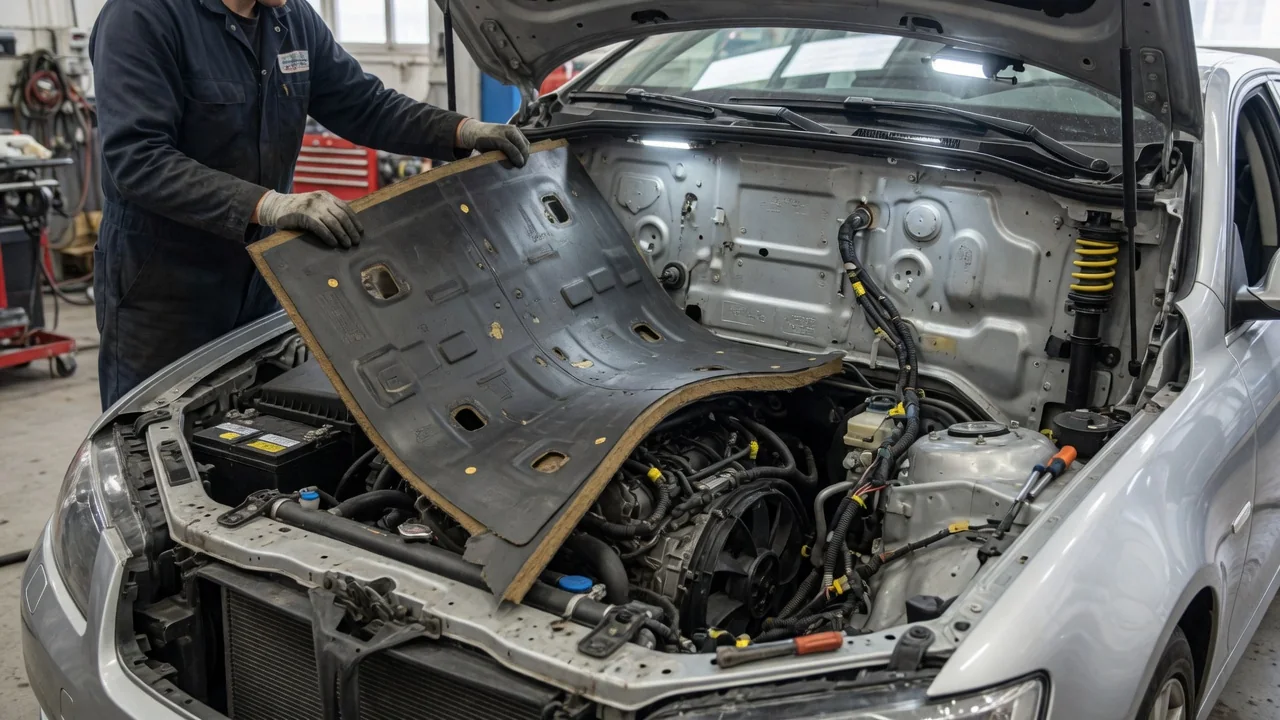
Between the engine bay and the passenger cabin sits the firewall, a steel panel also called the bulkhead. Attached to it, on one or both sides, is a layered pad usually called the firewall insulator or dash insulator. It is easy to overlook until it is damaged or missing. It reduces engine noise reaching the cabin, slows heat moving into the footwell, and helps seal the openings that pass through the bulkhead. Here is how it works and what it means for service.
Engine Noise: Why the Bulkhead Needs Help
The firewall is a large, relatively thin sheet of steel. On its own it behaves somewhat like a drum skin. Combustion pulses, valvetrain and injector noise, intake roar, and accessory drive sounds strike the panel as airborne sound, and the panel vibrates and radiates part of that energy into the cabin. Vibration also reaches the body through engine mounts and other connections. This is called structure-borne noise. The firewall insulator mainly targets the airborne path and the panel's tendency to re-radiate sound toward the occupants.
Most car firewall sound insulation works through a few general mechanisms. A common construction pairs a soft decoupling layer, such as felt, fiber batting, or foam, with a heavier, flexible barrier layer. The soft layer acts as a spring between the steel and the barrier, so the barrier does not simply move with the panel, and the barrier's mass resists sound passing through. Porous material on the engine side can also absorb sound inside the engine compartment and reduce how much bounces around before reaching the firewall. Layouts differ widely. Some vehicles rely mostly on an engine-side pad, while others depend largely on a cabin-side mat hidden behind the instrument panel and under the carpet.
Openings matter as much as the pad itself. The steering column, wiring harnesses, heater and air conditioning lines, pedal assemblies, and brake booster mounting all pass through or attach at the bulkhead. Sound leaks through small gaps out of proportion to their size, so the rubber grommets, boots, and seals around these pass-throughs are part of the insulation system. A complete insulator with one unseated grommet can still let noticeable noise into the cabin.
Heat: Protecting the Footwell and Nearby Components
An engine compartment holds several strong heat sources. These include the exhaust manifold, the catalytic converter on engines where it is mounted close to the engine, a turbocharger if fitted, and the engine block and coolant. Steel conducts heat readily, and a bare firewall exposed to radiant and convective heat warms the floor and pedal area behind it. Fibrous and foam insulation layers trap air and transfer heat slowly. Some engine-side pads add a reflective foil facing that turns back radiant heat. The result is a cooler footwell and less heat load for the climate control system to remove.
The insulator also shields parts mounted on or near the bulkhead: wiring connectors, plastic ducts, the HVAC housing, and in some designs electronic modules. Keep in mind that the insulator is not the fire barrier itself. That role belongs to the steel panel and properly sealed pass-throughs. Insulation materials are chosen with heat and flammability requirements in mind, but a pad soaked with oil, fuel, or coolant loses insulating value. Depending on the material and location, a contaminated pad near hot components may also add to fire risk.
Service: Inspection, Removal, and Reinstallation
Engine-side pads are usually held by plastic push clips, studs, or retainers. Over time they can sag, crack, or shift until they touch hot exhaust parts or moving components. During routine under-hood work, look for sections that are torn, scorched, oil-soaked, chewed by rodents, or hanging loose. Many vehicles also have a separate hood insulator on the underside of the hood. It is a different part, though it serves a similar purpose.
The cabin-side dash insulator is far harder to reach. It typically sits behind the instrument panel and under the carpet, so replacing it can require major interior disassembly. It is often disturbed during jobs such as heater core or evaporator replacement, clutch or brake pedal work, and steering column service. Procedures vary by vehicle, so the service manual for the specific model is the right reference for access steps and reassembly order. On reassembly, reinstall every clip and retainer, replace any that break, reseat all grommets fully, and route harnesses as originally positioned so they do not hold the pad away from the panel.
Replacement pads are usually shaped for a specific body, with cutouts placed for that vehicle's pass-throughs. Generic sheet material may not fit those openings or may not suit the heat exposure of the location. If a factory part is unavailable, choose material rated for automotive engine-compartment or interior use as appropriate. Household foam or packing material is not a suitable substitute.
Practical Implications and Limits
Some changes an owner might notice can point to an insulator or seal problem. The engine may sound noticeably louder than before, especially after repair work near the bulkhead. The pedals or floor may feel warmer than usual, or a whistle or hiss may come from behind the dash at speed. These symptoms are not unique to the insulator, though. An exhaust leak, a rattling heat shield, a worn engine mount, or a missing air intake component can produce similar complaints. Pinpointing the actual source should come before replacing insulation. A burning smell in particular calls for prompt inspection rather than assumption.
Insulation also has clear limits. Low-frequency booming, and vibration felt through the floor, seat, or steering wheel, usually travel through the structure rather than the air. A firewall pad does little for those, and mounts, driveline condition, or exhaust hangers are more likely causes. Piling on aftermarket deadening material tends to give diminishing returns. It adds weight and can interfere with pedals, wiring, or clips. Absorbent layers placed on the cabin floor can also hold moisture if water ever enters. In many cases, sealing gaps and restoring the original pad brings a car closer to its intended noise level than adding bulk.
The same logic applies when the powertrain changes. In vehicles with a quieter engine or an electric drive unit, the bulkhead still separates the front compartment from the cabin. Its insulation may then matter more for motor whine, pump and compressor noise, and road noise that the engine would otherwise mask. Exactly how a given vehicle balances these needs depends on its design, so general principles explain the purpose, but the specific part layout always comes from that vehicle's documentation.