Why Does a Car Feel Light Over a Hill Crest?
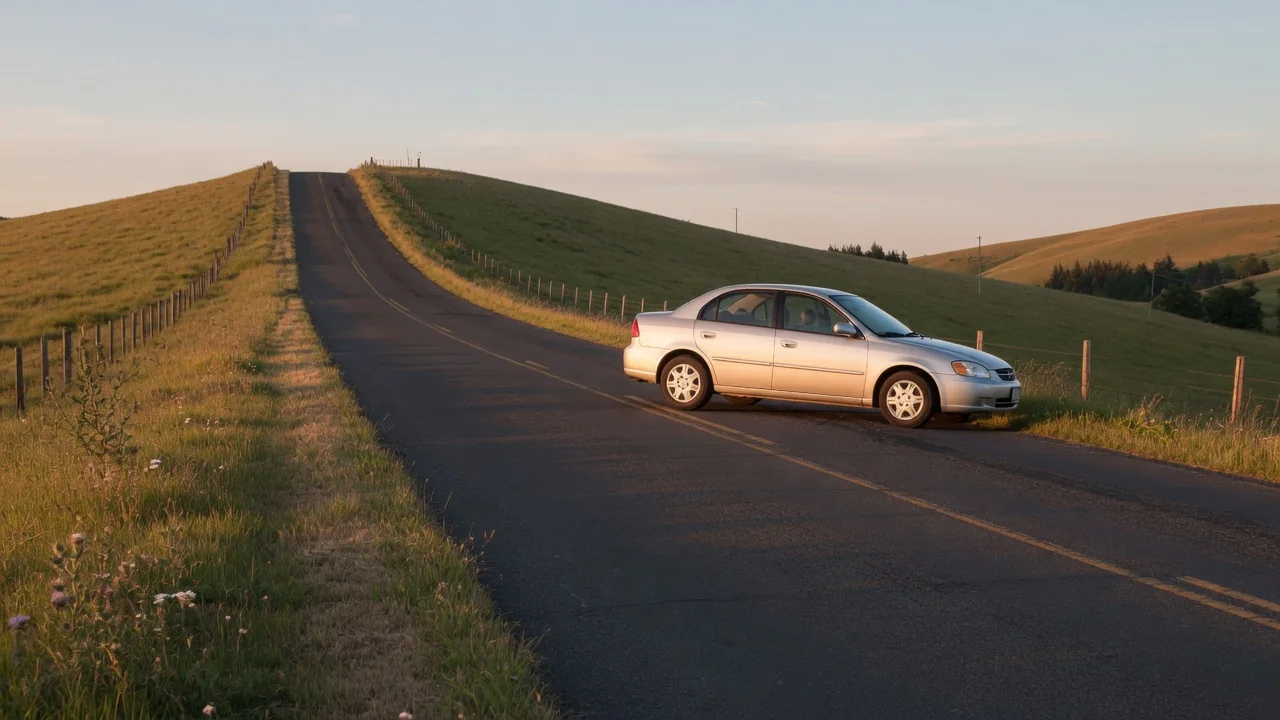
Drivers often ask why does a car feel light over a hill crest, especially when the steering goes quiet and the seat seems to fall away for a moment. The sensation is real physics, not imagination. As the road curves downward, the vehicle briefly presses on the pavement with less force, and that temporary load reduction changes how the tires, suspension and controls respond.
Vertical motion
A car climbing toward a crest carries upward momentum along with its forward speed. When the pavement bends away at the top, the body tends to keep traveling along its earlier path while the road drops beneath it. Gravity must pull the vehicle down to follow the new slope, and part of the car's weight is effectively used up bending its trajectory. The remainder is what pushes the tires against the surface, so the road feels the car as lighter than it does on level ground.
Occupants notice this as a floating stomach, a seat belt that feels looser across the lap, or loose items shifting in a cup holder. The suspension shows it too: springs that were compressed on the climb extend as load comes off, so the body rises on its wheels. How pronounced this is depends on the vehicle. Soft, long-travel suspension on a pickup or SUV may let the body float noticeably, while a firmly damped sedan settles sooner, and the shape of the crest matters as much as the car.
Tire load
Grip is closely tied to how hard each tire is pressed onto the road. The rubber's contact patch can generate braking, cornering and acceleration force roughly in proportion to the vertical load it carries, so when that load falls at a crest, available traction falls with it. Nothing about the tire itself has changed; the tread, pressure and compound are the same as they were a second earlier. The tire simply has less weight working on it, and therefore less capacity to resist sliding.
This is why steering can feel vague or light in the hands near the top of a rise. With less front tire load, the wheel takes less effort and the car responds more lazily to input. Braking distances can stretch for the same reason, and anti-lock or stability systems may intervene sooner than expected. The effect is not always even between axles, because weight distribution, wheelbase, cargo, passengers and towing all change which end unloads more, so two vehicles can behave differently over the same hill.
Reduce speed
The amount of unloading grows quickly with speed. For a given crest shape, the force needed to curve the car's path downward rises with the square of velocity, so a modest increase in speed produces a disproportionately larger loss of tire load. At gentle speeds the change is barely perceptible; at higher speeds the same hill can make the car feel distinctly floaty. A lower approach speed keeps more weight on the tires and keeps the suspension working nearer the middle of its travel.
Easing off before the rise, rather than braking hard at the top, matters because the tires have the least grip to offer exactly where the car is lightest. Slowing early, while the vehicle is still fully loaded on the climb, uses traction when it is plentiful. There is also a visibility reason: a crest hides whatever lies beyond it, including stopped traffic, a cyclist, an animal or a bend. Arriving at a speed that allows stopping within the visible road protects against both the physics and the unknown.
Everyday Use and Observations
In ordinary driving the sensation shows up on rolling country roads, humpback bridges, railway overpasses and steep neighborhood streets that flatten suddenly at an intersection. Most of the time it is mild: a brief lift in the seat, a quieter steering wheel, perhaps a soft settling motion afterward as the suspension compresses again. Passengers in the rear seats often feel it more, particularly in vehicles where they sit near or behind the rear axle, and children or anyone prone to motion sickness may comment before the driver notices.
Conditions change how much the lightness matters. On wet, icy, gravel-covered or leaf-strewn pavement, grip is already reduced, so a further drop in tire load leaves a thinner margin. A heavily loaded trunk, a roof box or a trailer alters how the body pitches and rebounds after the crest. Drivers may also see a traction or stability control indicator flicker briefly if a driven wheel spins as it unloads, which generally reflects the system doing its job rather than a fault.
Limits and Next Steps
A general explanation cannot predict how a particular vehicle will behave over a particular hill. Spring rates, damper condition, tire type and pressure, ride height and electronic aids differ between models and even between trim levels, and the owner's manual remains the right reference for recommended pressures and load limits. The physics described here also assumes a healthy car; it explains a brief, smooth lightness followed by a single controlled settle, not prolonged bouncing, wandering or knocking noises.
If the car keeps bobbing several times after a crest, feels unsettled over rises it used to handle calmly, or shows uneven tire wear, the suspension and tires deserve a professional inspection. Worn dampers, tired bushings or incorrect pressures can exaggerate normal unloading, though only a hands-on check can confirm the cause. Otherwise, the practical takeaway is simple: the light feeling is a normal consequence of the road falling away, and a moderate approach speed keeps it small, predictable and comfortable.