Why Does a Car Drift on a Crowned Road?
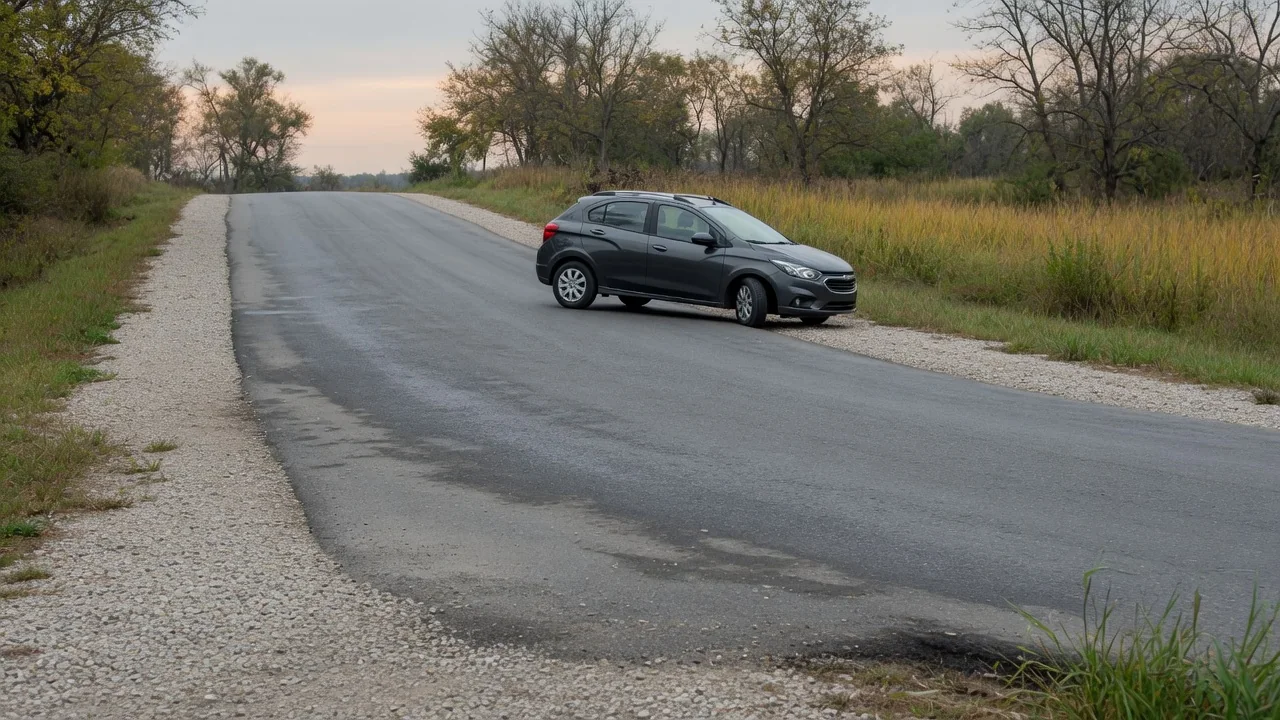
Many drivers wonder why does a car drift on a crowned road when the same vehicle tracks straight elsewhere. The short answer is that most roads are built with a gentle side slope for drainage, and gravity nudges the car downhill toward the edge. The harder part is telling that normal behavior apart from an alignment, tire, or brake problem that deserves attention.
Road crown
Road crown is the slight arch built into a road surface so rainwater runs toward the shoulders instead of pooling in the travel lanes. On a typical two-lane road the center sits higher than the edges, which means a car in the right-hand lane is always resting on a surface that tilts gently to the right. Because the vehicle's weight has a small sideways component on that slope, the tires need a little steering input to hold a straight line.
The effect differs from an alignment pull because it comes from the pavement, not the car. On a multi-lane highway, the left lanes often slope toward the median, so the same vehicle that eased right on a two-lane road may ease left there. Banked curves, worn ruts from heavy trucks, and patched pavement add their own influences. Wider tires and lighter steering can make a vehicle feel more sensitive to these slopes, so the amount of drift varies from one model to another.
Repeated observation
A single drive on a single road tells very little. The useful evidence comes from repeating the same observation under different conditions and seeing whether the drift follows the road or follows the car. If the vehicle eases right in the right lane, eases left in a lane that slopes left, and tracks straight on a flat, empty parking lot, the road surface is the most likely explanation, and the suspension geometry is probably doing what it was designed to do.
A drift that always goes the same direction regardless of lane, slope, or road points back toward the vehicle. Wind matters as well, since a steady crosswind can imitate a pull on an open highway, so calm days give cleaner results. It also helps to note whether the steering wheel sits centered when the car travels straight, and whether the tendency changes under acceleration or braking. Consistent patterns across several trips are far more meaningful than one impression on an unfamiliar road.
Service check
When the drift persists on flat pavement, a service check starts with the simplest items. Tire pressure that is low on one side increases rolling resistance on that side and steers the car toward it. Uneven tread wear, mismatched tires across an axle, or an internal tire defect can produce a similar pull. A technician may swap the front tires side to side to see whether the direction changes, which separates a tire cause from a chassis cause before any measuring begins.
If the tires check out, alignment angles are measured against the manufacturer's specifications for that vehicle. Side-to-side differences in camber or caster tend to cause a pull, while toe errors more often show up as an off-center steering wheel and faster tire wear. Some manufacturers deliberately specify slightly different angles on each side to offset typical road crown, so a reading that looks uneven is not automatically wrong. Worn suspension bushings, a dragging brake caliper, or steering system faults are also inspected.
Everyday Use and Observations
In daily driving, a mild crown drift usually shows up as a light, constant pressure in the steering wheel on back roads and a need for small corrections over long distances. The sensation often fades on newer, flatter highway surfaces and returns on older rural roads with steeper drainage slopes. Drivers who commute on the same route may notice the car behaves differently in each lane, which is a helpful clue that the pavement shape is setting the direction.
Vehicle design shapes how noticeable this is. Cars with electric power steering may include software that gradually compensates for a steady pull, masking the crown on long straight stretches, while older hydraulic systems pass more of it through to the driver's hands. Trucks with tall sidewalls, vehicles carrying uneven loads, and cars on wide low-profile tires that follow grooves in the pavement can each respond differently. Lane-keeping assistance may also add corrections that change what the steering wheel feels like.
Limits and Next Steps
Driver observations have limits. A parking lot that looks flat may still slope for drainage, and briefly loosening grip on the wheel to judge drift is only reasonable at low speed, in a safe open area, with hands ready to take control. Feel alone cannot measure alignment angles or reveal a tire with internal damage. Uneven tread wear, a steering wheel that sits crooked, vibration, or a pull that appears suddenly after hitting a pothole or curb are signs that go beyond road crown.
A sensible next step is to check tire pressures when cold against the placard on the vehicle, look across the tread for uneven wear, and note which roads and lanes produce the drift. Bringing those notes to a shop gives the technician a clearer starting point than a general complaint. If the car only wanders with the slope and tires wear evenly, no repair may be needed. If the pull is consistent, growing stronger, or paired with braking changes, a professional inspection is worthwhile.