Why Does a Car Coast Farther on Some Roads?
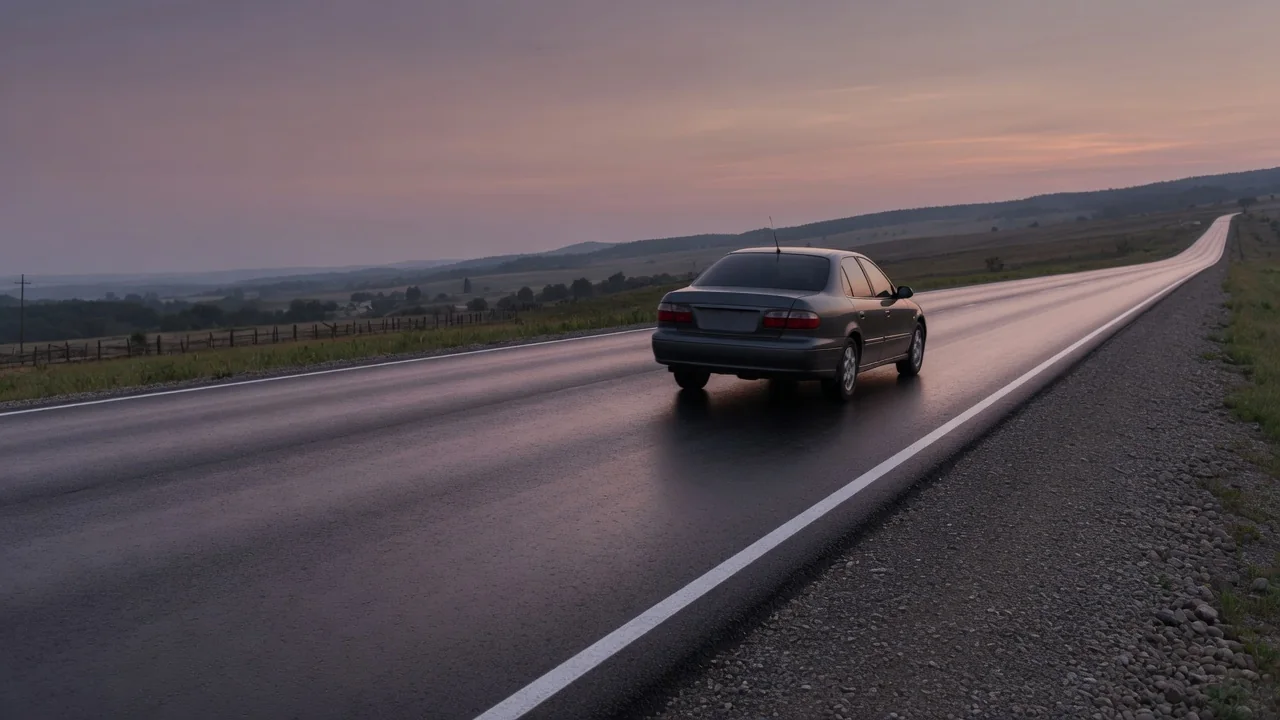
Lift off the accelerator at the same speed on two different roads and the car may roll a surprisingly different distance. Many drivers ask why does a car coast farther on some roads, and the answer rarely points to a fault. Slope, wind, tire behavior and the pavement itself all change how quickly a moving vehicle gives up its momentum.
Road grade
Grade is usually the biggest influence on coasting distance, and it is often invisible. A road that drops only a foot or two over every hundred feet looks flat to the eye, yet gravity is quietly pushing the car along that slope the entire time. On such a stretch the vehicle may hold speed with no throttle at all. Turn around and the same gentle hill becomes a steady drag that pulls speed down far sooner than the driver expects.
Vehicle weight shapes how a slope feels. A heavier vehicle carries more momentum while its aerodynamic drag stays roughly the same, so a loaded pickup often keeps rolling longer on a mild descent than it does empty. Drivers can spot subtle grades by watching roadside drainage, the way rainwater runs across the pavement, or the horizon ahead. Some instrument clusters and navigation screens show elevation or an inclinometer, though those readouts depend on the vehicle and trim level.
Tire resistance
Rolling resistance comes mostly from the tire flexing as it rotates. Each section of tread and sidewall deforms when it meets the road and springs back as it leaves, and part of that energy is lost as heat. An underinflated tire flexes more and slows the car sooner. The surface matters as well: smooth, dry asphalt lets a tire roll freely, while coarse chip seal, gravel, standing water or slush all absorb energy and shorten the coast.
Tire design adds another layer of variation. Tires marketed for low rolling resistance use compounds and constructions meant to waste less energy, while aggressive all-terrain tread blocks and soft winter compounds generally give up more. Cold weather stiffens rubber and lowers inflation pressure, so the same car may coast noticeably shorter on a winter morning. Two otherwise identical vehicles on different tires can therefore behave differently on one road, which makes comparisons between cars less meaningful than comparisons over time.
Safe interpretation
A difference between two roads is normal and seldom means anything is wrong. The observation worth attention is a change on a familiar stretch under similar conditions, where the car now slows much faster than it used to. Paired with a pull to one side, a wheel that feels unusually hot, a burning smell or a new humming noise, that pattern can suggest a dragging brake, a wheel bearing concern or an alignment issue, though none of those is confirmed by feel alone.
How the observation is made matters for safety. Shifting into neutral or switching the engine off to see how far the car rolls is a poor idea, because it can reduce steering and brake assistance and removes the ability to accelerate out of trouble. Noticing how the vehicle behaves during ordinary lift-off driving, in gear and with traffic in mind, gives enough information. A public road is never a controlled test track, so impressions should be treated as hints.
Everyday Use and Observations
Wind explains many day-to-day differences. Aerodynamic drag rises steeply with speed, so a headwind on an open highway can scrub off speed quickly, while a tailwind lets the car glide much farther. Crosswinds add drag too, because the air strikes the body at an angle. Roof boxes, bike racks, open windows and a lowered tailgate change the airflow around the vehicle, which is why the same commute can feel different after loading up for a weekend trip.
The drivetrain also colors what a driver feels when lifting off. Many gasoline cars cut fuel during deceleration and produce engine braking, which is stronger in lower gears. Some automatic transmissions offer a coasting or sailing function that decouples the engine to extend the glide. Hybrids and electric vehicles may apply regenerative braking the moment the pedal is released, and the strength is often adjustable. Each of these behaviors varies by manufacturer and drive mode, so the owner's manual is the best reference.
Limits and Next Steps
Informal coasting comparisons have real limits. Temperature, wind direction, passenger and cargo load, tire pressure and pavement condition all shift from one drive to the next, and they cannot be separated by feel. Engineers who measure road load use controlled coastdown tests on level surfaces, run in both directions to cancel wind and slope. A casual impression from a daily drive cannot match that, so a single short coast is weak evidence, while a consistent change over many drives carries more weight.
Sensible next steps begin with the simple items. Checking tire pressure when the tires are cold against the placard on the door jamb, and removing unused roof carriers, addresses the most common causes of extra drag. If the car still slows abnormally, or the change arrived suddenly with noise, heat, pulling or a warning light, a professional inspection of the brakes, bearings and alignment is worthwhile. Any stored fault code is a clue to interpret alongside that inspection, not proof that a specific part has failed.