Why Does a Car Battery Struggle on a Cold Morning?
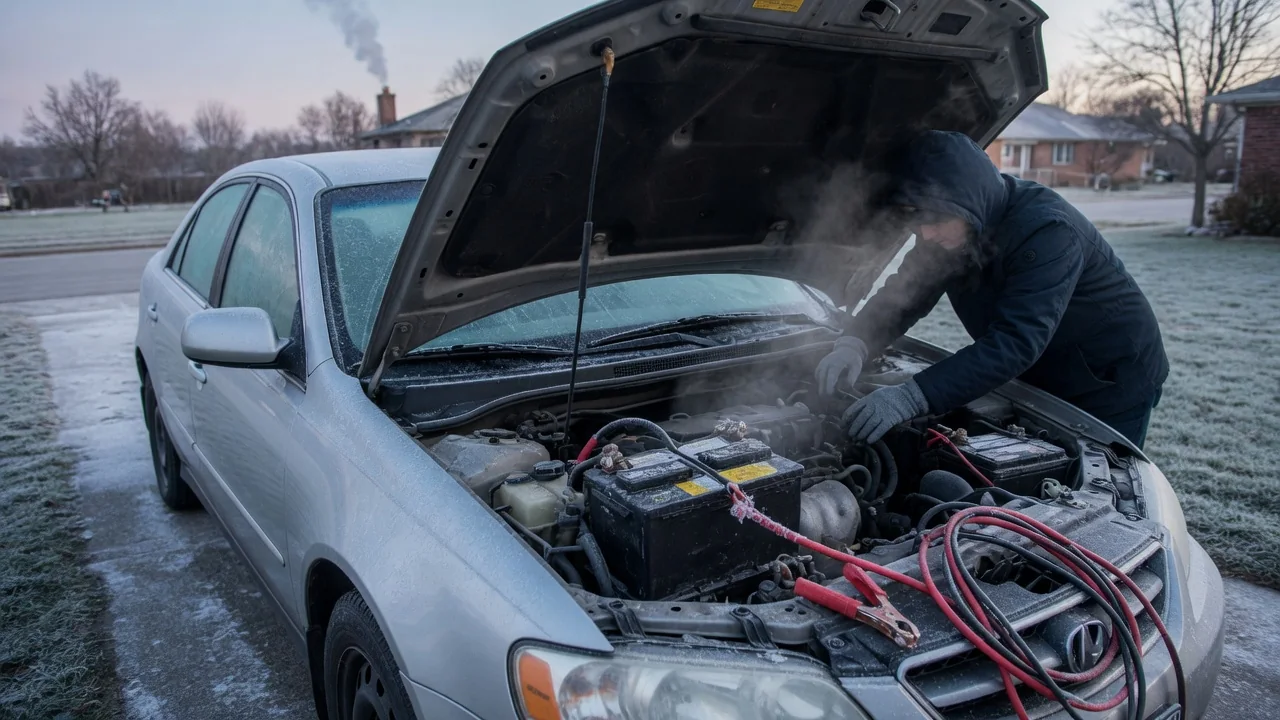
Why does a car battery struggle on a cold morning? The short answer is that low temperature reduces what the battery can deliver at the very moment the engine asks for more. Slower chemical reactions, thicker oil and extra electrical demands all meet at the turn of the key. Understanding each piece makes a sluggish winter start easier to interpret and to prevent.
Cold chemistry
A conventional lead-acid battery stores energy chemically, releasing current as its lead plates react with the sulfuric acid electrolyte. That reaction slows as temperature falls, and the electrolyte becomes less willing to move ions between the plates. Internal resistance rises, so voltage sags further under load than it would on a mild day. The battery has not lost its stored charge overnight; it simply cannot release that energy as quickly while the cells are cold.
State of charge matters even more in winter. A fully charged battery holds dense, acid-rich electrolyte that resists freezing, whereas a deeply discharged one contains weaker electrolyte that can freeze in severe cold and damage the case or plates. Age compounds the effect, because sulfation and plate wear reduce the active surface available for the reaction. Flooded, enhanced flooded and absorbed glass mat designs respond somewhat differently to cold, so the battery label and owner's manual are the right reference for a particular vehicle.
Starter load
While the battery's output shrinks, the starter motor's job grows. Engine oil thickens in the cold, so the crankshaft, pistons and valvetrain resist turning, and the starter must draw more current for longer to reach firing speed. Higher current pulls voltage down further, which in turn slows the starter and can leave the ignition and fuel systems with less voltage than they prefer. This squeeze is behind the slow, labored cranking drivers hear on frosty mornings.
Engine design changes the size of that demand. Diesel engines have high compression and often energize glow plugs or an intake heater before cranking, placing a heavy load on the battery before the starter even engages. Larger engines generally need more cranking effort than small ones. The cold cranking amps rating on the battery label describes its ability to deliver current at low temperature, and the appropriate rating depends on the manufacturer's specification for that engine, as does the recommended oil viscosity.
Testing and care
A resting voltage reading with a multimeter gives a rough indication of state of charge, but it does not show how the battery behaves under load. A conductance tester or a load test, available at many repair shops and parts stores, estimates cranking ability against the rated figure on the label. Testing the charging system at the same time is sensible, since an alternator that undercharges will leave even a healthy battery depleted. Results are best read against the vehicle's specifications rather than a generic number.
Care is mostly about clean connections and a full charge. Corroded or loose terminals add resistance exactly where high current must flow, so a visual check of the clamps, cables and ground strap is worthwhile before winter. Vehicles that sit for long periods benefit from a smart maintainer suited to the battery type. Anyone working near a battery should wear eye protection and avoid sparks, and on vehicles with battery monitoring systems, replacement may require a registration step, so confirming the procedure for that model is wise.
Everyday Use and Observations
Short trips are hard on a battery in winter. Each cold start removes a sizable amount of energy, and a few minutes of driving with heated seats, rear defroster, blower fan and headlights running may not give the alternator enough time to put it back. Batteries also accept charge more slowly when cold. Over several weeks of brief commutes the state of charge can drift downward, so the car that started fine in autumn begins to hesitate once temperatures drop.
Warning signs are usually audible and visible. Cranking that sounds slower than usual, interior lights or headlights that dim noticeably while the starter turns, a rapid clicking from the starter solenoid, or a clock and radio presets that reset all point toward low available voltage. Some vehicles disable stop-start operation or display a battery or charging message when the system detects low charge. How these cues appear varies by make and model, and a parked car's normal standby draw differs with its electronics.
Limits and Next Steps
A slow start in cold weather is evidence, not a verdict on the battery. Worn starter motors, corroded cables, a weak alternator, an excessive parasitic draw, oil thicker than specified, or fuel and ignition problems can produce similar symptoms. Any stored fault codes related to system voltage should be treated the same way, as clues that need interpretation and vehicle-specific confirmation rather than proof that a particular part has failed. Replacing a battery without testing can leave the real cause in place.
If the battery tests weak, choosing a replacement that matches the manufacturer's specified size, type and cranking rating is the reliable path. Where it tests sound, attention shifts to the charging system, the cables and how the vehicle is used. Parking in a garage, using a block heater or battery warmer where the vehicle supports one, and taking an occasional longer drive all ease the morning load. A jump start can get the engine running, but the owner's manual should guide connection points, and repeated jump starts call for professional diagnosis.