Why Does a Car Battery Lose Capacity as It Ages?
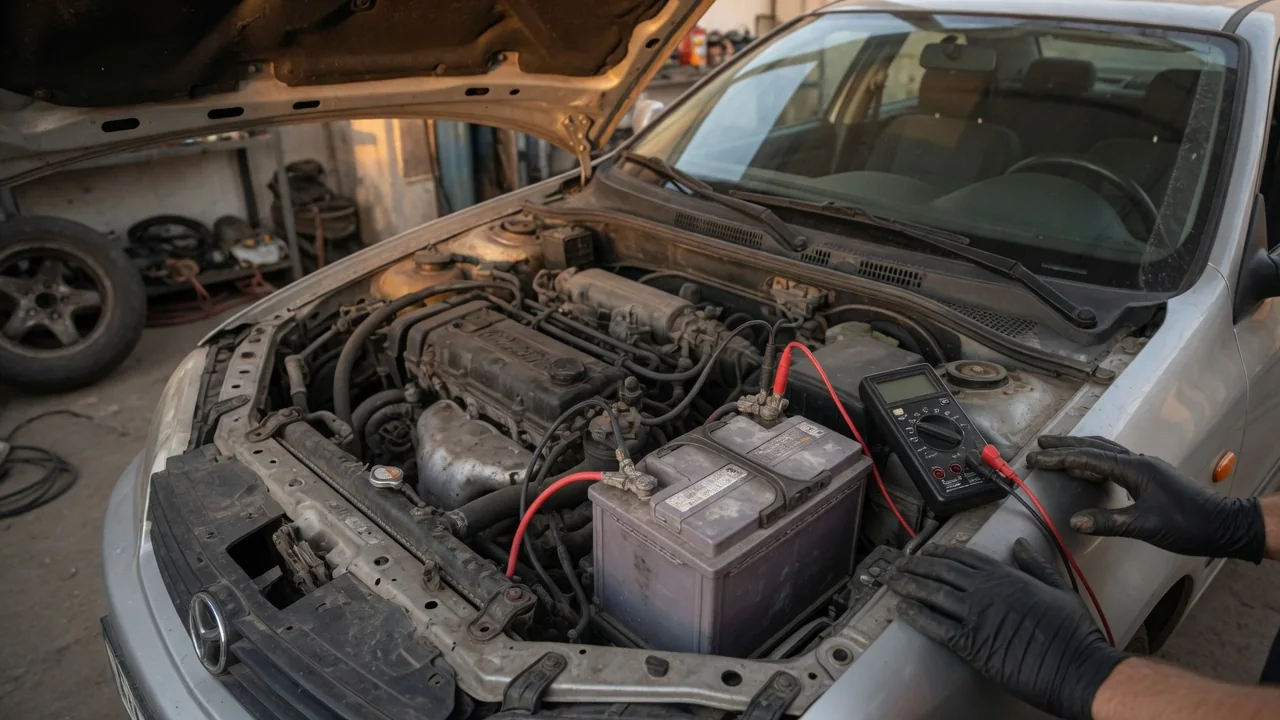
A conventional lead-acid car battery begins losing usable capacity from the day it enters service. Why does a car battery lose capacity as it ages? The chemistry that stores energy slowly damages the parts it depends on, heat speeds up that damage, and the loss often stays hidden until a test or a cold morning exposes it. This guide explains car battery capacity aging in general terms that apply to most 12-volt starter batteries rather than to any particular vehicle.
Chemical change inside the battery
A lead-acid battery stores energy in two sets of plates submerged in a sulfuric acid electrolyte. The positive plates carry lead dioxide, the negative plates carry porous sponge lead. During discharge, both materials react with the acid and turn into lead sulfate, while the electrolyte becomes weaker and more watery. Charging pushes the reaction back the other way. In theory this cycle is fully reversible, but in practice each charge and discharge leaves the battery very slightly different from how it started, and those small differences add up over years.
The best-known aging mechanism is sulfation. Lead sulfate normally forms as fine crystals that convert back easily during charging. When a battery sits partially discharged for long periods, those crystals grow larger and harder, and the charging current can no longer break them down completely. Every patch of plate locked up in hardened sulfate is active material that can no longer store or release energy. A related problem is shedding: the active paste expands and contracts with each cycle, gradually loosening from its supporting grid and falling to the bottom of the case, where it no longer contributes to capacity.
Other changes work alongside these. The positive grid, the lead alloy framework that holds the active material and carries current, slowly corrodes. As it does, the conductive path shrinks and internal resistance rises, so the battery delivers less of its remaining energy under load. Water is lost through gassing during charging, which concentrates the acid and can leave plate areas exposed in flooded batteries. In flooded designs the acid can also stratify, with denser acid settling toward the bottom, which uses the plates unevenly. No single mechanism usually ends a battery's life on its own; the losses accumulate until the margin for starting the engine disappears.
Heat and accelerated wear
Chemical reactions generally run faster at higher temperatures, and that includes the unwanted reactions inside a battery. Positive grid corrosion, self-discharge and water loss all speed up when the battery is hot. Batteries mounted in the engine compartment are exposed to engine and exhaust heat in addition to the outside climate, so they can spend long periods well above the surrounding air temperature. Batteries located elsewhere in the vehicle may run cooler, which is one reason the same battery type can age differently from one installation to another.
Heat damage is easy to misattribute because it rarely causes a failure at the moment it happens. Warm temperatures actually make a battery more chemically active, so a worn battery can still crank an engine readily in summer. When cold weather arrives, the electrolyte becomes sluggish, the engine oil thickens and the starter demands more current, while the battery can deliver less. The battery that fails on a cold morning has often lost most of its reserve during the preceding hot months. Sealed designs, such as absorbent glass mat batteries, are built to recombine most of the gas they produce, but sustained heat and overcharging can still dry them out, and their water cannot be topped up.
Testing for lost capacity
An open-circuit voltage reading, taken after the battery has rested with no load or charge, indicates state of charge rather than health. This distinction matters: a heavily aged battery can be fully charged and show a normal resting voltage while holding only a fraction of its original energy. Voltage readings taken right after driving or charging can also be misleading, because a temporary surface charge raises the number until it dissipates.
Shops commonly use two quicker methods to judge condition. A load test draws a high current for a short period and watches how far the voltage drops; a weak battery sags more. Electronic conductance or impedance testers send a small signal through the battery and estimate its cranking ability from internal resistance, usually comparing the result with the cold cranking amp rating entered by the user. These tools estimate starting power, which tends to fall as capacity falls, but they do not measure stored energy directly. On flooded batteries with removable caps, a hydrometer can check the specific gravity of each cell, revealing a single weak cell or acid stratification that an overall voltage reading would hide.
The most direct method is a capacity test: the battery is fully charged, then discharged at a controlled current until it reaches a defined cutoff voltage, and the run time shows how much energy it actually holds. This is the idea behind reserve capacity ratings. It is accurate but slow, which is why it is rarely part of routine service. Whatever method is used, results are most meaningful on a fully charged battery, since testing a discharged one can make a serviceable battery look failed.
Practical implications and limits
Driving patterns have a large influence on how quickly capacity fades. Frequent short trips, long periods of parking and running accessories with the engine off can leave a battery chronically undercharged, which favors the sulfation described earlier. Longer drives that let the charging system finish its work, or a maintenance charger suited to the battery type during extended storage, help reduce that risk. Parasitic drains from modules, aftermarket accessories or faults can quietly keep a battery partly discharged and shorten its life without any obvious symptom.
Aging can be slowed but not fully reversed. A timely full recharge can recover recently formed soft sulfate, yet hardened sulfate, shed active material and corroded grids are permanent losses. Products marketed as battery restorers or desulfators vary widely in results, so their claims deserve caution. Because climate, usage, battery design and installation differ so much, there is no fixed age at which every battery should be replaced; test results and symptoms are a better guide than calendar time alone.
Vehicle-specific requirements also set limits on general advice. Some vehicles, particularly those with start-stop systems or battery monitoring, are designed for a specific battery technology and may need the new battery registered or the monitoring system reset after replacement. The owner's manual or service information is the authority on battery type, rating and procedure. It is also worth confirming that the battery is really the problem: a weak charging system or a persistent electrical drain can produce the same symptoms as an aged battery, and a new battery will not cure either.