Why Does a Car Battery Have a Fuse Link?
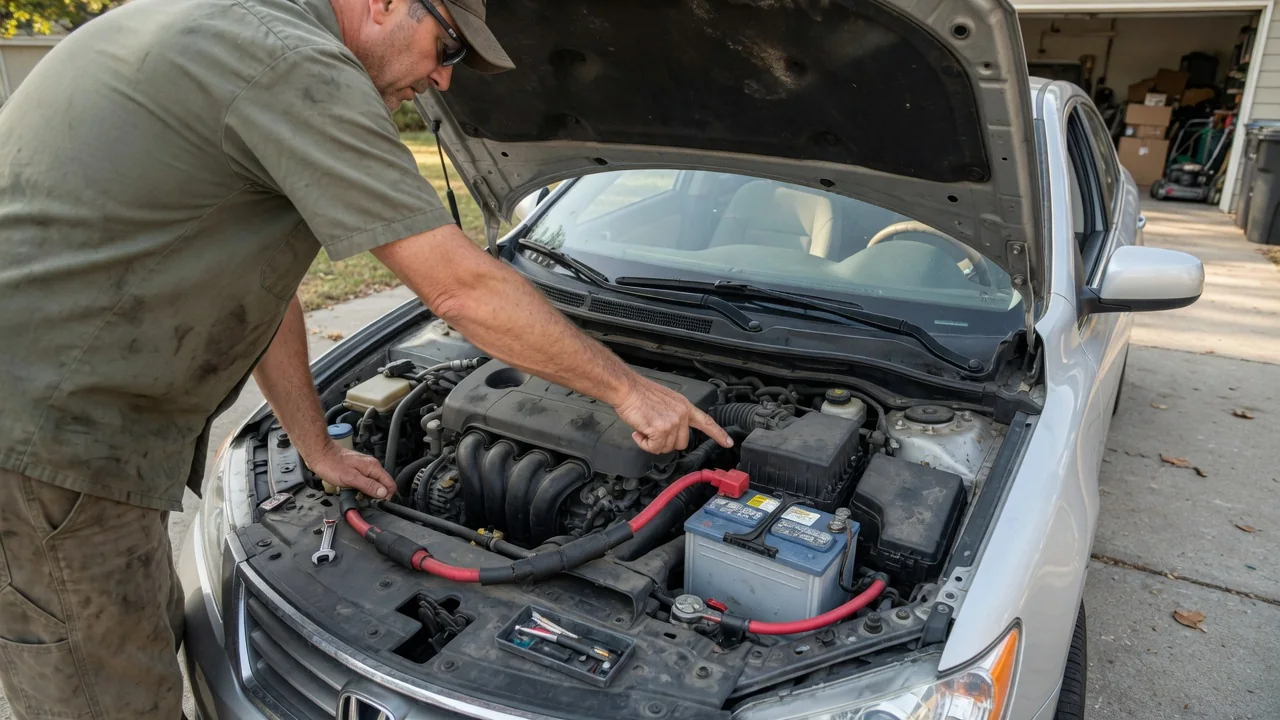
A car battery can release hundreds of amps in an instant, far more than most wiring in the vehicle can carry for long. So why does a car battery have a fuse link? The short answer is that this sacrificial part sits close to the battery and opens the circuit before a short turns heavy cables into heating elements. Here is how that protection works and what drivers may notice.
Protection role
A battery has no built-in limit on the current it will supply. If a heavy cable chafes through and touches the body or engine, current climbs until something melts. The fuse link is designed to be that something. It may be a fusible link, which is a short length of smaller-gauge wire with heat-resistant insulation, or a bolt-in high-amperage fuse mounted on or near the positive terminal. Either way, it gives up first so the cable insulation and the surrounding harness do not burn.
Placement matters because any wire between the battery and its fuse is unprotected. That is why the link sits as close to the positive post as packaging allows, guarding feeds such as the alternator charge cable, the main fuse box supply, and high-draw systems like electric power steering or cooling fans. Layouts vary widely. Some vehicles clamp a fuse block directly onto the terminal, others bury link wires in the harness, and some add a crash-triggered battery disconnect. The owner's manual or a wiring diagram shows which arrangement applies.
Failure signs
When a main link opens, the effect is usually broad rather than subtle. The vehicle may go completely dead, with no dash lights and no crank, even though the battery itself tests healthy. If the link feeding the alternator circuit opens, the engine may keep running while the battery slowly discharges, often with a charge warning lamp and dimming lights. On vehicles with several links, only one group of circuits may quit, such as the blower, power windows, or cooling fans.
Visual clues depend on the design. A cartridge or bolt-in fuse often has a window showing a broken element. A fusible link wire can look intact from outside, yet its insulation may be blistered, discolored, or unusually soft and stretchy. A corroded or loose bolt-in link can overheat, melt nearby plastic, and cause intermittent power loss that mimics a weak battery. Stored low-voltage fault codes are evidence to interpret rather than proof of a failed part, and manufacturer-specific codes need confirmation against information for that vehicle.
Service caution
A fuse link rarely opens without a reason. Common triggers include a shorted cable, jumper cables connected in reverse, an internal alternator fault, or a wiring mistake during an accessory installation. Replacing the link without finding the cause invites a repeat failure. Bypassing it with ordinary wire, or fitting a higher-rated fuse, is worse, because the weakest point then becomes the harness itself. At that stage, the next overload is absorbed by cable insulation running through the cabin or engine bay.
The area around the battery deserves respect. The cable upstream of the link is live and unfused, so a tool bridging it to ground can arc violently and cause burns. Hybrid and electric vehicles add high-voltage systems that call for trained technicians, and crash-triggered battery disconnects are tied into the airbag system. Any replacement should match the original type and rating listed in the vehicle's service information, and a qualified technician is the sensible choice when the cause of the failure is unclear.
Everyday Use and Observations
In normal driving the fuse link does nothing a driver can feel. It simply carries current, year after year. Many owners first notice it under the hood as a plastic cover on the positive terminal hiding flat metal strips or block-style fuses. Where the battery lives in the trunk or under a seat, a small fuse holder often sits right beside it. Useful habits are simple: keep protective covers in place, and watch for white or green corrosion creeping across the terminal assembly.
Certain everyday events put the link at risk. Jump-starting is the classic one, since reversed clamps can open a main fuse almost instantly. Battery replacement is another, because a terminal-mounted fuse block has to go back correctly and its connections must be secure, as a loose joint creates heat under load. Aftermarket additions such as amplifiers, winches, or auxiliary lighting follow the same logic as the factory design, which is why their power feeds need their own fuse placed close to the battery.
Limits and Next Steps
A fuse link has a narrow job. It protects wiring from sustained overcurrent, not individual components from every electrical problem. It is built to tolerate brief surges, so it will not react to a small parasitic drain, a failing battery, or a voltage spike that upsets a control module. Smaller fuses and relays downstream still guard individual circuits. On many vehicles the starter cable is left unfused because cranking current is so high, though that choice differs between manufacturers and should not be assumed.
When a link is suspected, the basics come first: battery state of charge, clean and tight terminals, and the main fuse locations shown in the owner's manual. Technicians commonly compare voltage on each side of the link to confirm whether it has opened, then trace the circuit it feeds to find the overload. If the link has blown, the car should not simply be returned to service with a new one. The underlying short or charging fault needs to be identified using diagrams specific to that vehicle.