Why Does a Black Car Show Swirl Marks?
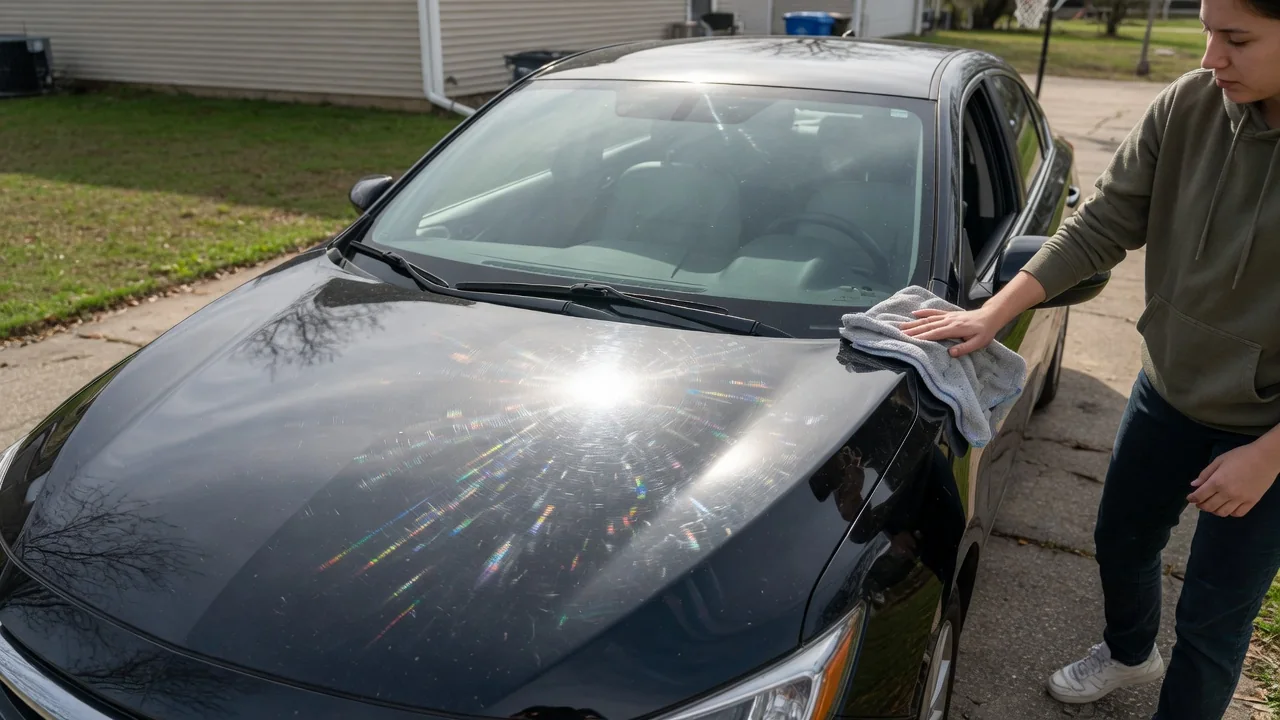
Owners often wonder why a black car shows swirl marks that seem invisible on silver or white vehicles parked right beside it. The scratches themselves are usually no deeper or more numerous on dark paint. The difference lies in how light behaves on a dark, glossy surface and how ordinary washing leaves fine scratches in the clear coat that sit above the color.
Surface reflections
Most modern vehicles carry a transparent clear coat over the pigmented base layer, and swirl marks are fine scratches in that top layer rather than in the color itself. Each scratch is a tiny groove with angled walls. When a concentrated light source such as the sun or a gas station canopy lamp hits those walls, it scatters toward the eye as a bright line. On black paint, the base beneath absorbs most incoming light, so the background stays dark and the bright scratch edges stand out sharply.
Lighter colors hide the same damage because the base coat already reflects plenty of diffuse light, leaving little contrast between a scratch and its surroundings. Metallic and pearl finishes also break up reflections with their flakes, which masks fine defects further. A solid, non-metallic black offers the least camouflage of all. The circular or spiderweb pattern is partly an optical effect too: scratches run in many directions, but only those oriented across the light source catch it, so a halo appears to surround the reflection.
Wash technique
Swirl marks rarely come from a single event. They build up when grit is dragged across the clear coat during contact washing. Road film contains fine mineral particles, and a sponge or mitt that traps them against the panel acts like very mild sandpaper. Automatic washes with spinning brushes or cloth strips can carry debris from previous vehicles, and a dropped wash mitt or a dusty drying towel does similar work by hand. Wiping a dry, dusty panel with a cloth is another common source.
Gentler habits reduce the rate of new marring rather than eliminating it. Rinsing loose dirt away before touching the paint, using a clean microfiber mitt with plenty of lubricating car shampoo, and rinsing the mitt frequently in a separate bucket all keep abrasive particles away from the surface. Working from the roof down leaves the grittiest lower panels for last. Drying with a soft, clean towel or blown air matters just as much, since many scratches are introduced after the washing itself is finished.
Correction limits
Polishing removes swirl marks by leveling the clear coat around them until the surface is flat again and reflects light evenly. That means correction always consumes a small amount of material, and the clear coat is a finite layer. Its thickness varies by manufacturer, model, and even from panel to panel, and repainted sections can differ again from factory finishes. A detailer may measure paint thickness before machine polishing for this reason, because edges, body lines, and previously corrected areas can be thinner than flat sections.
Not every defect can be polished out safely. Light wash marring usually responds well, but a scratch that catches a fingernail may extend beyond what can responsibly be removed, and chasing it risks thinning the protective layer. Paint hardness also varies widely between brands; some dark finishes mar easily yet correct quickly, while others resist both. Glazes and certain waxes contain fillers that temporarily mask swirls, which explains why marks sometimes reappear after a few washes without any new damage having occurred.
Everyday Use and Observations
Viewing conditions change how severe the marks appear. Under overcast skies or in shade, light arrives from every direction, and a swirled black hood can look nearly flawless. Direct sun, a phone flashlight, or parking lot lamps at night reveal the pattern immediately, because a small, intense light source produces the strongest contrast. Walking around the car shifts the halo with the reflection, which confirms the marks are spread across the panel rather than concentrated in one damaged spot.
The location of the marring often points to its cause. Horizontal surfaces such as the hood, roof, and trunk lid tend to show the most because they collect dust and receive the most wiping. Areas around door handles pick up fingernail and ring scratches, and the panel beneath a trunk opening may show marks from loading cargo. Soft piano-black exterior trim on pillars often swirls faster than the surrounding body paint, and a new vehicle may already carry light marks from dealership preparation washes.
Limits and Next Steps
Some degree of swirling is a normal consequence of driving and cleaning any vehicle, and on black paint it is simply easier to see. Protective products help within limits. Waxes, sealants, and ceramic coatings add slickness that lets dirt release more easily, which reduces friction during washing, but none of them makes the finish scratch-proof. Paint protection film offers a thicker physical barrier and is sometimes chosen for high-contact areas, though coverage options and results depend on the vehicle and the installer.
A sensible approach starts with inspecting the paint under a strong single light after a careful wash, then deciding whether the marks justify correction. Mild cases may only need a light finishing polish, while heavier marring is better assessed by a professional who can gauge remaining clear coat before working. Because every polish removes material, it makes sense to correct sparingly and focus on improving wash and drying habits afterward, so the restored gloss lasts longer between sessions and the clear coat is preserved.