Why Do Wheels Need a Specific Bolt Seat? Cone, Ball, and Clamping Explained
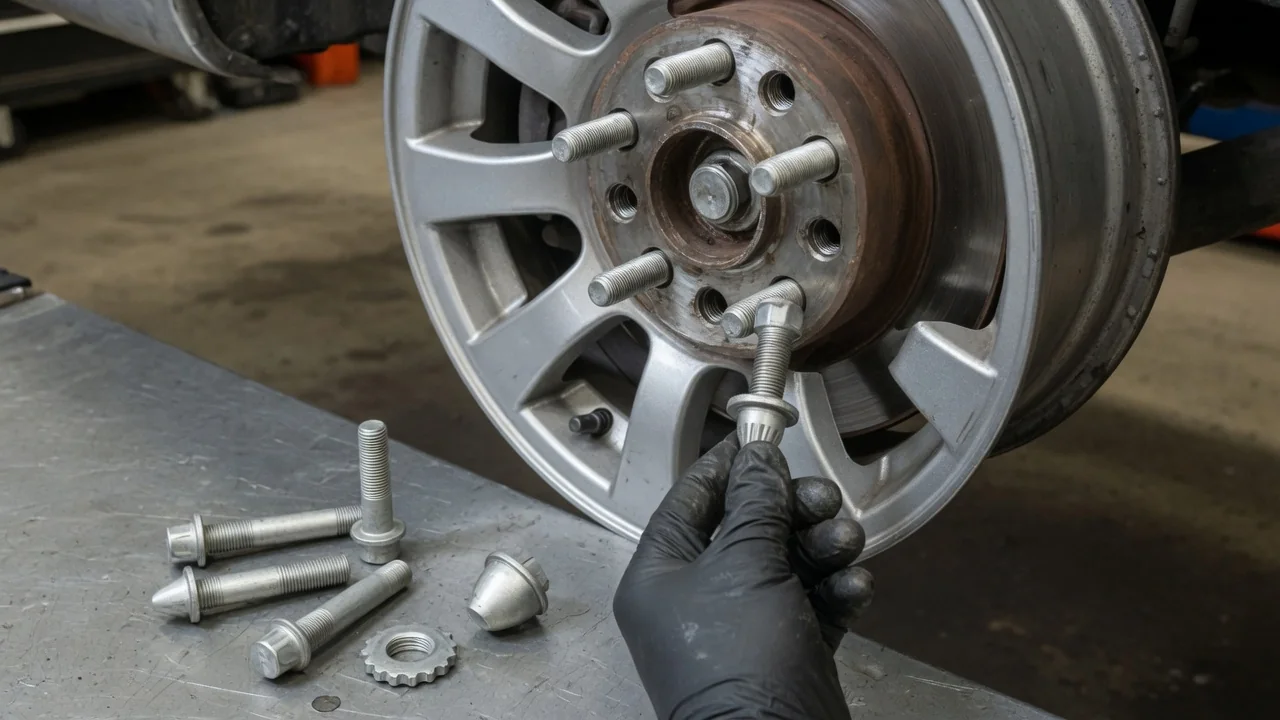
Every wheel is held to the hub by a handful of lug nuts or bolts, but the threads are only part of the story. The surface where each fastener presses against the wheel, called the seat, determines how well the joint centers, clamps, and stays tight. Understanding why wheels need a specific bolt seat explains why lug hardware is not interchangeable and why a mismatch can loosen a wheel even when the torque wrench says otherwise.
Cone or Ball Seat: Matching Shapes
The seat is the contact surface between the underside of a lug nut or bolt head and the matching recess in the wheel's mounting holes. The two most common wheel lug seat types are the conical seat, also called a tapered or acorn seat, and the ball seat, also called a radius or spherical seat. A conical seat is a straight-sided taper, most commonly with a 60-degree included angle. A ball seat is a curved surface shaped like a section of a sphere. Some wheels instead use a flat seat, where a flat-faced nut, often with a washer or a shank that extends into the hole, bears on a flat mounting face.
These shapes are not cosmetic variations. A cone pressed into a cone, or a sphere pressed into a matching spherical pocket, produces a broad band of contact around the full circumference of the hole. That band spreads the load, guides the fastener toward the center of the hole as it tightens, and resists the wheel shifting sideways. Ball seats are also made in different radii, so two fasteners that both look rounded may not share the same profile. The wheel's seat design comes first, and the fastener must be chosen to match it.
When the shapes disagree, the contact collapses into something much smaller. A conical nut in a ball-seat wheel, or the reverse, typically touches only along a thin ring or at a few points. The fastener may feel tight because it has stopped turning, yet it is bearing on a sliver of metal rather than a full seat.
Clamping: How the Seat Holds the Wheel
A wheel joint works by clamping, not by hanging the wheel on the studs. When a lug nut is tightened to its specified torque, the stud or bolt stretches slightly and acts like a stiff spring, pulling the wheel's mounting face hard against the hub. That pulling force, called preload or clamp load, creates friction between the wheel and the hub. Under normal driving, braking, and cornering, that friction is what carries the loads. The studs are primarily tension members, and they last longest when the joint never slips enough to make them bend or carry shear repeatedly.
The seat is where the clamp load passes from the fastener into the wheel, so its condition directly controls whether the preload survives. A full, matched contact area keeps contact pressure moderate, so the metal behaves elastically and the stud stays stretched. A mismatched seat concentrates the same force on a tiny area. The wheel material there can crush, deform, or wear in during the first miles of driving. Each bit of deformation lets the stretched stud relax, and preload drops even though nobody touched the nut. This is especially relevant for aluminum alloy wheels, which are softer than steel fasteners.
Once clamp load falls, the wheel can begin to move microscopically against the hub. That movement can work the nuts loose, damage or elongate the holes, and subject the studs to bending and fatigue. The progression can be gradual and quiet, which is why a seat mismatch is treated as a safety issue rather than a minor fitment detail.
Correct Fastener: More Than Thread Size
Choosing the correct fastener means matching several features at once. The seat type and, for ball seats, the radius must match the wheel. The thread diameter and pitch must match the vehicle's studs or the threaded holes in the hub. Engagement length matters too: a nut needs enough threads in contact with the stud, and a lug bolt must be long enough to engage the hub properly without bottoming out or contacting components behind it. Some wheels also need a particular shank length or outer diameter so the fastener sits correctly in a deep or narrow lug hole.
Vehicles use either lug nuts on studs or lug bolts threaded into the hub, and the same seat principles apply to both. Original-equipment hardware is chosen for the original wheels, so it may not suit a different wheel. An aftermarket wheel can have a different seat type or hole depth from the factory wheel it replaces, and a steel wheel may require different hardware than an alloy wheel on the same vehicle. The reliable references are the wheel manufacturer's specification for seat and shank, and the vehicle manufacturer's specification for thread size and tightening torque.
Conversion washers and hardware marketed as universal deserve caution. A fastener that threads on and turns down smoothly has not proven that it seats correctly. Fit is established by matching geometry, not by whether the nut reaches the wheel.
Practical Implications and Limits
The most common moments for a seat mismatch are wheel changes: installing aftermarket wheels, switching between seasonal sets, or mounting a spare. A temporary or full-size spare may be designed around different hardware than the road wheels, so it is worth confirming what the owner's manual specifies for it. When a vehicle runs two sets of wheels, keeping each set's fasteners with that set reduces the chance of mixing them. Before reinstalling hardware, a visual check of the seat surfaces on both the fastener and the wheel can reveal damage, galling, debris, or corrosion that would affect contact.
Visual inspection has limits, though. Two tapers of slightly different angle, or two ball seats with different radii, can be hard to tell apart by eye. When the seat type is uncertain, the wheel manufacturer or a qualified tire and wheel professional is the appropriate source of a definitive answer. Signs that a wrong fastener has already been used include shiny contact rings that cover only part of the seat, distorted or chipped lug holes, and nuts that repeatedly lose torque.
Tightening procedure interacts with seat fit as well. Tightening in a crisscross or star pattern draws the wheel evenly onto the hub, and a calibrated torque wrench gives far more consistent clamp load than an impact tool alone. Lubricating threads or seats changes how torque converts into preload, so it should be done only when the vehicle or wheel manufacturer calls for it. Many service guidelines also recommend rechecking torque after a short initial distance, since a new joint can settle. None of these steps can compensate for a mismatched seat; they work as intended only when the fastener and wheel were made for each other.