Why Do Tires Lose Air Gradually?
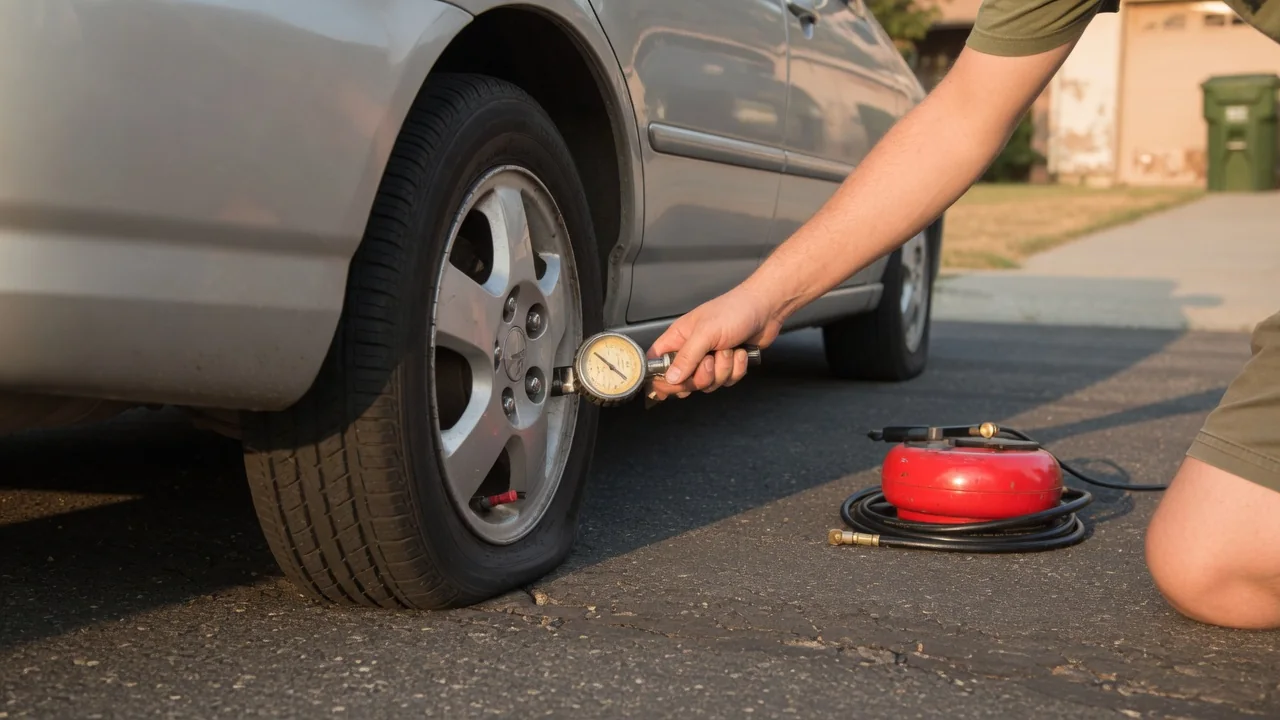
Every tire loses some pressure over time, even when nothing is wrong with it. The answer to why do tires lose air gradually comes down to two things: the slow escape of air through the rubber itself, known as permeation, and small leaks at valves, beads, or punctures. Knowing the difference helps drivers tell an ordinary pressure drop from a problem that needs attention.
Normal loss
Rubber looks solid, but at a molecular level it is slightly porous. Air molecules under pressure slowly work their way through the inner liner and carcass of a tire and escape to the atmosphere, a process called permeation. Modern tubeless tires use a dedicated inner liner compound designed to slow this movement, yet no liner stops it completely. The result is a small, steady pressure decline that happens whether the vehicle is driven daily or parked in a garage for weeks.
What drivers typically observe is all four tires drifting down by a similar small amount over a month or so, with no single tire standing out. The rate varies with tire construction, liner thickness, age, and size, so a low-profile performance tire and a large light-truck tire may not behave identically. Tires filled with nitrogen are sometimes said to hold pressure longer, though the difference in ordinary driving tends to be modest. An even, slow decline across the set is the signature of normal loss.
Seasonal change
Temperature changes pressure without any air actually leaving the tire. As air cools it contracts, so the reading on a gauge falls; a common rule of thumb puts the change at roughly one psi for every ten degrees Fahrenheit. That is why tire pressure monitoring warnings often appear on the first cold morning of autumn. The tires have not suddenly developed leaks; the same amount of air simply occupies its space at a lower pressure.
Seasonal swings can also mask or exaggerate real loss. A tire set in a warm shop and then driven into freezing weather will read low, while a marginal bead seal may seep more when cold rubber stiffens and the wheel contracts slightly. Readings taken after driving or in direct sunlight run higher than cold readings. Comparing pressures under similar conditions, ideally before driving, and against the placard value on the driver's door jamb gives the fairest picture, since recommended pressures differ by vehicle.
Locate abnormal loss
Abnormal loss usually shows up as one tire dropping faster than the others. Common sources include a nail or screw lodged in the tread, a worn valve core, a cracked rubber valve stem, corrosion on the wheel where the bead seats, or a slightly bent rim from a pothole. Alloy wheels can also develop porosity or corrosion under the bead area as they age, letting air escape slowly enough that the tire takes days or weeks to look visibly low.
Finding the source starts with a careful visual check of the tread and sidewalls for embedded objects, cuts, or bulges. Soapy water sprayed over the tread, valve, and bead edge will form growing bubbles where air escapes, which is the same basic method many shops use, sometimes with a dunk tank for stubborn cases. Vehicles with sensor-equipped valve stems add seals and hardware that can seep too. A leak found in the sidewall or shoulder is generally treated differently from one in the central tread.
Everyday Use and Observations
Daily habits make gradual loss easier to notice. A quality gauge used on a regular schedule reveals trends that a glance cannot, because modern radial tires can be significantly underinflated before they look soft. Writing down the readings for each wheel position turns vague impressions into evidence: if the left rear repeatedly needs more air than the other three, that pattern points to a leak rather than permeation or weather.
Other clues come from how the vehicle behaves. Slightly heavier steering, a gentle pull to one side, reduced fuel economy, or extra wear along both outer edges of the tread can all accompany low pressure. Dashboard monitoring systems help, but they vary: some display individual pressures, while indirect systems infer loss from wheel speed and may only warn once the drop is substantial. The spare, where fitted, loses air through the same permeation and is easy to forget.
Limits and Next Steps
Home observation has limits. Bubbles can identify where air escapes, but they cannot show internal damage from driving on a soft tire, and a tire run significantly underinflated may have weakened sidewalls that only an inspection off the wheel reveals. Whether a puncture can be repaired depends on its size, location, and the tire's condition, along with the tire maker's guidance. A pressure warning light is likewise a prompt to measure, not confirmation that any particular component has failed.
Sensible next steps follow from the pattern. Even, slow loss across all four tires simply calls for topping up to the placard pressure and continuing regular checks. One tire that keeps dropping deserves a professional inspection, particularly if the loss is speeding up, the sidewall shows a bulge or cut, or the tire has been driven while clearly low. A fast or sudden loss is a reason to stop driving on that tire and use the spare or roadside assistance instead.