Why Do Some Seats Have Extending Thigh Supports?
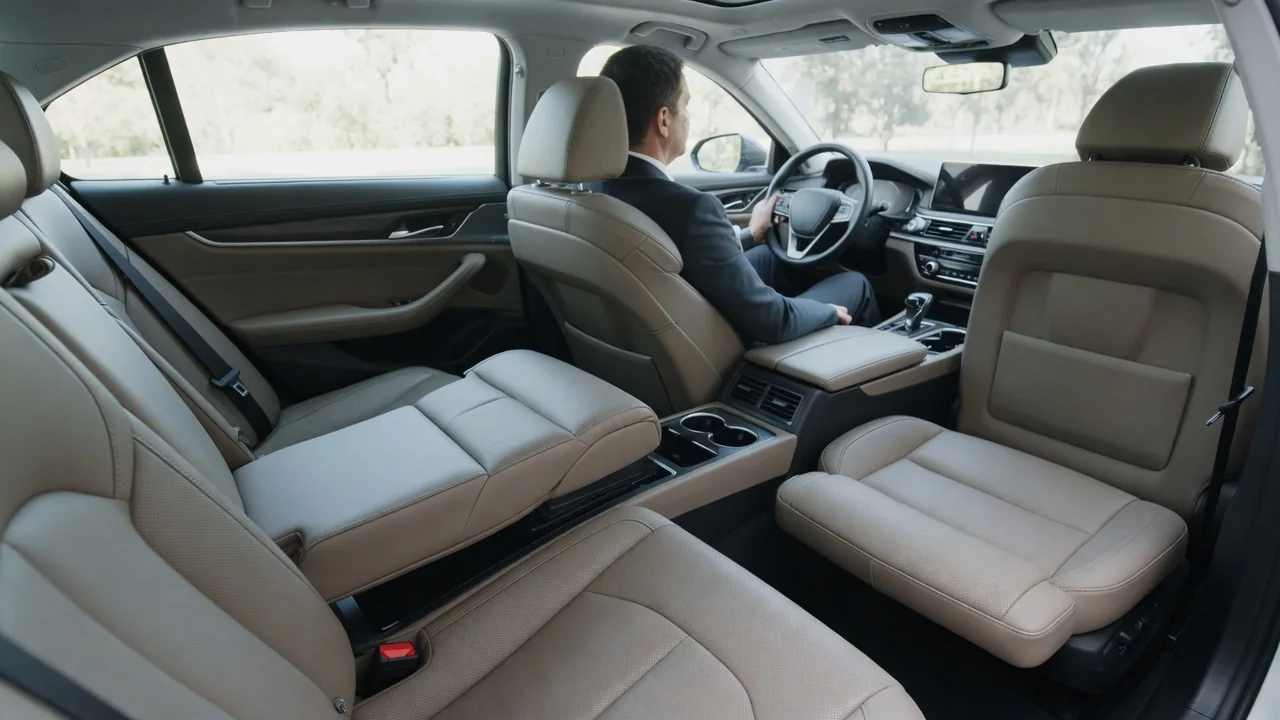
Some car seats have a front section of the cushion that slides forward or tilts out. It is often called a thigh support or cushion extension. People have different leg lengths, and a single fixed cushion depth cannot suit everyone. A car seat thigh extension lets the occupant lengthen the cushion so it carries more of the upper leg. This article explains why that matters, how the adjustment usually works, and how to set it properly.
Leg support
A seat cushion does more than hold the hips. When the cushion ends well short of the knees, part of each thigh hangs unsupported. Body weight then concentrates on the buttocks and the bony points of the pelvis. Over a long drive, that concentrated pressure can become uncomfortable and encourage fidgeting or slouching. A longer support surface spreads the load along the underside of the thighs, which generally makes sitting feel more stable and less tiring.
The challenge for seat designers is that thigh length varies widely between people. A cushion long enough for a tall driver may press into the back of a shorter driver's knees. That is uncomfortable and can make it harder to move the legs freely. Designers therefore tend to choose a cushion depth that suits a broad range of occupants. An extending thigh support solves part of this compromise. The base cushion can stay at a moderate depth, while people with longer legs add support where they need it. That is the main answer to why some seats have extending thigh supports.
Thigh support also relates to how the legs work while driving. The driver's right leg moves between the pedals, usually pivoting at the heel. The left leg may rest on a footrest or operate a clutch. Support under the thighs can help the legs feel settled during these movements, as long as the front edge of the cushion does not restrict them. This is why the extension is typically adjustable rather than fixed at its longest position.
Adjustment
Extending thigh supports generally come in two forms. In a manual design, a lever or handle at the front or side of the cushion releases a latch. The front section is then pulled forward or pushed back until it locks at the chosen position. In a power design, a switch on the side of the seat or on the door panel drives a small motor that moves the extension. Some designs slide straight forward, while others hinge so the front edge also rises slightly. The exact controls, travel and behavior differ from vehicle to vehicle, so the owner's manual is the reliable reference for any particular seat.
The thigh extension is usually one of several related adjustments. Seat height, fore-aft position, backrest angle and, on some seats, cushion tilt all affect how the thighs meet the cushion. Cushion tilt changes the angle of the whole seat base, while the extension changes its length. The two are different, although both influence pressure under the legs. Because these settings interact, changing one can make another feel wrong. Adjusting them in a sensible order tends to give a better result than tweaking the extension alone.
A common sequence starts with seat height and fore-aft position. Set them so the pedals can be pressed fully with a slight bend in the knee. Next, adjust the backrest so the steering wheel can be reached comfortably with the shoulders against the seat. After that, set the cushion tilt if the seat has one, and finally the thigh extension. On seats with memory settings, the extension may or may not be stored with the other positions, depending on the system.
Fit
A well-fitted extension supports most of the thigh without pressing into the soft area behind the knee. A widely used rule of thumb in seating ergonomics is to leave a gap of roughly two to three finger widths between the front edge of the cushion and the back of the knee. This is general guidance rather than a strict measurement, and individual comfort varies. The key signs of a good fit are even, gentle contact along the thigh and no sharp pressure line where the cushion ends.
It also helps to check the setting in a moving car rather than only while parked. When the foot moves from the accelerator to the brake, the leg should not drag against the cushion edge or feel pinned. If pedal movement feels restricted, the extension is probably too long or its front edge is angled too high. If the thighs still feel unsupported and weight sits mainly on the hips, a little more extension may help. Small changes are usually enough. The goal is support, not a cushion pushed as far forward as it will go.
Passengers can apply the same principles if the front passenger seat has an extension, although passengers have more freedom to move their legs. For drivers, fit matters more because leg position affects control of the pedals. In a shared car, each driver will likely need to reset the extension, especially when leg lengths differ significantly.
Practical implications and limits
An extending thigh support is mainly a comfort and fit feature. It can make long journeys more pleasant for people whose legs are longer than the cushion was designed around. It does not correct a poor overall driving position, though. If the seat is too far from the pedals, too low or reclined too much, lengthening the cushion will not compensate. People with short legs may never use the extension at all and are usually best served with it fully retracted.
The mechanism also brings some ownership considerations. The gap between the base cushion and the extension can collect crumbs, grit and small objects. Debris can make a manual slide feel stiff or cause a power unit to strain or stop. Cleaning the gap gently and avoiding heavy loads on the extended section can help. If a power extension stops moving, makes noise or moves unevenly, the cause may be electrical or mechanical, and diagnosis depends on the specific seat design.
Seat covers and upholstery work also need care. A one-piece aftermarket cover may bind the extension, stretch at the joint or wear quickly where the two sections move against each other. Many front seats contain occupant detection sensors, heating elements or side airbags, and some cushion designs include additional safety features. Before fitting covers, replacing upholstery or removing trim, check the vehicle's documentation or consult a qualified upholstery or repair specialist. What is safe on one seat may not be safe on another.