Why Do Some Cars Use Retractable Rear Spoilers?
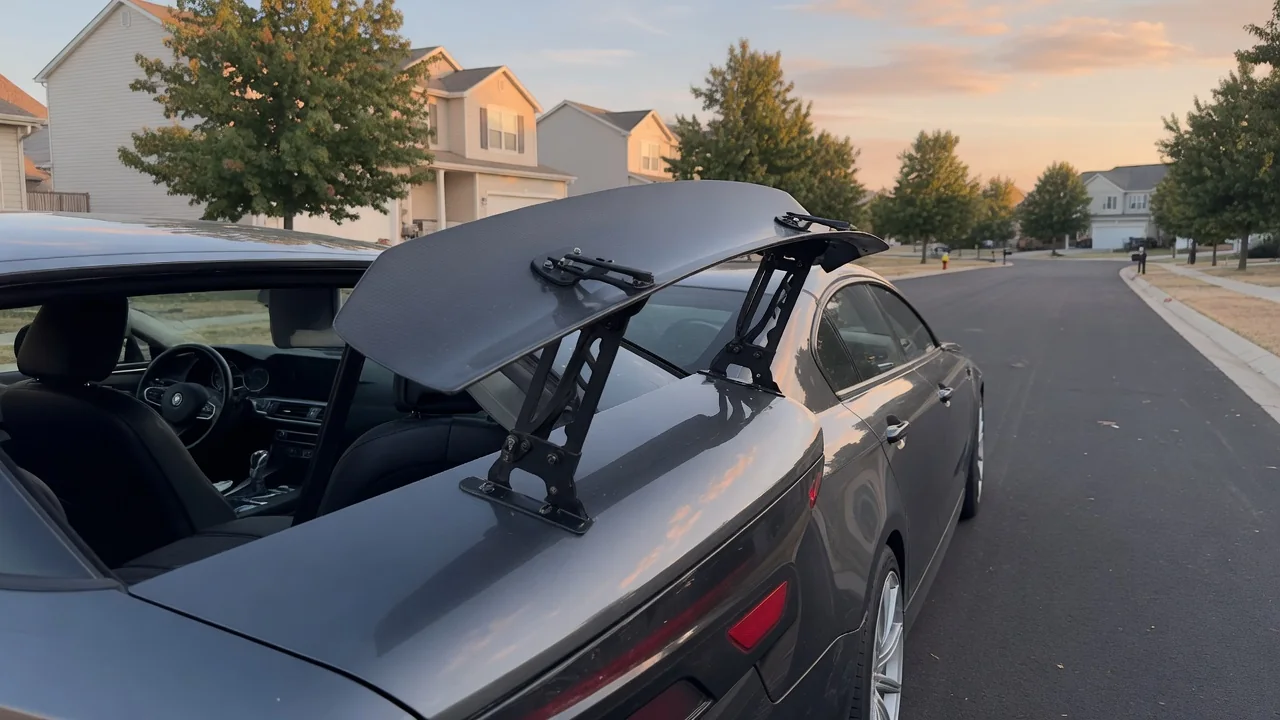
A fixed wing is always a compromise: the shape that steadies a car at highway speed adds drag, noise, and visual bulk around town. That tension answers the question of why do some cars use retractable rear spoilers. A movable panel lets engineers change the aero setup by condition, staying flush when airflow matters little and rising when stability, cooling, or braking benefits from it.
Actuation
Most deployable spoilers are moved by a small electric motor driving a gear set, cable, or linkage that lifts the panel out of the decklid or tailgate; some performance cars use hydraulic actuators that can also change the wing's angle. A control module decides when to move it, usually from vehicle speed, and sometimes from drive mode, brake pressure, or temperature inputs. The logic typically raises the spoiler above one speed and lowers it below a lower one, so it does not cycle constantly in steady traffic.
What that movement accomplishes depends on the car. On a sloping fastback, a raised lip helps air separate cleanly from the body, reducing rear lift that could make the tail feel light at speed. On more aggressive designs, the wing tilts steeply under hard braking to act as an air brake and add load on the rear tires. Some rear-engine cars also deploy the panel to direct more air into the engine bay. Trigger speeds, angles, and the number of positions differ by manufacturer, so the owner's manual is the reference.
Driver display
Because the driver cannot easily see the panel from the seat, many cars report its status through the instrument cluster or central screen. A common arrangement is a console or touchscreen button with an indicator lamp showing the spoiler has been raised manually, alongside a graphic in a vehicle settings menu. Cars with selectable drive modes may show the aero position changing as you switch from a comfort setting to a sport or track setting, which makes the link between condition and setup visible.
The display also carries warnings. If the module commands a position and the sensors do not confirm it, a message or warning light may appear, sometimes paired with advice to moderate speed because rear stability could be reduced. The wording, color, and severity of that alert vary between brands, and some vehicles show only a generic chassis or system notice. Treat any such message as a prompt to check the manual's explanation for that specific vehicle rather than assuming the meaning carries over from another car.
Service
A moving aero panel adds parts a fixed spoiler never needs: a motor or pump, drive cables or linkages, position sensors, seals, wiring that flexes with the decklid, and drain paths for water around the mechanism. Typical complaints include a spoiler that rises unevenly, stops partway, makes grinding or clicking noises, or will not retract. Debris, ice, corrosion, worn gears, and low battery voltage can all produce similar symptoms, which is why observation alone rarely identifies the cause.
When a fault is stored, the code is evidence to interpret, not proof that a particular component has failed. A position-mismatch code, for example, might trace to a sensor, a binding linkage, damaged wiring, or the motor itself. Many spoiler codes are manufacturer-specific, so their definitions need to be confirmed against information for that exact vehicle. A technician will usually check power, grounds, and mechanical freedom before recommending parts, and some systems require a calibration routine after work. Keep hands clear of the mechanism; it can move with considerable force.
Everyday Use and Observations
In daily driving, the system mostly works unnoticed. On a highway on-ramp you may hear a faint whir or see the panel rise in the rearview mirror, and it settles again as you slow for an exit. With the spoiler down, the car keeps a cleaner profile, less drag at moderate speeds, and often better rearward visibility than a fixed wing would allow. That stowed position is also why designers favor the approach: the body shape stays uncluttered when parked.
Owners often use the manual switch for practical reasons, such as raising the panel to clean underneath it or to clear leaves from the well. In winter, snow or ice packed around the edges can hinder movement, so clearing the area before driving is sensible. Automatic car washes are worth a look in the manual too, since some manufacturers give guidance about spoiler position. Noticing how the panel normally sounds and how quickly it moves gives you a baseline, making a change in behavior easier to spot early.
Limits and Next Steps
A retractable spoiler is not a substitute for tires, suspension condition, or sensible speed. Its effect grows with airflow, so at city speeds it contributes little, and even at highway pace on many road cars the gain is a modest improvement in stability rather than dramatic downforce. It also brings weight, cost, and complexity that a fixed lip avoids, which is why plenty of vehicles simply shape the trunk edge instead. The benefit is real mainly where a car's shape and speed potential justify it.
If you want to understand your own car, start with the owner's manual to learn when the panel deploys, what the switch does, and what each message means. Then watch it operate during a normal drive and compare what you see with that description. Uneven movement, new noises, or a persistent warning are good reasons to book a diagnostic visit with a shop familiar with the brand, and to follow any speed guidance shown in the meantime. Details differ enough between models that vehicle-specific information should guide every decision.