Why Do Some Cars Have Small Fins on the Roof?
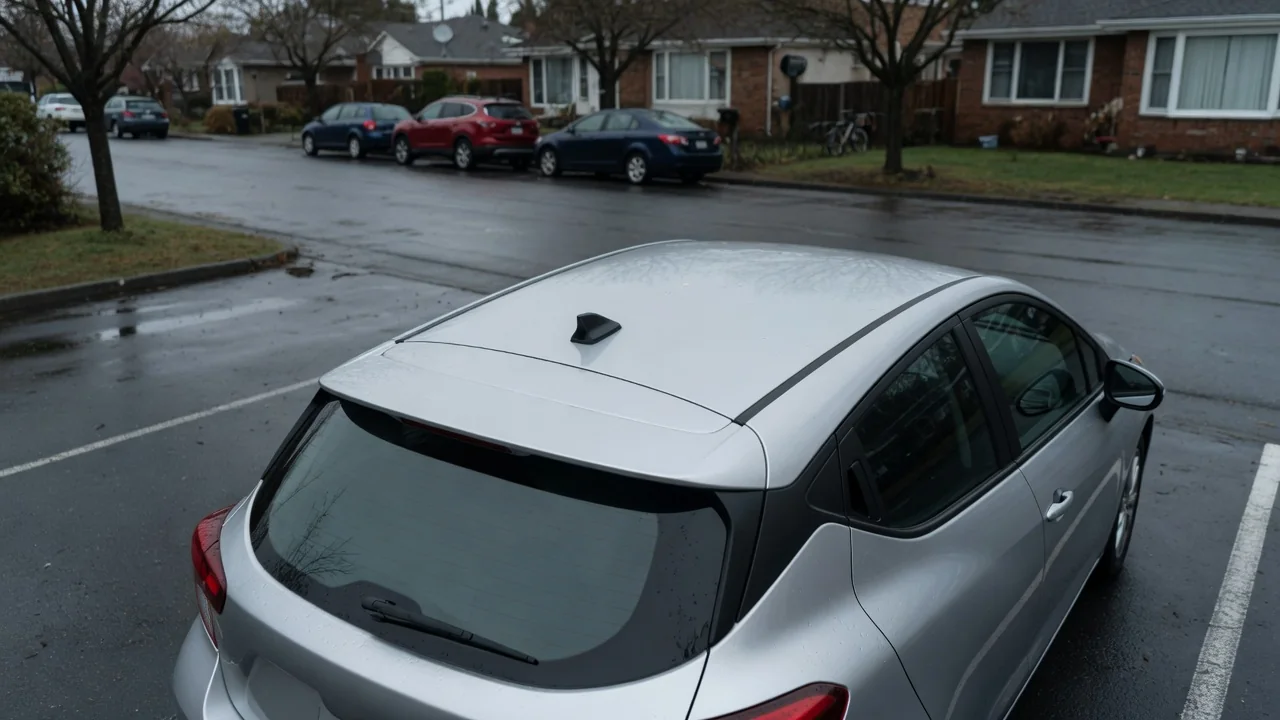
People often ask why do some cars have small fins on the roof, and the honest answer is that it depends on the vehicle. A single fin near the rear window usually houses antennas, while rows of smaller fins may be meant to influence airflow. Some are simply styling. Knowing how to tell them apart helps you understand what your own car carries.
Roof details
The most familiar roof fin is the single streamlined housing often called a shark fin, mounted on the centerline near the back edge of the roof. It replaced the long whip or mast antenna on many vehicles, and its low, tapered shape is less likely to snag in a car wash or whistle at highway speed. Size, color, and placement vary by manufacturer, and some vehicles move antenna elements into the glass or a spoiler instead, leaving the roof completely smooth.
A different detail appears on certain performance-oriented cars and aftermarket accessories: a row of several small triangular fins across the trailing edge of the roof, usually called vortex generators. Others have slim raised strips running lengthwise, which may be roof rail mounting covers or drainage channel trim rather than fins at all. Looking at the number, position, and shape gives the first clue. One fin on the centerline suggests electronics, while a spaced row across the roof points toward an airflow or cosmetic purpose.
Air and electronics
Inside an antenna fin, a plastic cover protects compact antenna elements and sometimes a small amplifier circuit. Depending on the vehicle and its options, that one housing may serve AM and FM radio, satellite radio, satellite navigation, and cellular data for connected services or emergency calling. The roof is a favored location because it is the highest metal surface on the car, giving a clear view of the sky and a broad ground plane. Which services actually live in the fin differs by model and trim level.
Vortex generators work on a different principle. Air flowing over a roof tends to separate from the body where the surface drops away toward the rear window, creating a turbulent wake that adds drag. Small fins can stir the layer of air nearest the surface so it stays attached a little longer. Whether that produces a meaningful benefit depends on careful shaping and testing for that specific body, so stick-on versions added to an arbitrary car should not be assumed to improve efficiency or stability.
Inspect damage
A roof fin deserves an occasional look because it sits over a hole through the roof panel. Check the housing for cracks, faded or peeling paint, and any looseness when pressed gently by hand. Examine the gasket or seal around the base for gaps, hardening, or trapped debris. Damage often comes from automatic car washes, low garage doors, roof cargo, or ice scraping. A cover that has shifted or cracked can let water reach the electronics inside or the opening beneath it.
Signs inside the cabin matter as much as the exterior. Water stains on the headliner near the rear of the roof, a damp smell, or drips after rain can indicate a failed seal, though sunroof drains and window seals can cause similar symptoms and should not be ruled out. Weak radio reception, a navigation position that wanders, or connected features dropping out may relate to the antenna, its cable, or something unrelated. Such symptoms are clues to investigate, not proof that the fin itself has failed.
Everyday Use and Observations
In daily driving, an antenna fin does its work without attention. You might notice its role only when reception changes, such as satellite radio cutting out under dense tree cover, in parking structures, or between tall buildings, which is normal behavior for signals that need a view of the sky. Roof boxes, bike carriers, or metallic wraps placed close to the fin may also affect performance on some vehicles. Comparing reception with and without cargo mounted is a simple, harmless observation.
Airflow fins are harder to evaluate from the driver's seat. Any change in wind noise, fuel consumption, or high-speed steadiness from a row of small fins is typically subtle and easily masked by tires, crosswinds, temperature, and driving style. Some owners observe how rain or dust streaks across the rear window, since altered airflow can change those patterns, but this is informal evidence at best. Factory-fitted examples were developed for that body shape, while decorative ones may do nothing measurable beyond changing the car's appearance.
Limits and Next Steps
Appearance alone cannot confirm what a particular fin does. Two housings that look nearly identical may contain different antenna combinations, and some vehicles carry a fin-shaped cover with limited or no electronics depending on equipment. The owner's manual, the original equipment list, or a dealer parts department using the vehicle identification number can clarify what is fitted. This matters before repainting, wrapping, or replacing a fin, because a generic cover may not match the base shape, connectors, or functions of the original.
If a fin is cracked, loose, or associated with a leak or reception problem, a qualified technician or body shop is the sensible next step. Access commonly involves interior trim and the headliner, where side curtain airbags and wiring may be routed, so forcing panels or prying at the housing risks further damage. For those considering add-on vortex generators, weigh adhesive effects on paint and the uncertain benefit. Treat the fin as a functional part until its role on your vehicle is confirmed.