Why Do Some Cars Have Brake-by-Wire? Pedal Sensing, Pressure and Backup
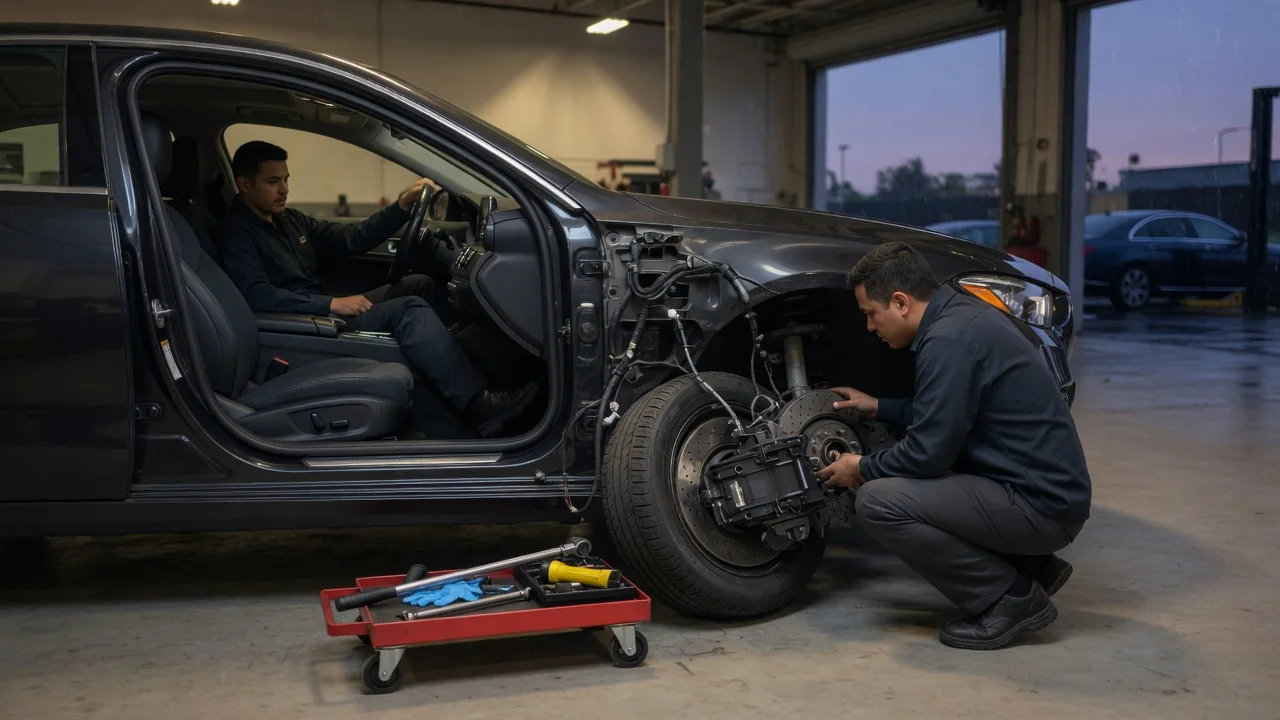
A brake-by-wire system separates the brake pedal from the job of directly pushing fluid to the wheels. Sensors read what the driver is asking for, and an electronically controlled unit produces the braking pressure. Some cars have brake-by-wire because electrified powertrains, driver-assistance features, and packaging demands are easier to serve when a controller decides exactly how braking force is created. Three core pieces explain why the design exists: pedal sensing, pressure generation, and backup.
Pedal sensing
In a conventional brake system, the pedal pushes a rod into a vacuum booster and master cylinder, so the driver's foot force directly becomes hydraulic pressure at the calipers. In a brake-by-wire system, the pedal acts mainly as an input device. A pedal travel sensor typically measures how far and how quickly the pedal moves, and many designs also measure the pressure the driver creates in a small master cylinder that the pedal still operates. These readings are usually duplicated with independent signals so the controller can cross-check them and recognize a sensor that is giving implausible values.
Because the pedal is not directly feeling the pressure at the wheels during normal operation, the system needs a pedal feel simulator. This is commonly a spring and damper arrangement, sometimes combined with a small hydraulic chamber, that pushes back against the foot in a predictable way. Engineers can tune that resistance so the pedal feels the same whether the car is slowing through its friction brakes, through an electric motor acting as a generator, or through a mix of both. Keeping pedal feel consistent while the source of deceleration changes underneath is one of the main reasons the design is used.
The rate of pedal movement also carries information. A fast, forceful application suggests an emergency stop, and the controller can respond by building pressure as quickly as the hardware allows. Conventional cars often have a separate brake assist function for this, but in a brake-by-wire layout the interpretation of driver intent and the generation of pressure live in the same controlled system.
Pressure generation
Most brake-by-wire systems in production cars are electro-hydraulic. The familiar calipers, brake lines, and fluid remain, but pressure comes from an electric motor driving a pump or a plunger, sometimes supported by a pressure accumulator. Valves then route and modulate that pressure to each wheel. Since the pressure source is electric, no vacuum booster is required, which matters for electric vehicles and for hybrids or engines that cannot supply steady vacuum without an added pump.
The biggest reason for this approach in electrified vehicles is regenerative braking blending. When the driver presses the pedal, the controller estimates how much deceleration the electric motor can provide at that moment, which depends on factors such as speed and battery condition, and asks the friction brakes to supply only the remainder. As regenerative capacity changes during a stop, the controller shifts the balance. Doing this smoothly is difficult when the pedal is hydraulically tied to the calipers, because every change in friction pressure would be felt underfoot.
Driver-assistance functions benefit as well. Automatic emergency braking, adaptive cruise control, and stability control all need to apply the brakes without the driver pressing the pedal. An actuator designed from the start to build pressure on command can do this quickly and precisely, and some units combine the pressure source with anti-lock and stability valve functions. Fully electromechanical brakes, which replace fluid with motors at each wheel, exist as a further step, but they remain far less common than electro-hydraulic designs; in everyday cars the most familiar electromechanical brake is the electric parking brake.
Backup
An obvious question about any brake-by-wire system is what happens if the electronics or power supply fail. Electro-hydraulic designs typically keep a mechanical and hydraulic path from the pedal to the wheels. During normal operation, valves isolate the driver's master cylinder from the brakes and send its fluid to the pedal simulator instead. If the system detects a serious fault or loses power, those valves are generally designed to return to a default position that connects the master cylinder directly to the brakes, often at least on the front axle. The car can then be stopped by foot force alone, but without power assistance the pedal can feel very different, usually with more travel or much higher effort, and stopping distances may increase.
Backup also exists inside the electronics. Duplicated sensors, self-monitoring controllers, and fault detection allow the system to drop into a reduced mode rather than simply switching off. Some architectures add a second electronic unit or an additional power path, particularly where automated driving features may need to brake the car without an attentive driver ready to press hard. Warning lights and messages are part of this strategy, telling the driver that braking performance or assistance has changed.
Fully electromechanical systems lack a hydraulic fallback, so they must rely entirely on redundant power, communication, and control paths. Proving that level of redundancy is a major engineering task, and it helps explain why designs that keep a hydraulic backup are the more common form of brake-by-wire today.
Practical implications and limits
For drivers, the most noticeable effect is usually pedal feel. A brake-by-wire pedal may feel very consistent, and some people describe it as less directly connected than a traditional pedal. A feel that is simply different from another car is not a fault. A sudden change in pedal behavior combined with a brake or system warning is different: it can mean the system is running in a degraded or backup mode, and the vehicle should be driven cautiously and checked as soon as practical, following the owner's manual guidance.
Maintenance does not disappear. Electro-hydraulic systems still use brake fluid that should be replaced on the manufacturer's schedule, and pads and rotors still wear. In vehicles that rely heavily on regenerative braking, the friction brakes may be used so lightly that rotors develop corrosion or pads wear unevenly, so periodic inspection still matters even when pad wear seems slow.
Service work brings its own cautions. Bleeding the brakes may require a diagnostic tool to run the pump and cycle the valves. Some systems can build pressure on their own, for example when a door is opened or the vehicle wakes up, so service information often calls for a maintenance mode before anyone works on calipers. Finally, brake-by-wire is not automatically better for every car. For a conventional engine-only vehicle, a vacuum-assisted hydraulic system is simple and well proven, which is why brake-by-wire appears mostly where electrification or advanced driver assistance justify the added complexity. The owner's manual or service information is the reliable way to confirm which system a specific vehicle uses.