Why Do Some Car Seats Have Integrated Headrests?
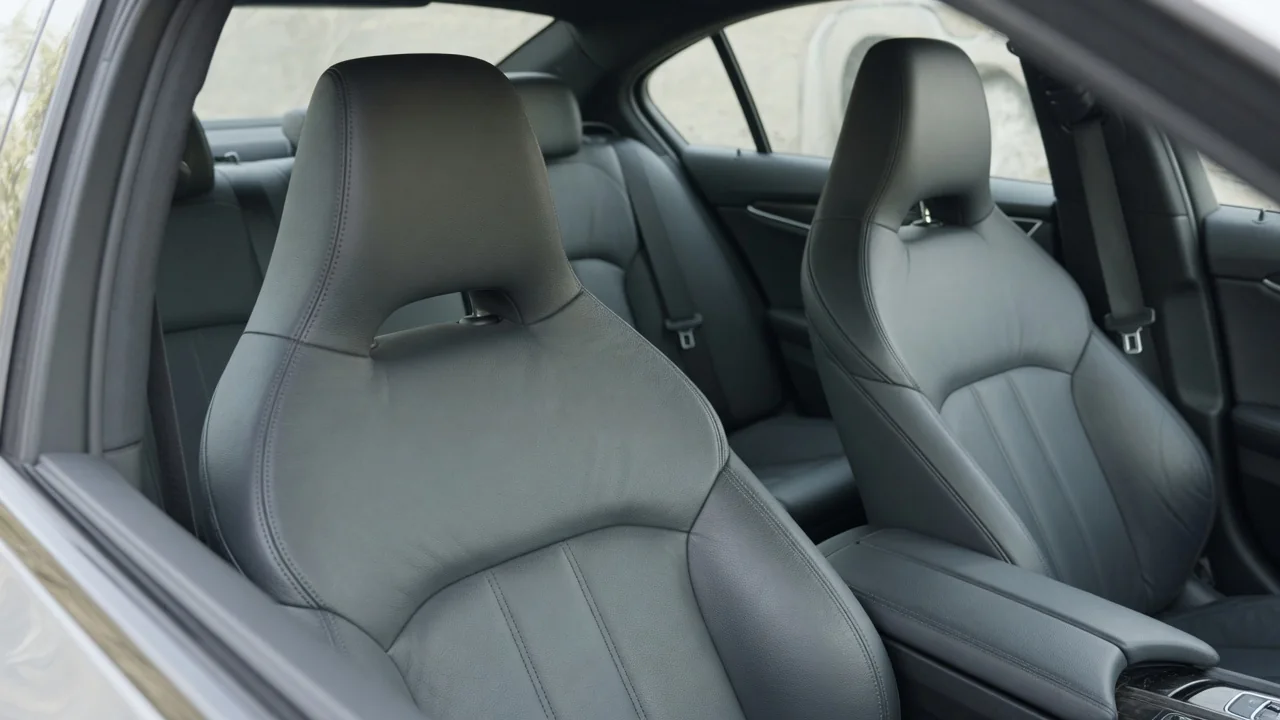
An integrated headrest is a head restraint built into the seatback as one continuous piece rather than mounted on adjustable metal posts. You will usually see one on sport-style bucket seats, some rear seats and certain minimalist interiors. Why some car seats have integrated headrests comes down to three factors: how the seat frame is built, how the cabin is meant to look, and how much adjustability the designer is willing to give up. Each of those trade-offs affects comfort, fit and everyday ownership.
Seat Structure: How the Headrest Becomes Part of the Backrest
On a conventional adjustable headrest, two steel posts slide into guide sleeves set into the top of the seatback frame. A locking collar with detents holds the restraint at a chosen height, and a release button lets you raise, lower or remove it. In an integrated car headrest design, the seatback frame itself extends upward to support the head area. That upper section is padded with foam that continues from the backrest and is wrapped in the same upholstery cover, so the restraint is not a separate component at all.
This approach removes several parts: the posts, the guide sleeves, the locking mechanism and the release button. Fewer moving parts means fewer potential sources of rattles and wear, and nothing that can be removed and forgotten. It also means the restraint cannot accidentally be left in its lowest position, which is a common problem with adjustable designs. Because the position never changes, the seat maker knows exactly where the restraint sits relative to the rest of the seat in every vehicle that leaves the factory. In performance-oriented seats, a one-piece upper backrest also makes it easier to incorporate openings for multi-point harness belts.
The trade-off is that the upper seat frame must carry the loads that a head and neck place on the restraint in a rear impact. With a post-mounted headrest, those loads pass through the posts into the frame; with an integrated one, the extended frame and its connection to the recliner mechanism take them directly. How a particular seat manages this, and which materials it uses, varies by vehicle and is not something you can judge from the outside.
Styling: Why Designers Choose a One-Piece Look
Much of the appeal is visual. A high-back seat with no visible posts and no gap between headrest and backrest reads as a single sculpted shape. That silhouette is strongly associated with racing and sports cars, so it is often used to signal a performance character even in vehicles that are not track-focused. It also suits minimalist interiors where designers want clean, uninterrupted surfaces and fewer visible mechanical details.
A single upholstery panel gives trimmers more freedom. Stitching lines, perforation patterns, contrast piping and embossed or embroidered emblems can run from the cushion bolsters all the way to the top of the seat without being interrupted by a separate headrest cover. Some designs add shaped cutouts in the upper section, either for harness routing or simply to lighten the appearance of a tall seatback. In rear seats, low-profile fixed restraints can be shaped to blend into the bench and keep the cabin looking open.
Adjustment Limits of a Fixed Head Restraint
The most important limitation is that an integrated headrest has no height or tilt adjustment of its own. Its position relative to your head is set entirely by the seat geometry and by the adjustments the rest of the seat offers, such as cushion height, fore-aft travel and backrest recline. A taller occupant may find the top of the restraint sits below the back of the head, while a shorter occupant may find the padding or side wings press against the head or shoulders. With an adjustable restraint, those differences can often be corrected; with an integrated one, they cannot.
Backset, the horizontal distance between the back of your head and the restraint, also depends on recline. Leaning the seatback further rearward generally opens that gap, and an integrated design offers no separate tilt to close it again. Some seats offer additional controls such as lumbar or upper-back adjustment that change your posture against the backrest, but whether those exist, and how much they help, is specific to each vehicle.
Because the restraint cannot be removed, it can also limit how the seat interacts with accessories and other seats. Universal seat covers designed around separate headrests may not fit. Child seat top tethers that are normally routed under or around a removable headrest need a different path, which the vehicle owner's manual should specify. In rear rows, fixed restraints can affect how far a seatback folds or whether it clears the front seats, which is one reason some rear restraints are kept deliberately low.
Practical Implications and Limits for Owners
Since you cannot tune an integrated headrest after purchase, fit is best checked before buying. Sit in your normal driving posture, with the seat set the way you would actually use it, and note where the restraint meets your head. Common safety guidance is that the top of a head restraint should be at least level with the top of your ears and ideally closer to the top of your head, with the back of your head close to the padding. If the seat cannot achieve that for you or a regular passenger, adjustment will not fix it later.
Repairs and modifications also work differently. A torn or worn upper section usually means repairing or replacing the entire backrest cover, because there is no separate headrest cover to swap. Replacing a damaged integrated restraint generally means replacing the seatback or the whole seat rather than a single bolt-on part. Anyone fitting aftermarket seats or covers should make sure the result still provides a proper head restraint and does not interfere with any seat-mounted airbags the vehicle may have, following the manufacturer's guidance.
Finally, an integrated headrest is not automatically safer or less safe than an adjustable one. It removes the risk of incorrect adjustment and missing parts, but it relies on the fixed geometry suiting the person in the seat. Its real-world value depends on the specific seat design and on how well that design matches your body and driving position. For details such as tether routing, cover compatibility and seat adjustment ranges, the owner's manual for your vehicle remains the authoritative reference.