Why Do Some Car Interior Plastics Become Brittle?
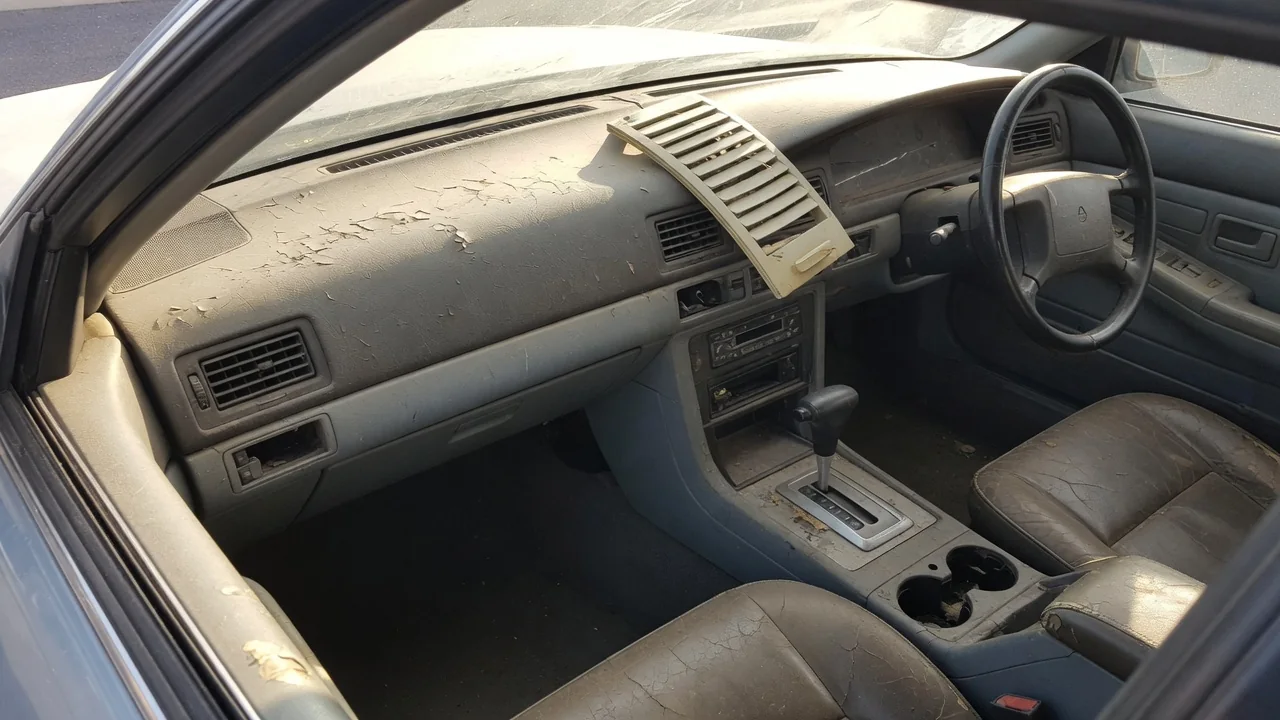
Car interior plastics rarely fail all at once. A dashboard, door panel or console trim can look fine for years, then crack when a clip is released or a cup holder is pressed. Some car interior plastics become brittle because heat, sunlight and time slowly change the polymer itself. Mechanical and chemical stress then decide where the damage appears. Understanding both sides of automotive plastic aging helps explain which repairs are realistic.
Heat and time: how interior plastics age
A parked car works like a greenhouse. Sunlight passes through the glass and interior surfaces absorb it, so the dashboard and rear shelf can become far hotter than the outside air. Heat speeds up thermo-oxidative aging, in which oxygen reacts with polymer chains. Some chains break and others form new cross-links. Shorter chains and a stiffer, more tangled structure leave the material less able to stretch and absorb energy before it cracks. Ultraviolet light adds its own damage, mainly at the surface. That is why sun-facing parts often fade, chalk or develop fine surface cracks before hidden parts do.
Most interior plastics contain additives, such as antioxidants and UV stabilizers, that slow these reactions. These additives are consumed or migrate out over time, so the protection gradually weakens. Flexible and soft-touch materials, including some PVC skins and vinyl coverings, also rely on plasticizers to stay pliable. Heat drives some of these compounds out of the material, and they can contribute to the oily haze that builds up on the inside of a windshield. As plasticizer content drops, the skin shrinks, hardens and becomes prone to splitting, especially over sharp edges, vents and seams.
Time matters even without extreme conditions. Many polymers undergo slow physical aging, in which the molecular structure settles into a denser, less flexible arrangement. Daily and seasonal temperature swings add repeated expansion and contraction. This matters most where plastic meets metal brackets or parts made of different materials. Cold weather makes the change more visible. A part that has already lost toughness becomes even less forgiving at low temperatures, so cracks often appear on a winter morning rather than on a hot afternoon.
Stress: where cracks begin
Aging lowers a material's tolerance, but stress determines where it actually breaks. Molded parts often contain residual stress from manufacturing. It concentrates near thin walls, sharp corners, screw bosses and the points where molten plastic flowed together in the mold. Assembly adds more: clips held under tension, screws tightened into plastic bosses, and panels pulled against each other to close gaps. Once the material can no longer relieve the load by deforming slightly, these locations become the starting points for cracks.
Chemicals can make stressed plastic fail sooner through a process called environmental stress cracking. Certain solvents, alcohol-based or ammonia-containing cleaners, some fragrance products, hand sanitizers and sunscreen residues can attack susceptible plastics. Amorphous types such as ABS and polycarbonate blends used in some trim are particularly vulnerable. The chemical does not need to dissolve the part. Combined with stress, it lets small crazes form and grow into cracks. This is why cracks sometimes cluster around areas that are touched or cleaned often.
Mechanical loads complete the picture. Road vibration works on clips, tabs and hinges for years, and repeated use fatigues latches, cup holders, storage lids and door pulls. Occasional overloads can break a part that would have flexed harmlessly when new. Examples include leaning on a console lid, pressing on the dashboard while cleaning, or prying trim off without the right tool. Once a crack starts, it concentrates stress at its tip and tends to spread with further loading.
Repair: what can realistically be fixed
Brittleness itself cannot be reversed. Trim dressings and conditioners can improve appearance and add some surface UV protection. They do not rebuild broken polymer chains or restore lost plasticizer in any structurally meaningful way. Repair therefore means reconnecting or reinforcing damaged areas, or replacing the part. A useful first step is to identify the material. Many plastic parts carry a molded code on the back, such as PP, ABS, PC/ABS or TPO, and that code guides the choice of adhesive or welding method.
Different plastics respond differently to repair methods. ABS and similar materials can often be bonded with suitable adhesives or solvent-based cements. Polypropylene and TPO have low surface energy, so many glues adhere poorly unless the surface is first treated with an adhesion promoter made for those plastics. Plastic welding is another option and generally works best when the filler rod matches the base material. Common general practices include cleaning and roughening surfaces before bonding, reinforcing the back of a crack with mesh or a bonded patch, and drilling a small hole at the end of a crack to slow its growth.
Replacement is often more practical for broken clips, tabs and mounting points, because these are hard to rebuild with lasting strength. On cracked dashboard skins, fillers and texture-matching kits can hide damage, while overlays and covers conceal it without repairing it. Use heat guns cautiously. Aged plastic may distort, discolor or crack further when reheated, and nearby wiring or foam can be damaged.
Practical implications and limits
For owners, the most effective step is limiting the main aging drivers rather than chasing repairs later. Parking in shade, using a windshield sunshade and ventilating the cabin can lower peak interior temperatures. Cleaning with mild products intended for automotive interiors reduces the risk of chemical attack, especially if anything new is tested on a hidden area first. When removing trim on an older vehicle or in cold weather, warm the cabin first and use plastic trim tools. These steps spread the load and help avoid snapping clips that have hardened with age.
There are also clear limits. How quickly a part ages depends on its resin, additive package, color, design, climate and use. Two vehicles of the same age can therefore behave very differently, and general mechanisms cannot predict how a specific model will age. Repaired areas rarely match original strength and may crack again nearby, because the surrounding material has aged too. Do not glue, reshape or cover airbag covers, nearby panels or other safety-related parts in ways that could affect their function. For those areas, the vehicle's service information or a qualified technician is the right reference.