Why Do Some Car Consoles Leave Space Underneath?
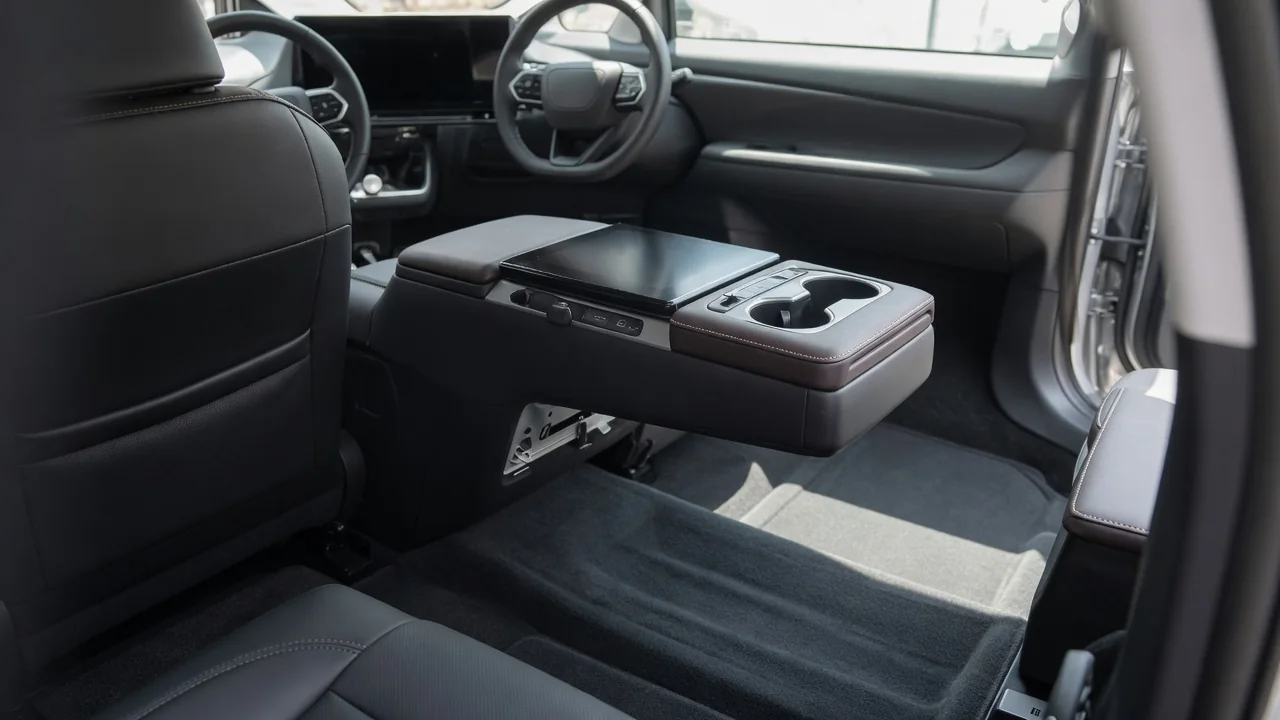
Look across the front seats of many newer vehicles and you may notice that the center console no longer sits solidly on the floor. Instead, it rises like a bridge and leaves an open space under the center console. This is not just a styling choice. The gap usually reflects changes in how drivers operate the vehicle, how designers plan storage, and how the cabin is meant to be used and kept clean.
Electronic controls
For decades, the center console was largely a cover for hardware. A mechanical gear lever needed a physical linkage or cable running down to the transmission, and a hand-operated parking brake used a lever and cable routed beneath the floor area. The console had to enclose these parts, so it naturally extended all the way to the floor. When those mechanical connections disappear, the main reason for a solid, floor-to-armrest structure weakens considerably.
Many modern vehicles use shift-by-wire systems, in which the gear selector sends an electrical signal instead of moving a cable. The selector can take the form of a compact lever, a rotary dial, push buttons, or a stalk on the steering column. Electronic parking brakes similarly replace the large hand lever with a small switch. Because these controls only need wiring, designers can raise the console into an elevated bridge that keeps switches, screens, and the armrest within easy reach while freeing the floor below.
The underlying vehicle architecture also matters. Vehicles without a large central floor tunnel, such as many electric vehicles built on flat-floor platforms, may have no driveshaft or exhaust to cover. In vehicles that still have a tunnel, the open area may be smaller or absent. Wiring, air ducts for rear passengers, and structural brackets still have to pass through or under the console, so its exact shape depends on how each vehicle is packaged.
Storage
The most obvious benefit of an open lower area is storage that is easy to reach. A handbag, small backpack, tablet case, or spare water bottles can sit on the floor-level tray without taking up a seat or crowding the passenger footwell. Because the opening is usually accessible from both the driver and front passenger sides, either occupant can grab an item without lifting an armrest lid or reaching into a deep bin.
Designers often treat this lower level as part of a layered storage plan. The upper surface may hold cupholders, a phone tray or charging pad, or a small covered compartment, while the lower tray takes bulkier items. In some vehicles, the lower area includes power outlets, USB ports, or a nonslip liner, but these features vary widely and should be confirmed in the owner's manual rather than assumed.
There are trade-offs. An open shelf has no lid, so items are visible from outside the vehicle and less protected from theft. Loose objects can also slide during hard braking or cornering. A soft bag will often stay in place, but round or heavy items can roll out, and anything that ends up in the driver's footwell could interfere with the pedals. Soft-sided organizers or bins sized for the space can reduce this movement.
Cleaning
An open space under the center console changes where dirt collects. Crumbs, dust, receipts, and grit from shoes tend to gather on the lower tray and along its edges. The advantage is that this area is usually visible and reachable, unlike the narrow gaps between a traditional console and the seats, where debris can disappear for a long time. A vacuum with a crevice tool or soft brush attachment typically reaches most of the surface.
If the lower tray has a removable rubber or fabric liner, lifting it out and cleaning it separately is often the simplest approach. For fixed surfaces, a lightly dampened microfiber cloth works better than spraying cleaner directly, especially near charging ports, switches, or visible wiring. Liquid can seep into connectors or seams, so apply the product to the cloth first. Follow the cleaning guidance in your owner's manual, because interior plastics, fabrics, and coatings differ between vehicles.
Spills are worth addressing quickly. Because the tray sits close to the floor, drinks knocked from the upper cupholders may land there and soak into liners or carpet edges. Wiping away sticky residue soon after a spill keeps it from hardening and trapping more dirt.
Practical implications and limits
In everyday use, a raised console can make the front cabin feel more open, particularly in vehicles with a flat floor. It suits people who carry a bag on most trips or who want a quick spot for things they do not need while driving. Drivers who prefer to keep valuables out of sight or everything enclosed may find a traditional closed bin more convenient and may need to rely on the glovebox, armrest compartment, or trunk instead.
The design also has limits. A bridge-style console is supported at fewer points than a solid one, so how firm it feels depends on the specific vehicle's construction. The amount of usable space underneath is set by the platform, seat range, and any components routed through the area, not by styling alone. Not every vehicle with electronic shifting has an open lower area, and an open console does not by itself mean the vehicle lacks a floor tunnel.
When evaluating a vehicle, sit in it and check what actually fits, how easily you can reach the lower tray while seated, and whether stored items might drift toward the pedals. Aftermarket organizers can add structure, but they should not obstruct vents, controls, or the movement of the seats.