Why Do Some Car Colors Fade Unevenly?
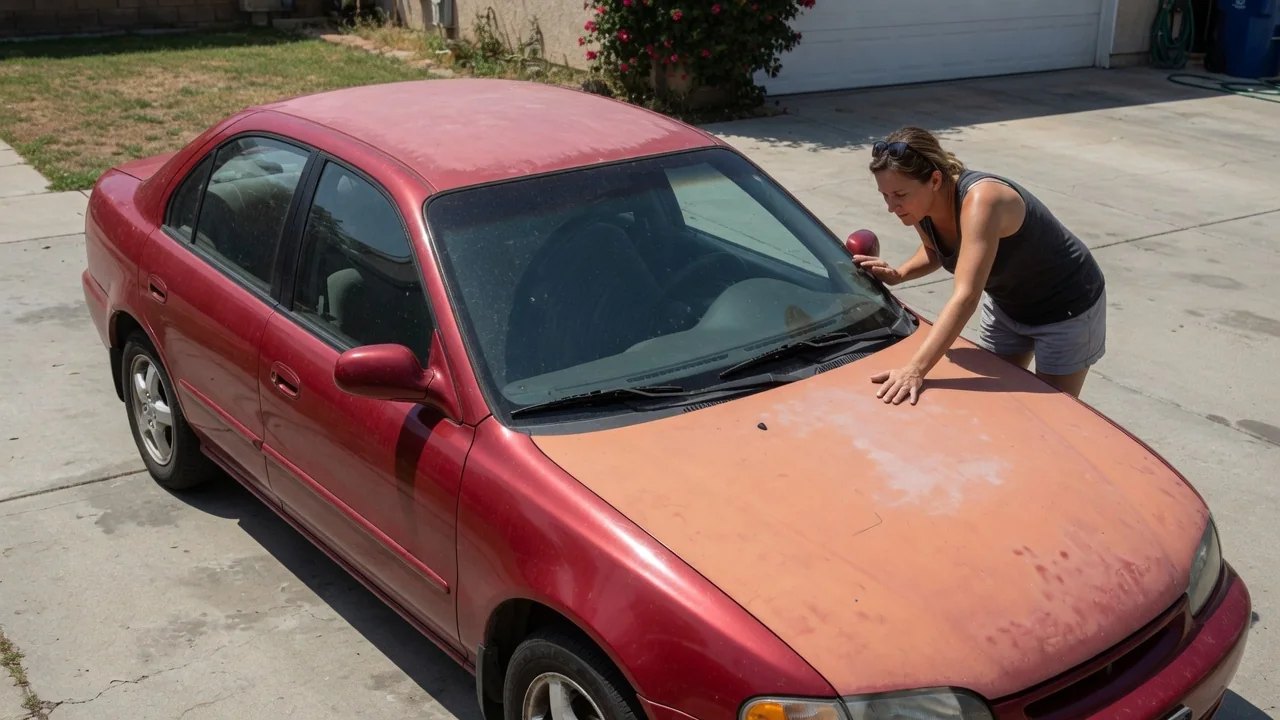
Uneven car paint fading usually shows up in a few familiar ways. The roof may look lighter than the doors, the hood may have gone dull while the bumper still looks fresh, or one side of the car may no longer match the other. The pattern is rarely random. It reflects how much sunlight, heat, and chemical contact each surface receives, what each panel is made and painted with, and how the finish has been cared for. Those factors explain why some car colors fade unevenly and what can realistically be done about it.
Exposure: How Sun, Heat, and Contaminants Reach Each Panel
Ultraviolet radiation is the main driver of paint fading. UV energy gradually breaks down the resin binders in clearcoat and paint, and it can also degrade many pigments. Horizontal surfaces such as the roof, hood, trunk lid, and the tops of the fenders face the sky most directly. Over a day, they receive more radiation than vertical panels like doors and quarter panels, which are struck at a steeper angle and spend part of the day in shade. That geometry alone explains why many cars show lighter or duller paint on top than on the sides.
Parking habits add another layer. A car that is regularly parked in the same position may expose one side to strong afternoon sun while a building shades the other side. A carport edge, a tree, or a nearby wall can shade part of the body and leave a visible boundary over time. Heat matters as well. Surfaces in direct sun get hotter, and darker colors absorb more energy than lighter ones. Repeated heating and cooling stresses the finish through expansion and contraction, and higher temperatures can speed up the chemical breakdown that UV starts.
Chemical and mechanical exposure is uneven too. Bird droppings, tree sap, industrial fallout, and acidic rain residue tend to sit on horizontal surfaces, where they can etch the clearcoat if they are not removed. Road salt, tar, and grime concentrate on lower panels and behind the wheels. Frequent automatic washes, abrasive cleaning tools, harsh chemicals, or repeated aggressive polishing can wear down the protective layer on the panels that receive the most attention. Each of these effects thins or weakens the finish locally, which leaves the color beneath more vulnerable in some areas than in others.
Material Differences in Paint, Pigments, and Panels
The type of paint system shapes how fading appears. Most modern vehicles use a basecoat that carries the color, topped by a clearcoat that provides gloss and UV protection. Clearcoats are typically formulated with UV absorbers and stabilizers, and these protective ingredients are gradually used up with exposure. Older vehicles, and some repainted or commercial vehicles, use single-stage paint, where pigment and gloss are combined in one exposed layer. Single-stage finishes commonly oxidize into a chalky, dull surface that makes the color look lighter. In basecoat and clearcoat systems, the more typical progression is that the clear hazes, cracks, or peels first. Once the base is exposed, it can then deteriorate quickly.
Pigments differ in lightfastness, meaning their resistance to light-induced change. Some organic pigments used to create vivid, saturated shades have traditionally been regarded as more vulnerable than many inorganic pigments, which is one reason faded red paint is such a familiar sight. Exact durability depends on the specific formulation, and formulations vary by manufacturer and era, so a color name alone is not a reliable predictor. Metallic and pearl finishes add another variable. Their appearance depends on how light reflects from flakes within the coating, so degradation of the surrounding layers can change how they look from different angles.
Not every panel is made of the same material or painted in the same way. Bumper covers, mirror housings, and some trim pieces are plastic and may be painted separately from the metal body. They may use flexible additives, different film thicknesses, or be painted at a different facility. These parts can match closely when new and still age at different rates. Repaired or replaced panels introduce a further difference, because a refinish may use different products, clearcoat thickness, or curing conditions than the factory finish. Even on an untouched car, factory film thickness can vary across the body, so some areas start with more protective clear than others.
Correction Limits: What Polishing and Refinishing Can Fix
What can be corrected depends on where the damage sits. Surface oxidation on single-stage paint can often be improved by polishing, and so can light haze, fine scratches, or weathering on the top of a clearcoat. Polishing works by removing the degraded surface material to reveal intact material beneath it. Results vary with the condition of the finish and the skill applied, and improvement is not guaranteed.
Polishing has firm limits. Every correction removes some material, and factory clearcoat is thin and cannot be replenished. Repeated or aggressive polishing reduces the remaining protective layer and can bring forward the point at which the clear fails. For this reason, professionals often measure film thickness before heavy correction. If the color change has occurred in the basecoat beneath an intact clear, polishing the surface will not restore the original shade, because the faded material is below the layer being worked. Once the clearcoat is cracking, peeling, or turning milky or whitish, no polish, wax, or coating will reverse the damage. Refinishing becomes the realistic remedy.
Refinishing has its own limitations. When one panel must match faded neighbors, refinishers usually tint the paint to match the vehicle's current appearance rather than relying only on the original paint code. They often blend the new color into adjacent panels to soften the transition. Even with careful work, metallic and pearl finishes can look slightly different under certain lighting or viewing angles. A freshly painted panel and older original panels will also continue to age at different rates. A fully uniform appearance may require repainting a larger area than the visibly damaged section.
Practical Implications and Limits
For everyday ownership, the factors you can influence are exposure and care. Covered or garage parking reduces UV and heat load. Prompt, gentle washing keeps contaminants from sitting on the finish. A protective layer such as wax, sealant, a ceramic-type coating, or paint protection film on the most exposed surfaces can slow deterioration. None of these blocks UV completely, and their durability depends on the product, application, and conditions. Treat them as ways to slow the process rather than prevent it, and follow any care guidance in your owner's manual.
When you evaluate a used car, uneven fading is useful information rather than just a cosmetic flaw. A lighter roof and hood are consistent with long-term outdoor storage. A single panel that looks noticeably different from its neighbors may point to a repaint, a replaced part, or simply a different material. Uneven fading does not prove collision history on its own, but it justifies a closer look at panel edges, gaps, and door jambs, or an inspection by a qualified professional.
Set expectations according to the type of damage. Light surface dullness is often a candidate for cleaning and correction. Failing clearcoat means paintwork, and the scope of that work depends on how far the failure has spread. Paint warranty coverage, where it exists, varies by manufacturer and vehicle, so check your own documentation rather than assuming coverage. Because general mechanisms cannot reveal the condition of a specific finish, an in-person assessment by a refinisher or detailer is the reliable way to decide between protection, correction, and repainting.