Why Do Rubber Wiper Blades Harden? Sun, Heat, Streaks and Replacement
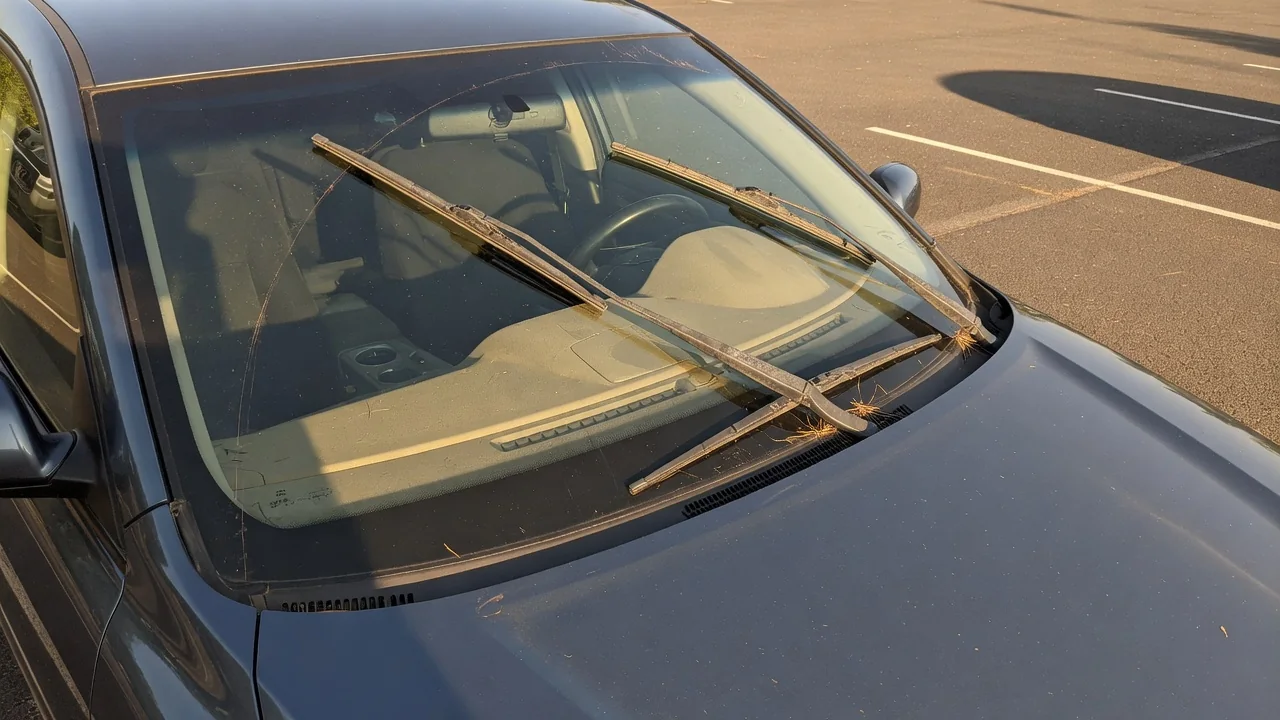
Wiper blades rarely fail all at once. The rubber edge slowly loses its softness until it no longer wipes cleanly, and most drivers notice only when streaks appear in the rain. Understanding why rubber wiper blades harden explains why a blade can look intact yet perform poorly. This article covers how sunlight, heat, cold and ozone drive wiper rubber aging, how a stiffened edge produces streaks, and what to check when deciding whether a replacement is due.
Sun and temperature: what ages wiper rubber
A wiper blade spends most of its life parked at the base of the windshield, fully exposed to the sky. Ultraviolet radiation in sunlight carries enough energy to break chemical bonds in the long polymer chains that give rubber its elasticity. As those chains are cut and the surface reacts with oxygen, the outer layer of the rubber becomes harder, more brittle and less able to stretch and recover. The damage starts at the surface, which is exactly where the wiping edge does its work. Ozone in the air adds a related form of attack. Many rubber compounds are vulnerable to ozone, which can create fine cracks, especially where the rubber is held under strain, such as along the bent edge of a parked blade.
Heat speeds up these chemical reactions. A windshield in direct summer sun can become much hotter than the surrounding air, and the blade resting against it shares that heat for hours. Elevated temperature accelerates oxidation and can drive out the oils and plasticizers blended into the rubber to keep it supple. Once those softening ingredients migrate to the surface or evaporate, they do not return, so this kind of hardening is permanent. Repeated heating and cooling cycles add mechanical stress on top of the chemical change.
Cold works differently. Low temperatures make rubber temporarily stiffer, so a blade may chatter or wipe poorly on a frosty morning and then behave better once the glass warms up. That reversible stiffness is not the same as aging, but winter can still cause lasting damage: blades frozen to the glass can tear when the wipers are switched on, and sweeping across ice, road salt and grit wears and nicks the edge. Rubber compounds differ in how well they resist these effects, which is one reason different blade types age at different rates.
Streaks: how a hardened edge shows up on the glass
A wiper edge is designed to flex and flip as the blade changes direction, so a thin lip trails across the glass and pushes water away in a continuous sweep. Hardened rubber cannot flip smoothly or follow the curve of the windshield closely. Instead of a clean pass, it leaves gaps where the edge lifts slightly, producing thin lines of water, hazy bands or a smeared film that scatters light from oncoming headlights at night.
Stiffness also changes how the blade moves. A rubber edge that no longer bends easily tends to drag and then release, which causes chattering, skipping or a juddering sound. Aged rubber often takes a set, meaning it stays bent in the direction it was parked, so it may wipe acceptably on one stroke and poorly on the return. Surface cracks and a rounded or chipped edge leave their own pattern: a consistent streak in the same place on every pass usually points to a damaged section of the edge rather than dirty glass.
Streaks are not always caused by hardened rubber. Wax, road film, tree sap or residue from some cleaning products can leave a smear even with fresh blades, and a bent wiper arm or weak arm spring can stop an otherwise healthy blade from pressing evenly on the glass. Cleaning the windshield and the blade edge first helps separate a glass problem from a rubber problem.
Replacement: when hardened blades should go
Because hardening is a chemical change inside the material, cleaning cannot reverse it. The practical question is whether the blade still wipes adequately. With the wiper lifted away from the glass, run a fingertip along the edge: it should feel flexible and smooth, not stiff, cracked or brittle. Look for splits, missing pieces, a rounded profile or rubber that has partially separated from its frame. If streaks or chatter remain after the glass and blade have been cleaned, the rubber has likely reached the end of its useful life.
When replacing, the vehicle's owner's manual or a parts catalog lookup is the reliable source for the correct blade lengths and the attachment type used by the wiper arms, since these vary between vehicles and sometimes between the driver and passenger sides. Some designs allow only the rubber refill to be swapped, while others are sold as complete assemblies. Rear wipers age too and are easy to overlook. Replacing both front blades together keeps wiping performance even across the windshield, because blades that have seen the same exposure usually harden at a similar pace.
No single replacement interval fits every car. Blade compound, climate, parking habits and how often the wipers are used all change how quickly the rubber ages, so condition and wiping quality are better guides than the calendar alone. Checking the blades at the change of seasons, before the wettest or coldest months arrive, is a simple way to catch hardening before it becomes a visibility problem.
Practical implications and limits
Since sunlight and heat are the main drivers of wiper rubber aging, reducing exposure can slow it. Parking in a garage or in shade, or using an exterior windshield cover that shields the blades, limits the energy reaching the rubber. Keeping the glass clean means the edge is not ground against dust and grit, and using washer fluid instead of wiping dry glass reduces friction. In winter, freeing frozen blades by defrosting the glass rather than pulling them loose avoids tearing the edge. These habits extend service life; they do not stop aging altogether.
Products sold to clean or condition wiper rubber can remove grime and may briefly improve wiping, but they cannot rebuild polymer chains that have already been broken or replace softening agents that have been lost. Any improvement should be treated as temporary, with the blade judged by how it performs afterward. A blade that seems fine in mild, dry weather may reveal its condition only in heavy rain or at night, so wiping quality is worth checking in those conditions rather than assumed.
The mechanisms described here apply broadly to rubber blades, but the visible result depends on the specific vehicle. Windshield curvature, wiper arm geometry, spring pressure and the parked position of the blades all influence how quickly a hardened edge starts to streak. For details such as blade size, recommended blade types or service procedures for a particular car, the manufacturer's owner's manual remains the authoritative reference.