Why Do Muddy Roads Clog Wheel-Well Areas?
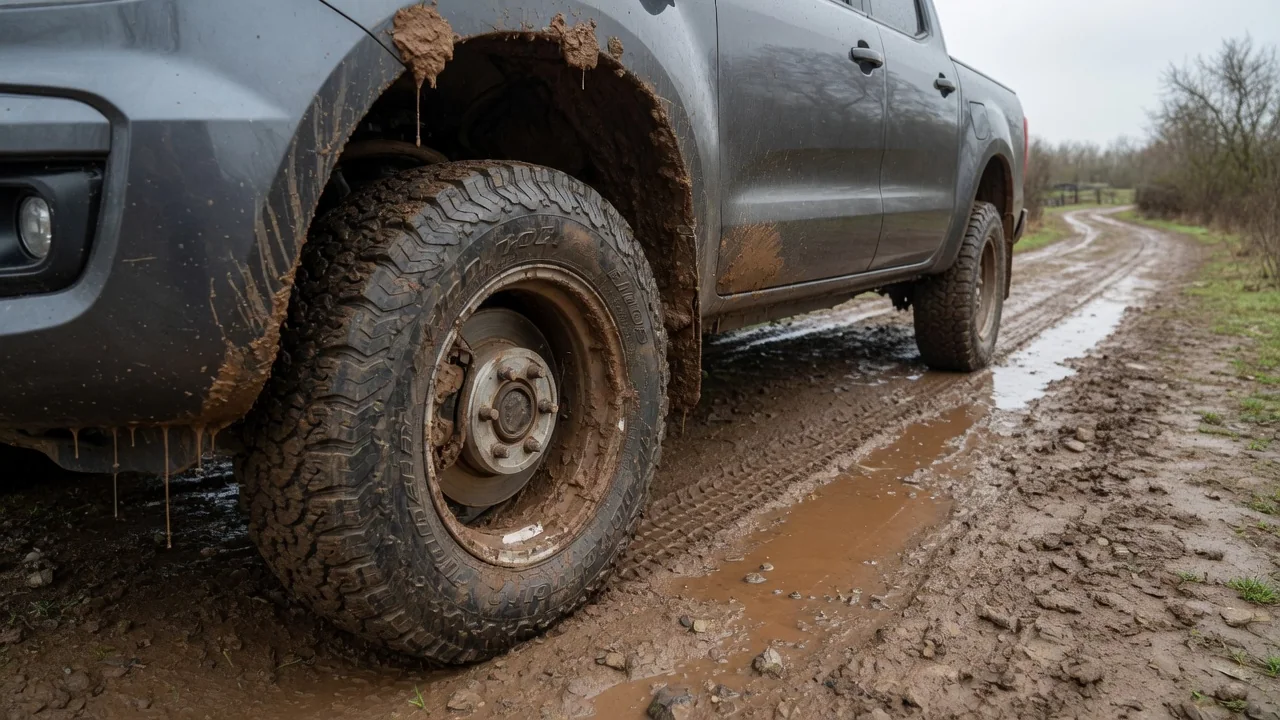
Driving on a wet dirt or gravel road can leave a thick crust of mud packed inside the wheel wells, sometimes heavy enough to rub against the tire or hide important components. Muddy roads clog wheel well areas through a chain of simple physics. A rotating tire throws wet soil upward, and the enclosed space above the wheel sheds sticky mud poorly. The deposits then harden if they are left alone. Knowing how each step works makes mud wheel well buildup easier to prevent and remove.
Tire Spray: How Mud Gets Thrown Into the Wheel Well
Every time a tire rolls through mud, the tread grooves fill with wet soil. As that section of the tread lifts off the ground and rotates upward, it carries the soil with it. The soil stays on until its own momentum overcomes how strongly it clings to the rubber. At that point it flies off roughly in the direction the tread is moving, which sends much of it up and back into the wheel well. The faster the wheel turns, the more energy each clump carries and the harder it strikes the liner, the inner fender, and the suspension parts above and behind the tire. Tires with deep, widely spaced tread blocks tend to pick up and release more mud than tires with tighter, shallower patterns. Their grooves simply hold more material between rotations.
The type of mud matters as much as the amount. Soil with a high clay content becomes sticky and cohesive when wet. It adheres to plastic, painted metal, and rubber, and it bonds readily to itself. The first thin coat roughens the surface, which gives later impacts something to grab onto, and the layer grows with every mile of muddy road. Sandier mud is looser and tends to wash off more easily, although it can still pack into corners. On the front axle, steering changes the angle at which the tire throws material. Turns and maneuvering therefore spread deposits across areas the tire would not reach when driving straight.
Drainage: Why Mud Stays Instead of Falling Out
A wheel well is a partly enclosed cavity. It is designed mainly to keep spray off the body and engine bay, not to release heavy, semi-solid deposits. Plain water runs off its curved surfaces by gravity, but thick mud behaves differently: it holds its shape and clings to vertical and even overhead surfaces. Mud collects on several kinds of shelves that do not shake loose easily: • brackets, liner seams, and fastener heads; • the tops of control arms and spring seats; • the gap between the liner and the body; The shape and material of the liner vary between vehicles, so some designs shed debris more readily than others.
Once mud is in place, its water content starts to drop as moisture drains away and evaporates. The remaining soil becomes stiffer and more tightly bonded, turning a soft coating into a hard cake. Some bodies and liners have openings meant to let water escape, and packed mud can cover them and trap moisture against nearby surfaces. Damp soil held against metal for long periods can contribute to corrosion, particularly where road salt or de-icing chemicals are mixed in. In freezing weather, wet mud and slush can also freeze into rigid lumps that cling even more stubbornly until they thaw.
Cleaning: Removing Wheel-Well Buildup Without Damage
Mud is easiest to remove while it is still wet. Rinsing soon after a muddy drive usually clears most of the soft material. A garden hose works, or a pressure washer held at a moderate distance. Work from the top of the wheel well downward so loosened mud falls away instead of landing on cleaned areas. Turning the front wheels fully to each side opens up more of the space behind them. Hardened deposits respond better to soaking first. Giving water time to penetrate dried clay softens it so it can be rinsed or brushed off rather than chipped away.
High-pressure water should be used with care. A narrow, powerful stream can damage several parts or force water where it should not go: • wiring connectors and wheel speed sensor cables; • brake hoses; • rubber suspension and steering boots; • bearing seals; For stubborn spots, a long-handled brush or a plastic scraper is gentler. It is less likely than metal tools to tear liners or scratch protective undercoating. Removing the wheel gives far better access for a thorough job. In that case the vehicle must be lifted and supported correctly, following the procedure in its owner's manual and using proper jack stands.
After cleaning, a quick inspection is worthwhile. Check for problems that the mud may have hidden: • liner fasteners that have loosened or gone missing; • splash shields pushed out of position; • stones or sticks lodged near the brakes; • torn boots; Wet brakes can feel less responsive for a short time. A few gentle applications at low speed help dry them before normal driving.
Practical Implications and Limits
Heavy buildup is more than a cosmetic problem. Mud packed inside the wheel rim itself can upset the wheel's balance and cause a vibration that often disappears once the wheel is cleaned. Thick deposits in the well reduce the space between tire and liner. That can cause rubbing during tight turns or when the suspension compresses over bumps. Large chunks can also break free later at highway speed and fall onto the road. Built-up soil adds weight and can hide damage, leaks, or worn parts that would otherwise show up during routine checks.
How quickly a particular vehicle collects mud depends on factors that differ from one car or truck to the next: • tread pattern; • clearance between tire and liner; • liner design; • ride height; • speed; • the soil found in the local area; That is why there is no single rule for how often to clean. Mud flaps reduce spray onto the body and onto following vehicles, but they do not keep material from entering the wheel well. Larger or more aggressive aftermarket tires can reduce clearance and increase the amount of mud thrown. Owners who make that change may need to clean more often. For drivers who regularly use unpaved roads, rinsing the wheel wells after each muddy trip limits corrosion and clearance problems better than an occasional deep clean. The owner's manual remains the best source for any vehicle-specific cleaning precautions.