Why Do Hybrids Use Regeneration Less on a Full Battery?
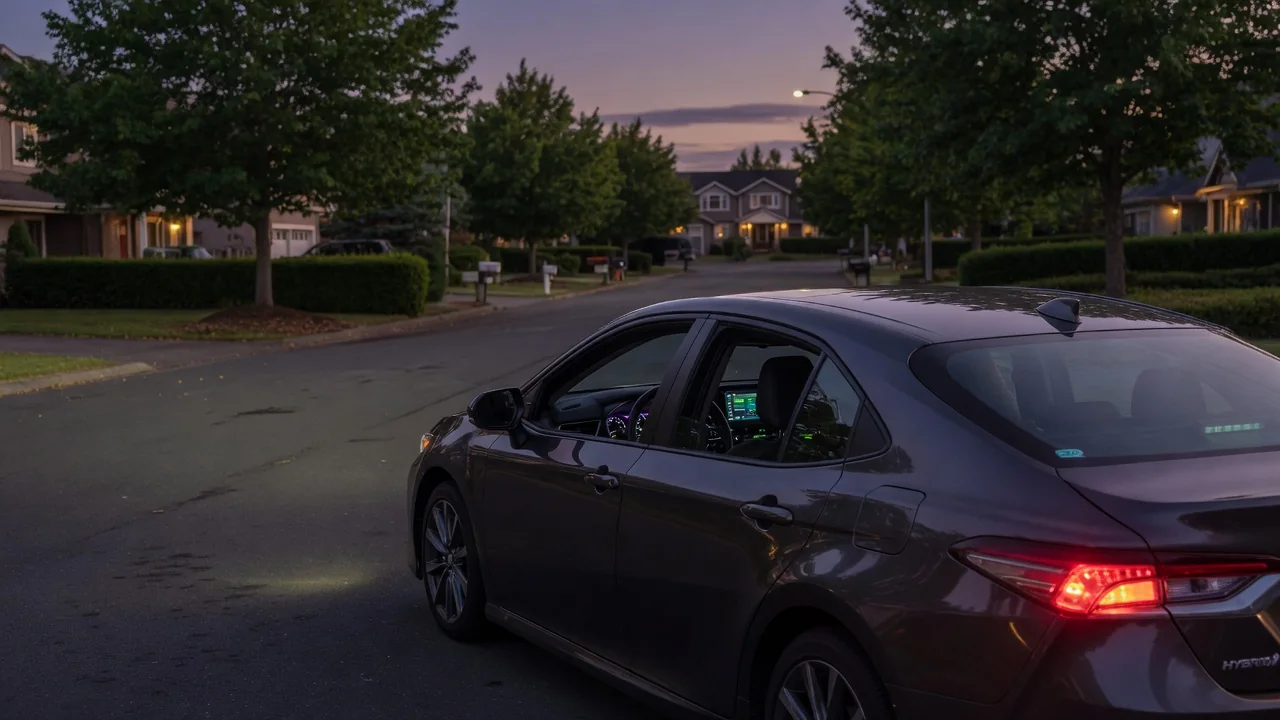
Regenerative braking lets a hybrid recover energy that a conventional car would turn into brake heat. The amount it recovers is not fixed. When the battery is near the top of its allowed charge range, the control system scales regeneration back on purpose. The reason is that energy can only be recovered if the battery can safely accept it. Here is how charge acceptance, the friction brakes and the driver's experience fit together when hybrid regen meets a full battery.
Energy acceptance
During regeneration, the electric motor works as a generator. It converts the vehicle's motion into electrical current, and the inverter sends that current into the high-voltage battery. This only works while the battery can take the charge. A battery's ability to absorb power is often called charge acceptance, and it is not constant. It falls as the state of charge rises, because cell voltage climbs toward the upper limit the chemistry can tolerate. Pushing a high current into cells that are already near that limit raises their voltage further and generates heat. Depending on the chemistry, it can also speed up wear or create conditions that battery designers specifically work to avoid.
The battery management system monitors cell voltages, temperatures and the estimated state of charge. From these, it calculates how much charging power the pack can accept at any moment. The hybrid control unit treats that figure as a ceiling for regeneration. As the battery approaches the top of its permitted window, the allowed charging power tapers and regenerative braking is reduced to match. Once the limit is reached, regeneration may stop almost entirely until some stored energy has been used.
It also helps to know what "full" means in a hybrid. To protect service life, most hybrids use only part of the battery's total capacity rather than charging it to the absolute maximum. A battery gauge that reads full usually shows the top of that usable band, not the full chemical capacity of the cells. The exact window, and how sharply acceptance tapers, depend on the battery type and the manufacturer's calibration. Temperature matters too: a cold or very hot pack may accept less charge even when it is not full.
Friction brakes
When regeneration is limited, the car still has to slow down as much as the driver asks. Kinetic energy that cannot go into the battery has to go somewhere else, and the conventional hydraulic brakes are the main route. Pads clamp the rotors, or shoes press against drums, and the energy becomes heat, exactly as in a car without a hybrid system. This is why hybrids keep fully capable friction brakes. Regeneration supplements them rather than replacing them.
Many hybrids use blended braking. A brake control unit reads the pedal input as a request for a total amount of deceleration. It then splits that request between regenerative and friction braking based on what the electric system can absorb at that moment. With a partly charged battery, much of a gentle stop can come from regeneration. The friction brakes add force when demand is higher, and they often take over at very low speeds, where regeneration becomes less effective. With a full battery, the split shifts toward the friction side. The way this is built varies between vehicles. Some use fully electronic brake control, others a pedal mechanically linked to the hydraulics with regeneration layered on top, and other arrangements exist.
Some hybrid designs have other ways to get rid of energy when the battery cannot take more. One is using the electric machines to spin the engine without fuel, so engine friction and pumping losses absorb part of the load. Another is a lower gear or a dedicated driving mode. Whether a particular vehicle does any of this, and under what conditions, depends on its design. Check the owner's manual rather than assuming.
Driver feel
The control system aims to deliver the same deceleration for the same pedal input. Because of that, many drivers do not notice the shift from regenerative to friction braking during normal stops. Blended systems are calibrated so the pedal feels consistent however the work is divided. Still, the change is not always invisible. Some drivers notice small differences in pedal response, brake noise or the smoothness of a stop as the balance between the two systems moves.
A more noticeable difference often appears when the driver lifts off the accelerator. In many hybrids, releasing the pedal produces mild deceleration that comes partly from regeneration and imitates the engine braking of a conventional car. When charge acceptance is limited, that lift-off deceleration may weaken or be produced another way. The car may seem to coast more freely, or the engine may run or spin audibly where it would normally be quiet. The instruments can show the change as well: a power or energy-flow display may show little or no charging during deceleration once the battery is near full.
None of these effects is a fault on its own. They are the visible result of the control system respecting battery limits. A warning light, a sudden change in brake pedal travel, or unusual braking behavior that continues at any charge level is a different matter and should be inspected.
Practical implications and limits
The most practical consequence shows up on long descents. A hybrid that starts a long downhill run with the battery near the top of its window has little room to store energy. More of the braking on that descent therefore has to come from the friction brakes or other ways of dissipating energy. Using the lower gear, engine-braking position or brake mode that the owner's manual recommends for grades helps limit brake heat, just as it does in a conventional vehicle.
Efficiency suffers in the same way. Energy that turns into brake heat cannot later help move the car, so a full battery at the start of a deceleration caps how much can be recovered. In a conventional hybrid, the driver usually has little direct control over state of charge, because the control system manages it automatically. Plug-in hybrids may offer charge-hold or similar modes. In those vehicles, a battery fully charged from the plug can mean reduced regeneration during the first part of a drive. Whether such modes exist, and how they behave, varies by vehicle.
Only some of this can be generalized. Each manufacturer sets its own charge window, taper behavior, blending strategy and alternative ways of shedding energy. These can also change with temperature, battery age and software calibration. The general principle holds across designs: regeneration is limited by what the battery can safely accept, and the friction brakes are always there to cover the difference. For the exact behavior of a specific car, the owner's manual and service information are the authoritative references.