Why Do Hybrids Sometimes Idle Their Engine?
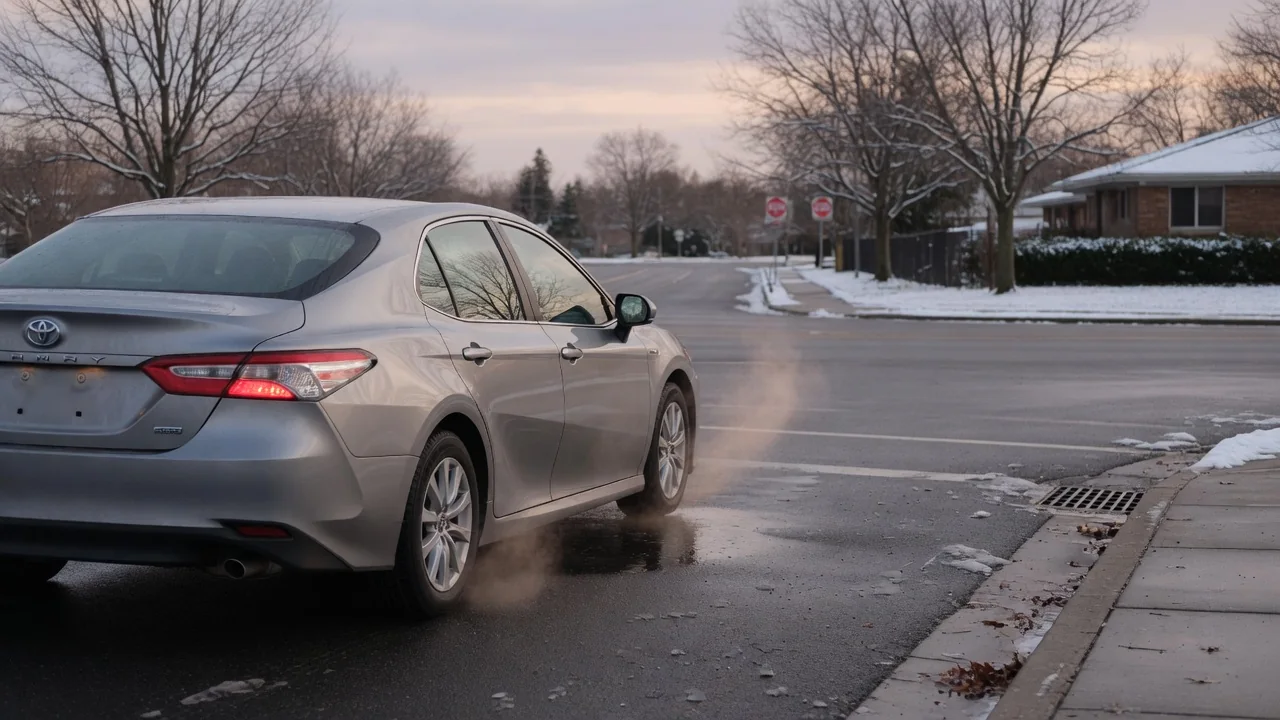
A hybrid can surprise its owner by running the gasoline engine while the car sits still at a light or in a driveway. So why do hybrids sometimes idle their engine? Usually it is deliberate. The hybrid control system decides when the engine runs, and three of the most common hybrid engine idling reasons are warmup, battery charge, and cabin climate demand. Knowing how each works helps separate normal operation from a possible fault.
Warmup: Getting the Engine and Exhaust Up to Temperature
After a cold start, the control logic's most pressing job is usually emissions. The catalytic converter only cleans exhaust efficiently once it reaches its operating temperature, and until then tailpipe emissions are much higher. To heat the catalyst quickly, many hybrids keep the engine running for a period after startup. They often use an elevated idle, with spark timing and fueling adjusted to send more heat into the exhaust. This can happen even when the car is parked and the driver has not touched the accelerator. That is why a cold hybrid may run its engine immediately and then shut it off a few minutes later.
Engine temperature matters too. Control software typically monitors coolant temperature, and it may use other signals such as estimated oil temperature, before it allows the engine to stop freely. A cold engine has higher internal friction and less stable combustion, and its oil has not yet reached normal viscosity. Letting it reach a minimum temperature protects both durability and efficiency. The exact thresholds and timing vary by manufacturer and model, but the general pattern is consistent: the colder the starting conditions, the longer the engine tends to run before electric-only operation becomes available.
This is also why short trips in cold weather produce more engine running than the same trip on a warm day. If the drive ends before warmup is complete, the next start may repeat much of the same cycle.
Charge: Keeping the Hybrid Battery in Its Working Range
A hybrid's high-voltage battery is not normally used from completely full to completely empty. The control system keeps its state of charge inside a managed band. This helps preserve battery life and leaves room both to deliver power and to absorb energy from regenerative braking. When the charge drops toward the lower edge of that band, the system starts the engine and uses it to drive a generator or motor-generator that recharges the battery. In many hybrid designs this can happen while the vehicle is completely stopped, so the engine runs even though nothing appears to need it.
Several everyday situations can pull the charge down: long stretches of slow traffic, extended electric-only creeping, repeated hard acceleration, or heavy electrical loads while parked with the system on. Battery temperature also plays a role. A very cold or very hot battery may be limited in how much power it can safely deliver or accept, and the control logic may lean more on the engine until conditions improve. These limits are set by the manufacturer's battery management strategy, and the driver cannot see them directly.
In many hybrids, the conventional 12-volt system is supplied from the high-voltage battery through a DC-DC converter rather than from a belt-driven alternator. Accessory power therefore ultimately comes out of the same energy store, and sustained accessory demand can contribute to the engine starting for charging.
Cabin Climate: Heat, Defrost, and Air Conditioning
Cabin heating is one of the most common reasons a hybrid engine keeps running in cold weather. Many hybrids heat the cabin the same way a conventional car does: hot engine coolant flows through a heater core, and a fan blows air across it. If the driver asks for heat and the coolant is not warm enough, the control system may run the engine specifically to produce that heat. This can happen even if the battery is well charged and the car is not moving. Defrost and defog settings can have a similar effect, because clear glass is a safety priority and those modes often demand strong heat.
Some hybrids add electric heating elements or a heat pump to reduce reliance on engine heat. Whether a given vehicle has them, and how much of the heating load they cover, depends on the specific design. Where they exist, they draw electrical energy from the battery, which can in turn bring the engine on for charging sooner.
Air conditioning works differently in many hybrids. An electrically driven compressor allows cooling to continue with the engine off, unlike cars whose compressor is belt-driven. However, cooling still consumes battery energy. On a hot day with the system left in its ready state, the A/C load can drain the battery until the engine starts to recharge it. In that way the climate system can trigger idling indirectly even when it does not need engine power directly.
Practical Implications and Limits
For most owners, the main takeaway is that the engine running at a standstill is usually a normal control decision rather than a malfunction. It does have real costs, though. Cold-weather driving, short trips, and heavy use of cabin heat tend to reduce a hybrid's fuel economy noticeably, because running the engine without moving the car adds fuel use without adding distance. Combining errands into one longer drive, using seat heaters where fitted, or choosing a less aggressive climate setting can reduce how often heat demand keeps the engine on. How much these steps help depends on the vehicle and the conditions.
Driver controls have limits. Buttons or modes for electric driving or economy usually work only within the conditions the control system allows. If the battery is low, the engine is cold, or strong heat or defrost is requested, the system may override or decline the request. The owner's manual is the right place to find which conditions apply to a particular vehicle, because thresholds and available modes are not standardized across manufacturers.
Idling is worth investigating when the pattern does not fit any of these explanations. One example is an engine that rarely or never shuts off after a full warmup in mild weather with the climate system off. Another is idling that appears together with warning lights or messages. In those cases a diagnostic check is more useful than guesswork. Finally, the engine can start on its own whenever the system is in its ready state, so a hybrid should not be left on in a closed garage or other enclosed space. A quiet engine at the moment of parking does not mean it will stay off.