Why Do Hybrids Have Different Brake Pedal Feel?
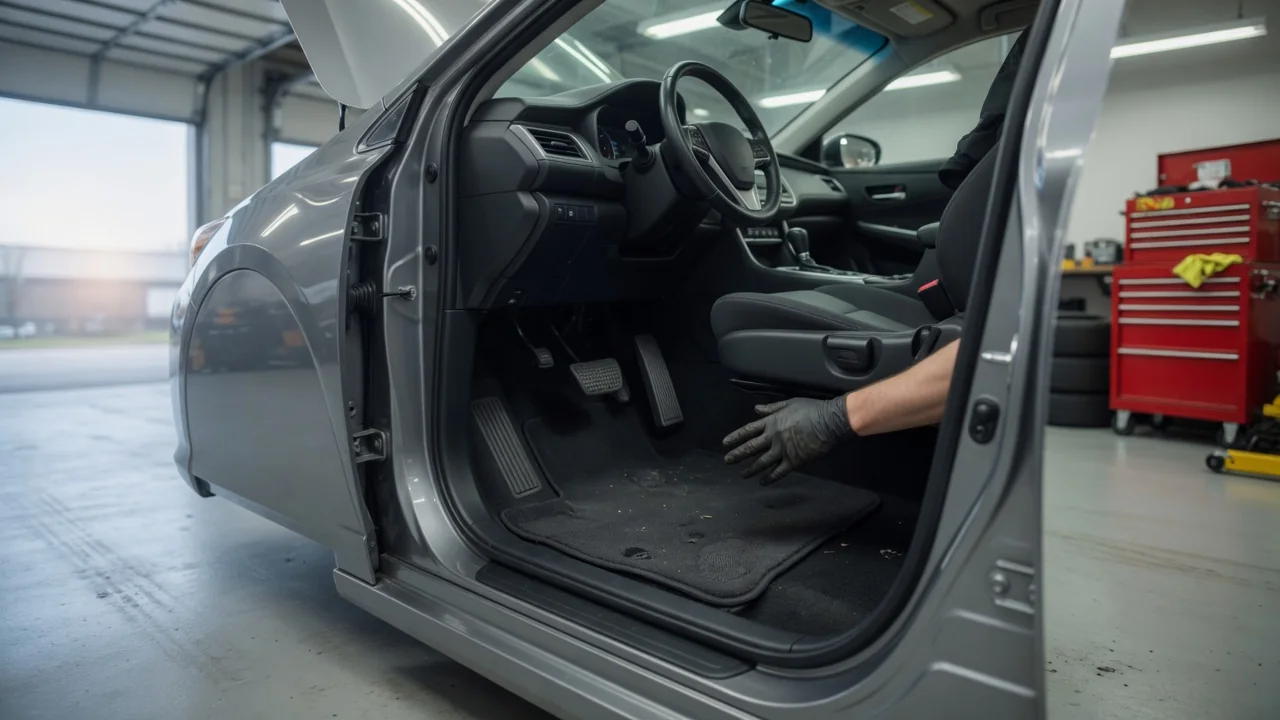
If you have driven a hybrid after years in a conventional car, the brake pedal may feel lighter, less linear, or slightly different at the very end of a stop. In most cases this is designed behavior, not a defect. The reason hybrids have a different brake pedal feel comes down to three things: how the car blends regenerative and friction braking, how the battery's condition limits energy recovery, and how the brake system is maintained.
Blended braking: sharing the work between motor and friction brakes
In a conventional car, pressing the pedal pushes fluid from the master cylinder to the calipers, so pedal force and travel relate fairly directly to braking force. A hybrid adds a second way to slow down. The electric motor-generator can resist wheel rotation and convert kinetic energy into electricity for the battery. This is regenerative braking. Because both regeneration and the friction brakes can slow the car, a controller has to decide how much each one contributes at every moment. That coordination is called blended braking, and it is the main source of the distinctive hybrid regen brake feel.
Many hybrids use an electronically controlled or partially decoupled brake system. Sensors measure pedal travel and hydraulic pressure. The control unit interprets them as a deceleration request, then splits that request between regeneration and hydraulic pressure at the wheels. Because the pedal is not always directly connected to all of the braking force, these systems typically use a stroke simulator. This is a spring or hydraulic element that recreates resistance under the driver's foot. The simulator's tuning is an engineering choice, so its feel can differ from a traditional hydraulic pedal. Other hybrids keep a more conventional hydraulic layout and modulate regeneration around it. The architecture varies by manufacturer and model.
Drivers most often notice the handover between the two systems. Regeneration becomes less effective as the motor slows, so near the end of a stop the friction brakes take over a larger share. If the transition is not perfectly matched, you may feel a small change in deceleration or find yourself adjusting pedal pressure. When anti-lock braking or stability control intervenes, the system generally reduces regeneration and relies on the friction brakes, which can control each wheel individually.
Battery state: why regeneration is not always available
Regenerative braking only works when the battery can accept the energy. If the state of charge is already high, the control system limits regeneration to protect the battery and shifts more of the braking to the friction brakes. Temperature matters too. A cold battery generally accepts charge more slowly, and a very hot one may also be restricted. Even at moderate charge, there is a limit on how quickly energy can be absorbed. Firm braking from higher speed can therefore exceed what regeneration alone can handle.
The controller is designed to make up the difference with hydraulic braking, so that deceleration for a given pedal input stays as consistent as possible. That compensation is not always invisible. The pedal may feel slightly different, and the brakes may make more noise as the friction components do more work. The deceleration you get when lifting off the accelerator can also change if the system reduces coasting regeneration. On long descents, the battery can fill up, regeneration tapers off, and the friction brakes or engine braking carry more of the load. Some hybrids offer a selectable mode for added engine braking on grades. The owner's manual describes what a particular vehicle provides.
Service: what affects pedal feel over time
Because regeneration handles much of routine slowing, hybrid friction brakes are often used less than in a comparable conventional car. Pads may last longer, but light use has its own drawbacks. Rotors can develop surface corrosion, and caliper slides or pistons may not move as freely, particularly in wet or road-salt climates. These conditions can cause pulsation, grabbing, or noise that is easily mistaken for a control-logic issue. Brake fluid still absorbs moisture over time and should be replaced on the manufacturer's schedule.
Electronically controlled brake systems can also change how service is performed. Some systems build hydraulic pressure on their own, for example when a door opens or the vehicle is switched on. For that reason, manufacturers often require a specific procedure to disable the system before pad or caliper work. Bleeding the brakes may require a scan tool to operate pumps and valves, and sensors may need recalibration after certain components are replaced. Skipping these steps can leave air in the system, trigger warning messages, or change how the pedal feels. The vehicle's service manual is the authority on these procedures.
If a brake warning light or a message about limited regeneration appears, the stored fault codes usually reveal more than pedal feel alone. A scan with suitable diagnostic equipment is a more reliable starting point than guessing at the cause.
Practical implications and limits
In everyday driving, gradual and early braking tends to keep more of the stopping within the range that regeneration can handle. This recovers energy instead of turning it into heat at the brakes. Abrupt or late braking relies more heavily on the friction brakes. None of this means drivers should change how they brake in an emergency. The system is designed to deliver full braking whenever the pedal is pressed hard, regardless of how the work is divided.
It also helps to separate expected variation from warning signs. Small differences in feel between a cold morning and a warm afternoon, or between a full and a depleted battery, are consistent with normal blended braking. Some symptoms are not explained by regeneration and call for prompt inspection: a pedal that sinks toward the floor, noticeably longer stopping distances, pulling to one side, grinding, persistent vibration, or illuminated brake warnings.
Finally, this explanation covers general mechanisms. How smoothly a specific hybrid blends its brakes, how much regeneration it uses, and how its pedal is tuned are vehicle-specific decisions. Two hybrids can feel quite different for reasons that have nothing to do with a fault. For details about a particular car, the owner's manual and the manufacturer's service information are the appropriate references.