Why Do Engine Mounts Use Rubber? Vibration, Load Support and Wear Explained
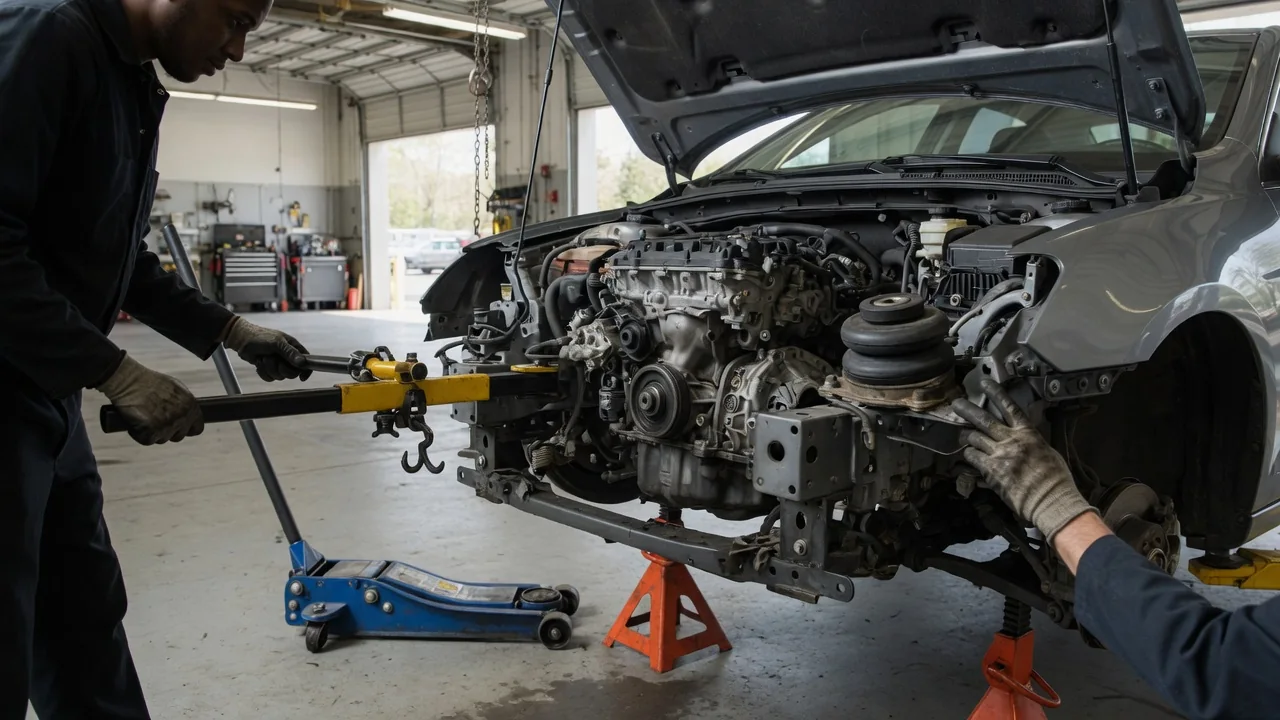
Engine mounts tie the engine and transmission to the vehicle's body or subframe. Most of them rely on rubber because it can hold a heavy powertrain in place while keeping much of its vibration out of the cabin. The purpose of rubber engine mounts comes down to three jobs: isolating vibration, supporting changing loads, and doing both for years before wear catches up with them.
How Rubber Isolates Engine Vibration
An internal combustion engine is never perfectly smooth. Combustion pulses, the back-and-forth motion of pistons and connecting rods, and rotating parts that are not perfectly balanced all create forces that shake the engine many times per second. If the engine were bolted rigidly to a steel structure, those forces would pass almost directly into the body, where floor panels, the steering column, and seat frames could carry them to the driver as buzz, hum, and harshness. Rubber interrupts that path. Because it is elastic, it deflects slightly under each pulse instead of transmitting it unchanged. Because it also has internal damping, it turns part of the motion energy into a small amount of heat rather than passing all of it along.
How well a mount isolates vibration depends on the relationship between its stiffness and the frequency of the vibration. A flexible mount lets the engine move slightly on its own, which helps filter out the higher-frequency vibration typical of normal running. Rubber is useful here because its stiffness can be tuned through the compound, its hardness, and the shape of the molded part, including voids, ribs, and the way it is bonded to metal brackets. Engineers balance these choices so the mounts absorb the vibration drivers would notice most while avoiding combinations that let the engine resonate. Rubber also reduces noise, since vibration traveling through solid structure can be radiated as sound inside the cabin. Some vehicles use hydraulic, or fluid-filled, mounts that keep a rubber body but add internal fluid chambers for extra damping in specific conditions such as idle shake.
How Rubber Mounts Support Engine Load
Isolation alone would be easy if the mount did not also have to carry weight. Engine mounts support the static mass of the engine and, in many layouts, the transmission or transaxle as well. Rubber performs well under compression, so mounts are typically designed so the main weight bears on the rubber element in a way it can sustain for years without collapsing. The rubber is usually bonded to metal plates or sleeves, which spread the load and provide solid attachment points for bolts to the engine and to the body or subframe.
The bigger challenge is dynamic load. When the engine produces torque, the reaction tries to rotate the engine opposite to the crankshaft's rotation, so the engine twists on its mounts during acceleration and twists the other way when the driver lifts off or engages reverse. Braking, cornering, and road bumps add forward, sideways, and vertical forces. Rubber tends to resist more firmly as it is deformed further, which lets a mount feel soft for small vibrations yet push back harder against large movements. Many designs also include a torque strut, a dog-bone style link, or internal stops that limit travel, so the engine cannot swing far enough to strain hoses, wiring, exhaust parts, or shift linkages.
This is why mounts are not simply made as soft as possible. A very soft mount would isolate well but allow excessive engine motion, clunks, and contact with surrounding components. A very stiff mount would control motion but pass more vibration into the cabin. Rubber gives designers one material that can be shaped to sit between those extremes, while the number and placement of mounts around the engine help share the work.
Why Rubber Engine Mounts Wear Out
Rubber's flexibility comes with a tradeoff: it does not last forever. Every engine cycle flexes the mount slightly, and over years of driving that repeated loading can cause fatigue cracks, especially where the rubber meets its bonded metal parts. Heat from the engine and exhaust accelerates aging and can leave rubber harder and less elastic. Ozone exposure can cause surface cracking, and contact with engine oil, fuel, or certain other fluids can make many rubber compounds swell, soften, or break down. Hydraulic mounts can also leak their internal fluid, after which they lose much of their damping ability.
As a mount ages, its behavior changes gradually. Hardened rubber transmits more vibration, while cracked, separated, or collapsed rubber lets the engine sit lower or move farther than intended. Commonly reported symptoms include increased vibration at idle or while stopped in gear, a clunk or thump when accelerating, shifting between drive and reverse, or lifting off the throttle, and visible engine rocking. None of these signs are exclusive to mounts. Misfires, worn driveline parts, exhaust contact, or loose components can produce similar complaints, so inspection matters more than guessing.
Inspection generally means looking for cracks, separation between rubber and metal, oil contamination, fluid leaks, and abnormal sag, and checking whether the engine moves more than it should under load. Procedures differ between vehicles, some mounts are hard to see without removing other parts, and load checks should only be done with proper safety precautions, so service information for the specific vehicle is the right guide.
Practical Implications and Limits
For owners, the practical point is that engine mounts are wear items without a universal replacement interval. Their service life depends on mount design, engine heat, driving style, climate, and whether leaking fluids reach them. Repairing an oil leak near a mount can help protect the rubber. A mount that has clearly failed should not be ignored, because extra engine movement can add stress to the remaining mounts and to nearby hoses, axles, wiring, and exhaust components. When one mount has failed, it is reasonable to check the others, since they have usually seen similar age and conditions.
Replacement choices involve tradeoffs. Original-equipment-style rubber or hydraulic mounts aim to restore the intended balance between comfort and control. Stiffer aftermarket options, such as polyurethane mounts or rubber mounts with inserts, reduce engine movement and can make a car feel more direct, but they generally transmit more vibration and noise into the cabin. Solid mounts are mostly suited to racing use where comfort is not a priority. Whether any alternative is appropriate depends on the specific vehicle and how it is driven.
Rubber mounts also have limits in what they can fix. A healthy mount reduces vibration but cannot cancel vibration caused by an engine fault, unbalanced wheels, or worn drivetrain parts. Some vehicles also use balance shafts, active mounts, or engine control strategies to manage vibration, so the mounts are one part of a broader system. When a new vibration or clunk appears, a worn mount is a reasonable suspect, not an automatic answer.