Why Do Cars Need Different Washer Fluid in Winter?
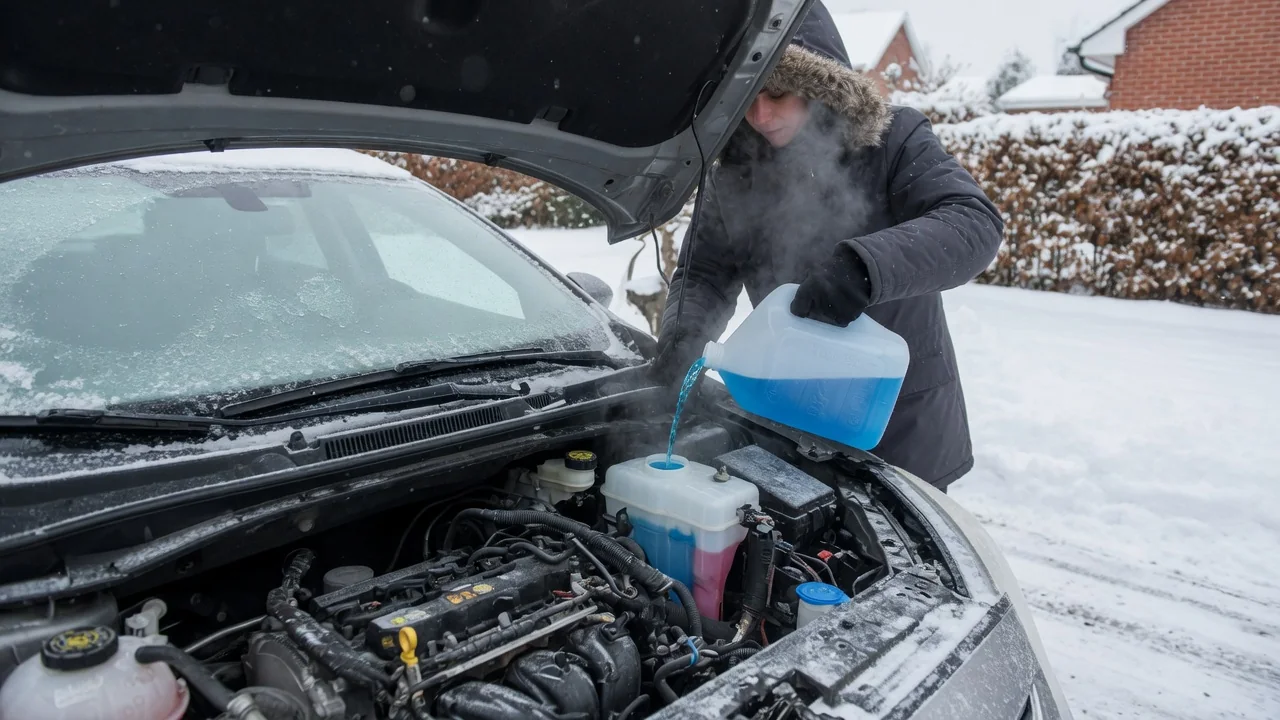
Windshield washer fluid looks like a simple consumable, yet the bottle you pour in during July is often the wrong choice for January. Cold weather changes what the fluid has to survive and what it has to remove. Winter blends are made to stay liquid in the reservoir and on the glass, and to cut through salty road film rather than bugs. Understanding why cars need different washer fluid in winter comes down to three things: freeze protection, cleaning chemistry, and reading the label correctly.
Freeze Protection: Keeping Fluid Liquid in the System and on the Glass
The main reason for a winter formula is that water freezes, and many summer washer fluids are mostly water with a small amount of detergent. When temperatures drop below freezing, a reservoir filled with plain water or a summer blend can turn to slush or solid ice. Water expands as it freezes, which can stress or crack the plastic reservoir, split hoses, and damage the electric washer pump or its seals. Even when nothing breaks, a frozen line or blocked nozzle means the washers simply do not work when you need them most.
Winter washer fluid lowers the freezing point by adding an alcohol, commonly methanol, though some products use ethanol, isopropanol, or glycol-based ingredients instead. The more of these freeze-depressing ingredients the mix contains, the colder it can get before the fluid starts to form ice crystals. This is the same basic principle that allows engine coolant to stay liquid in cold weather, although the two products are formulated for very different jobs and are not interchangeable.
Freezing is not only a reservoir problem. A windshield exposed to cold air, especially while driving, sits at or near the outside temperature, and moving air plus evaporation pull heat from the thin film of fluid you spray. A fluid without enough protection can freeze on contact and leave an opaque glaze that the wipers smear rather than clear. Winter blends are intended to stay liquid long enough to be wiped away, and some include additives meant to help loosen light frost.
Cleaning: Winter Grime Is a Different Kind of Dirt
Summer washer fluids are typically formulated for insects, tree sap, pollen, and dust. Winter road dirt is different. Melting snow, brine, and treated slush thrown up by other vehicles leave a film of salt, sand, and oily road residue that dries into a gray haze. That haze scatters light, which is why it becomes especially troublesome when driving into a low winter sun or facing oncoming headlights at night. Winter fluids usually combine their freeze protection with solvents and detergents chosen to dissolve and lift this kind of film so the wipers can carry it away.
Winter also changes how much fluid you use. Following traffic on wet, treated roads can coat the windshield repeatedly within a short distance, so the washers may run many times on a single trip. A reservoir that lasts weeks in mild weather can empty quickly during a storm. A fluid that actually cleans on each pass, rather than smearing salt across the glass, reduces how often you need to spray and helps the supply last. Good fluid cannot compensate for hardened or torn wiper blades, though; a blade that skips over the glass will leave streaks regardless of what is in the reservoir.
Label: Reading What the Bottle Actually Promises
The most important detail on a winter washer fluid label is its freeze protection rating, usually printed as a temperature. This number indicates the point at which the product, as sold, is expected to resist freezing. Choose a rating that matches or exceeds the coldest conditions you realistically expect where you drive and park, including overnight lows, because a car parked outside sits at ambient temperature for hours. Products marked all-season or year-round may offer some freeze protection but not necessarily the level of a dedicated winter product, so compare the stated rating rather than relying on the name.
Check whether the product is ready to use or a concentrate. Premixed fluid is meant to be poured straight in, and its rating applies only at that strength. Concentrates must be diluted according to the instructions, and the label typically shows how different mixing ratios change the protection level. Adding extra water, or pouring winter fluid on top of a reservoir still half full of summer fluid, dilutes the freeze-depressing ingredients and lowers the real protection below what the bottle states.
Labels also carry safety information that matters. Many winter fluids contain methanol or other alcohols that are toxic if swallowed and flammable, so the bottle will include warnings about storage, ventilation, and keeping it away from children and pets. Store it in the original container, never in a drink bottle, and wipe up spills around the vehicle.
Practical Implications and Limits
Timing makes the biggest practical difference. Switching to winter fluid before the first hard freeze is easier than trying to rescue a frozen system. If the reservoir still holds summer fluid, using it up or running it low before refilling keeps the mix closer to the labeled rating. Because the hoses and nozzles still contain the old fluid after a refill, operating the washers briefly helps draw the new fluid through the lines. If the system has already frozen, the most reliable approach is to let the vehicle warm up in a heated space; pouring hot water on the glass or forcing the pump to run against ice can crack the windshield or strain the pump motor.
Avoid improvised substitutes. Engine coolant is not designed to be sprayed onto glass, can leave residue, and is toxic, while household detergents can foam, streak, or leave deposits in the lines. Some vehicles have features that affect washer fluid use, such as heated nozzles, rear window washers, headlight washers, or washer jets that also serve cameras or driver-assistance sensors. The owner's manual is the right place to check for any fluid specification, reservoir capacity, or caution that applies to a particular car, since those details vary between vehicles.
It is also worth being clear about what winter fluid cannot do. It does not replace scraping ice and clearing snow before driving, and it will not melt a thick layer of frozen precipitation. Running the wipers over iced glass can tear blades or overload the wiper motor even with good fluid in the system. Freeze ratings describe the fluid itself, not guaranteed performance in every combination of wind, speed, and sleet. Treated as one part of winter visibility alongside healthy blades, a working defroster, and a clear windshield, the right fluid does its job well.