Why Do Cars Have Protective Wax Inside Hidden Cavities?
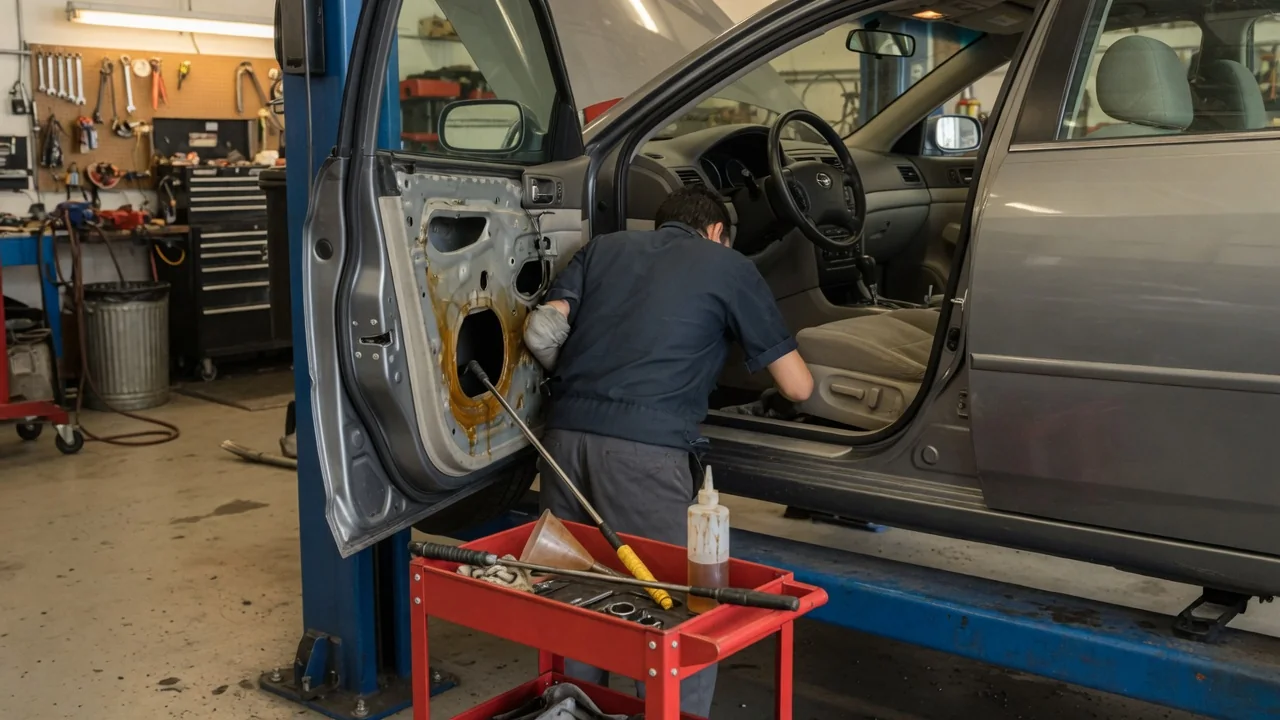
Why do cars have protective wax inside hidden cavities? Because the steel most likely to rust is the steel nobody can see or paint properly. Box sections, sills, and door shells trap moisture and are hard to coat during manufacture, so automakers and body shops flood them with a creeping, water-repelling wax that seals seams from the inside.
Cavity access
A modern unibody is built from stamped panels welded into closed box sections: rocker panels, frame rails, pillars, crossmembers, and the inner shells of doors, hoods, and tailgates. Once these are welded shut, spray guns cannot reach the inner surfaces, and even dipped primer coatings can leave thin spots at overlapping flanges and spot-weld seams. Cavity wax is applied through access openings using long wands with nozzles that fog the material in all directions, letting it coat surfaces no conventional paint process covers reliably.
Owners can often spot the access points themselves. Look for round rubber or plastic plugs along the door edges, inside door jambs, under sill trim, in the trunk floor, or along the underside of the rocker panels. Some are factory drain or assembly holes that double as wax ports, while others are added during aftermarket rustproofing. The number and location of these openings differs widely between manufacturers and body styles, and some vehicles rely on existing drain slots instead of dedicated plugged holes.
Moisture exposure
Hidden cavities are never truly sealed. Water runs past window seals into door shells by design, then exits through drain slots at the bottom. Sills and frame rails take in spray from the wheels, and temperature swings cause humid air inside closed sections to condense on cold steel. When drains clog with dirt or leaves, water sits against seams for long periods. Road salt makes matters worse, because salty moisture conducts electricity better and accelerates the electrochemical reaction that turns steel into rust.
Wax counters this by forming a soft, water-displacing film that creeps into lap joints and hem flanges through capillary action, pushing moisture out of the tight gaps where corrosion usually starts. Because it stays pliable rather than curing hard, it tolerates body flex and can self-heal over small scratches. How harsh the exposure is depends on climate and use: vehicles driven on salted winter roads or near the coast face far more aggressive conditions than those kept in dry regions, and manufacturers vary in how extensively they treat each cavity.
Repair
Collision repair is where cavity wax matters most after the factory. Welding a new quarter panel, rocker, or rail section burns away the original coatings on the back side of the joint, including galvanizing and any wax nearby. Cutting and grinding leave bare steel inside a closed section that will never be seen again. Unless the technician reapplies corrosion protection after refinishing, the repaired area can rust from the inside out, sometimes showing up as bubbling paint along a seam a few years later.
For that reason, manufacturer body repair procedures commonly call for cavity wax to be restored in any section that was welded, sectioned, or opened. The specific product, application points, and coverage areas are vehicle-dependent, so a shop should follow the published procedure for that model rather than a generic routine. Owners reviewing a repair estimate can reasonably ask whether corrosion protection for enclosed sections is included, and may notice fresh plugs or a faint waxy residue at drain holes afterward as a sign the step was done.
Everyday Use and Observations
In daily driving, cavity wax mostly goes unnoticed, but it leaves clues. On a hot day, a newer or recently treated vehicle may weep a little amber or brownish wax from door drain slots, sill seams, or the lower edge of a tailgate. This is typically excess material softening and migrating, not a fluid leak, and it wipes off painted surfaces with a mild wax-and-grease remover. A faint solvent or waxy smell after fresh treatment is also common and usually fades as the carrier evaporates.
Simple habits help the wax do its job. Keeping door and sill drain openings clear lets water escape instead of pooling against the coated seams, and rinsing the underbody and wheel arches after salted-road driving reduces the load on the protection. Sloshing sounds from a door or rocker panel after rain suggest a blocked drain worth clearing promptly. The appearance of the wax itself varies by product, from nearly clear to tan or dark brown, so color alone says little about its condition or age.
Limits and Next Steps
Cavity wax slows corrosion; it does not make steel immune. Coverage inside a complex box section is never perfectly uniform, the film can thin or dry over many years, and wax sprayed over existing heavy scale will not reverse damage already underway. It also cannot compensate for trapped debris, blocked drains, or a poorly sealed repair. Rust that begins inside a cavity often stays invisible until paint blisters along a seam or the metal softens near a jacking point, by which stage the damage is usually more extensive than it looks.
Anyone concerned about an older vehicle, a car from a salt-belt region, or one with past body repairs can have a shop inspect enclosed sections with a borescope passed through existing openings. That shows whether wax is present and whether corrosion has started before deciding on retreatment. Supplemental application is a reasonable step where coverage is thin, but it should use existing access points where possible, avoid blocking drains, and follow the manufacturer's guidance for that vehicle, since recommended products and treatment areas differ between models.