Why Do Cars Have Parking Brake Auto-Hold?
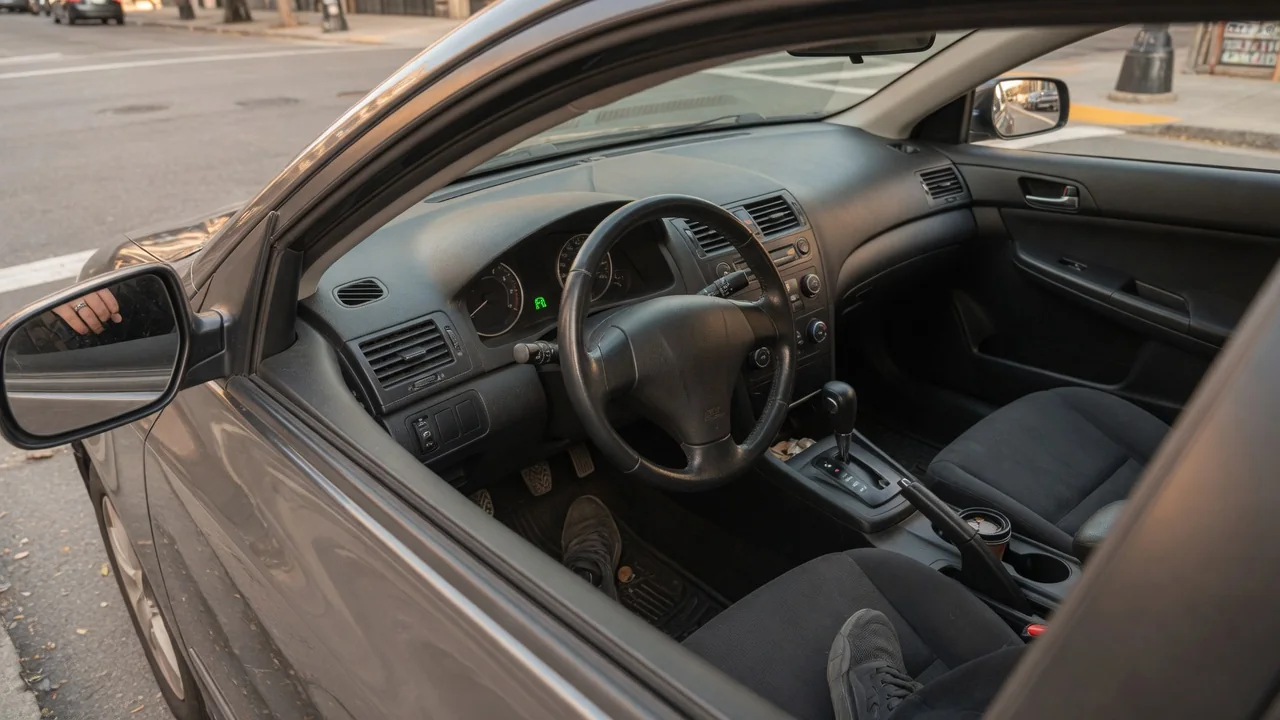
Drivers often ask why do cars have parking brake auto hold when a regular parking brake already exists. The short answer is that the two do different jobs. Auto-hold keeps the vehicle stationary for brief stops while you are still driving, and the parking brake secures the car once you are finished. Knowing the difference helps you use each one correctly.
Stop-and-go behavior
In heavy traffic, a driver with an automatic transmission normally keeps a foot on the brake pedal at every stop to resist the car's tendency to creep forward. Auto-hold takes over that task. Once the vehicle comes to a complete stop, the system maintains brake pressure at the wheels after the pedal is released, so the car stays put without constant leg effort. On many vehicles this pressure comes from the same hydraulic hardware that supports stability control, not from the parking brake mechanism itself.
That distinction explains the feature's name and its purpose. The hold is temporary and intended for a driver who is seated, alert and about to move again, such as at a red light, a railroad crossing or a drive-through line. The parking brake, by contrast, is designed to keep an unattended car stationary for hours. Some vehicles hand off from the hydraulic hold to the electric parking brake if a stop lasts long enough, although the timing and behavior of that transition depend on the manufacturer.
Release conditions
Auto-hold is built to let go smoothly when the driver signals an intention to move. In most automatic vehicles, pressing the accelerator is the trigger: the system senses the request for torque and releases brake pressure as the car begins to pull away. With a manual transmission, release is usually tied to the clutch reaching its engagement point with some throttle applied. The goal is a clean launch without rollback on a hill and without a lurch on level ground.
A parking brake releases under different logic. A traditional lever or pedal stays applied until the driver physically releases it, and an electric parking brake typically requires a switch input, often with the foot on the brake pedal, though many also release automatically on pull-away under certain conditions. Those conditions can include a fastened seat belt, a closed driver's door and a running engine. Because these rules vary between brands and even between model years, the owner's manual is the reliable reference for how a particular car behaves.
Driver checks
Before relying on the feature, a driver should confirm that it is actually active. Many vehicles require auto-hold to be switched on with a dedicated button, and some reset it to off each time the car is started while others remember the previous setting. An indicator in the instrument cluster usually shows two states: one for the system being armed and another, often a change in color or an added symbol, for the brakes being held at that moment.
It is also worth checking the conditions the system expects. A typical design will not engage unless the driver's door is closed and the seat belt is buckled, and it may cancel the hold or apply the parking brake if either changes while stopped. Watching the dash indicator after releasing the pedal is the simplest confirmation that the car is being held. If the light does not appear, keep your foot on the brake as you would in any car without the feature.
Everyday Use and Observations
In daily driving, the most noticeable benefit is reduced fatigue during long stretches of congestion. The driver can rest the right foot between movements, and the brake lights generally remain lit while the hold is active, so following traffic still sees a stopped vehicle. On inclines the system prevents the car from rolling backward during the moment between leaving the brake pedal and applying power, which is especially reassuring on steep driveways and at uphill intersections.
Some situations make the feature less welcome. During slow parking maneuvers, many drivers rely on gentle creep controlled by the brake pedal, and a hold that engages at each pause can make the car feel jerky as it grabs and releases. Automatic car washes that pull the vehicle along a conveyor are another case where a held brake is unwanted. Switching the function off for those moments is common practice, and some vehicles relax or suspend the hold in reverse, though that behavior is not universal.
Limits and Next Steps
Auto-hold is not a substitute for securing a parked car. It depends on the vehicle being powered and the driver being present, and it is not meant to hold a car indefinitely or after the occupant leaves. When parking, the correct routine remains selecting park or an appropriate gear and applying the parking brake, particularly on a slope. Treating a temporary hold as a parked state risks unexpected movement if the system times out or its conditions change.
If the feature refuses to engage, releases unexpectedly or displays a warning message, the cause is not always obvious from the driver's seat. The system shares sensors and components with the brakes, stability control and electric parking brake, so a warning light or stored fault code points toward an area to investigate without proving that a specific part has failed. Low battery voltage, a door or belt switch signal and brake system issues are all possibilities, and a qualified technician with vehicle-specific information is best placed to confirm the cause.