Why Do Cars Have a Fuel Cutoff After a Collision?
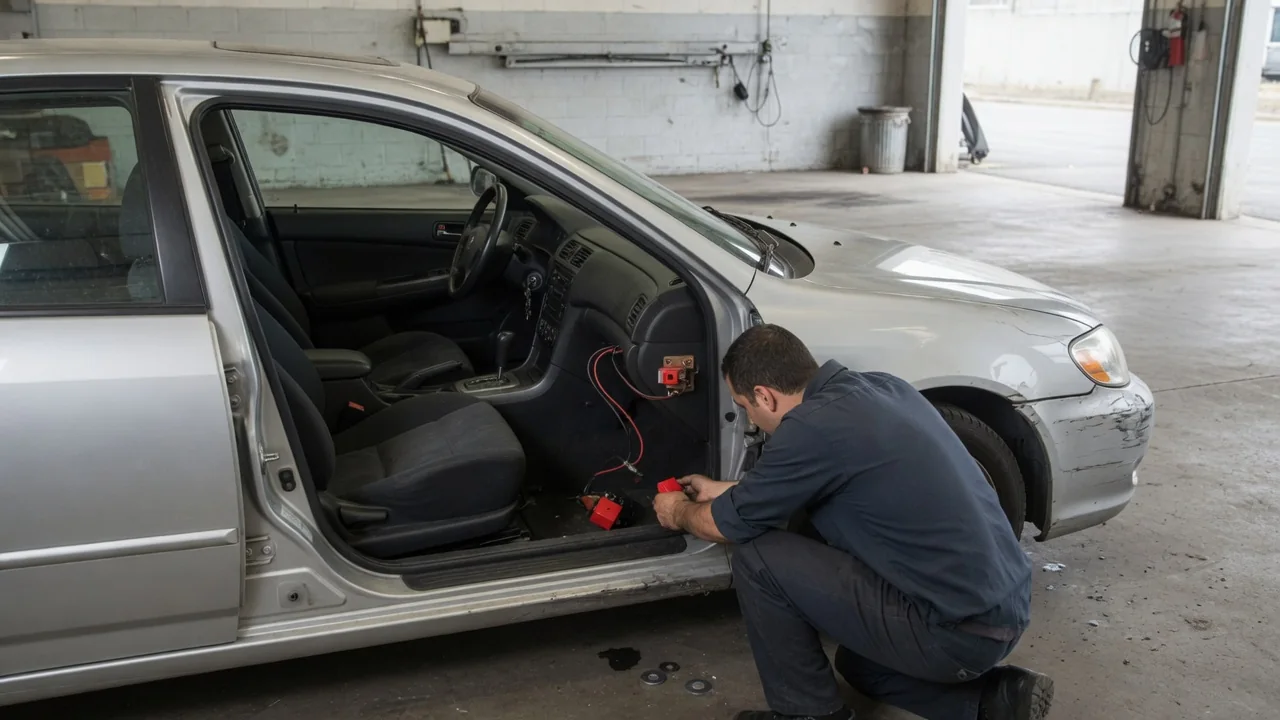
Drivers who ask why do cars have a fuel cutoff after a collision are usually looking at a vehicle that will not restart after an impact. The short answer is fire prevention: a crash can rupture fuel lines, and a pump that keeps running would feed gasoline toward hot parts and damaged wiring. Stopping fuel delivery removes that supply quickly.
Impact sensing
A fuel cutoff depends on the vehicle recognizing that a crash has happened. Older designs often used a dedicated inertia switch, a small mechanical device in which a sudden jolt moves an internal element and opens the electrical circuit that powers the fuel pump. Many newer vehicles rely instead on the same crash sensors and control module that decide whether to deploy airbags, sending a signal to the engine or body computer to stop commanding the pump. The approach differs by manufacturer, model and production year.
Because the system reacts to deceleration rather than visible damage, the trigger does not always match what the driver sees. A hard hit against a curb, a deep pothole strike or a low-speed bump in a parking lot can occasionally be enough on some vehicles, while a gentle scrape that dents a panel may not register at all. Where a physical switch exists, it may sit behind interior trim, in the trunk area or under the dash, and the owner's manual is the reliable place to confirm its presence.
Engine shutdown
Once the cutoff acts, the electric pump in or near the tank stops pushing fuel forward. Pressure in the supply line falls, the injectors run out of fuel to spray, and the engine stalls within moments. This matters because a modern fuel system operates under pressure, so a cracked line or a separated fitting would otherwise release a steady stream as long as the pump kept working. Cutting pump power limits a leak to what remains in the line rather than the contents of the tank.
From the driver's seat, the result usually looks like an engine that cranks normally but will not fire, since the starter and battery are unaffected while the fuel supply is absent. Some vehicles display a message or warning lamp explaining that the fuel system has been disabled, and others give no clear indication. Depending on the design, a crash event can also unlock doors, switch on hazard flashers or interior lights. Hybrid and electric models add their own measures, typically isolating the high-voltage battery from the rest of the vehicle.
Recovery requires instructions
Restoring fuel delivery is not handled the same way across vehicles, which is why the procedure should come from the owner's manual or the manufacturer rather than from general advice. Some cars have a reset button on the inertia switch itself. Others restore the system through a specific ignition key sequence, and some store the crash event in a control module so that only a workshop with suitable diagnostic equipment can clear it. Guessing between these methods wastes time and may leave a real fault overlooked.
The more important point is that a reset should follow an inspection, not replace one. The cutoff acted because the vehicle sensed a significant impact, and returning power to the pump while a line is leaking would put fuel exactly where the system was trying to keep it away from. Manuals that describe a reset generally tell the owner to check first for the smell of gasoline and for wet spots or drips beneath the car. Any sign of leaking fuel means the vehicle should stay off and be towed.
Everyday Use and Observations
In normal driving the cutoff is invisible. It does not affect fuel economy, performance or routine starting, and most owners never learn it exists until an impact activates it. That is why a no-start after a minor bump can be confusing: the car may look almost undamaged, the battery is strong and the starter turns the engine, yet nothing happens. Recognizing that a safety shutdown is one possible explanation helps the driver describe the situation accurately to a roadside technician or repair shop.
A few observations are useful to note. With many vehicles a faint hum from the rear is audible for a second or two when the ignition is switched on, as the pump primes the system, and its absence after an impact is consistent with a cutoff, though not proof of one. A message in the instrument cluster, an airbag warning lamp or deployed restraints suggest the crash system recorded an event. A similar no-start with no impact involved points elsewhere, since a failed pump, relay, fuse or wiring fault produces the same symptom.
Limits and Next Steps
A fuel cutoff reduces fire risk but does not eliminate it. Fuel already in the lines, a punctured tank, leaking oil or coolant on a hot exhaust and damaged electrical wiring can all remain hazards after the pump stops. The system also may not act in every crash, because it depends on the direction and severity of the impact and on sensors that can themselves be damaged. After any serious collision, switching off the ignition and moving away from the vehicle remains sensible if it is safe to do so.
When a car will not restart after an impact, the practical path is to look and smell for fuel, consult the manual for the vehicle-specific procedure and arrange a tow if anything seems wrong or the instructions are unclear. Stored fault codes can help a technician understand what the modules recorded, but they are evidence to interpret alongside a physical inspection, not a verdict on any single part. If the cutoff trips repeatedly without an obvious impact, the switch, its mounting or the related wiring deserves professional diagnosis.