Why Do Car Weatherstrips Shrink Over Time?
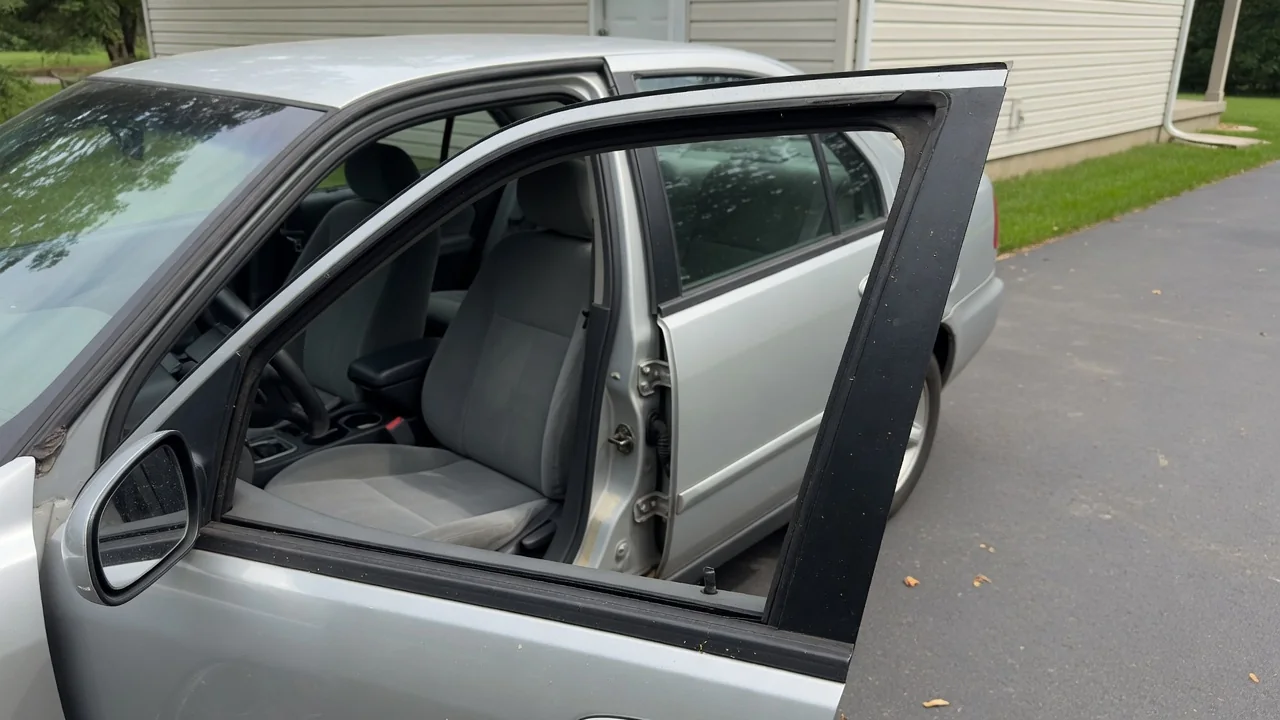
Car weatherstrips are the rubber seals around doors, windows, trunks, and hatches that keep out water, wind, and dust. After years of service, many owners notice that a strip no longer reaches the corner it once filled, or that a gap has opened at a joint. Several overlapping causes are involved: how rubber ages, how seals are installed, and how they are held in place. Understanding them helps you decide whether a seal can be refitted or needs replacing.
Aging: Why Rubber Loses Length and Volume
Most automotive weatherstrips are made from EPDM, a synthetic rubber chosen for its resistance to weather, ozone, and temperature swings. Like other rubber compounds, it is formulated with oils and plasticizers that keep it soft and flexible. Over time, heat and sunlight drive some of these ingredients out of the material through evaporation and migration to the surface. As they leave, the rubber loses a small amount of mass and volume and becomes firmer. That gradual loss is one of the main reasons weatherstrip shrinkage shows up on older cars, especially on seals that sit in direct sun or near warm surfaces.
Oxidation adds to the effect. Oxygen, ozone, and ultraviolet light slowly attack the polymer chains, and heat speeds those reactions. Depending on the compound, the result can be extra crosslinking that makes the rubber harder, or chain breakage that leaves the surface chalky and cracked. Either way, the seal loses its ability to spring back. Compression set matters just as much: a seal squeezed by a closed door for years gradually takes on a permanent flattened shape. Hollow bulbs and sponge rubber sections are particularly prone to this, and a collapsed bulb behaves like a seal that has shrunk even if its length has barely changed.
Not all shrinkage is chemical. Rubber also contracts in cold weather and expands when warm. That seasonal movement is reversible, but on an aged seal that has already lost elasticity, it can be enough to open a visible gap in winter.
Fit Gaps: Where Shrinkage Shows Up and What Else to Rule Out
Gaps from shrinking seals tend to appear in predictable places: the ends of a strip where two sections meet, such as a butt joint at the bottom of a door opening or around a trunk seal, and tight corners where the rubber was bent during installation. Many seals are fitted with slight stretch to get them around curves. As that stored tension relaxes and adhesive or retaining clips weaken, the rubber creeps back toward its natural length and pulls away from corners and ends. Glued-on seals are especially susceptible because nothing mechanically locks the end in place.
Typical symptoms include more wind noise at highway speed, water drips inside a door or trunk after rain or a car wash, daylight visible around a closed door, and dust tracks along a sill. Simple checks help locate the problem. Closing a door on a strip of paper at several points and feeling for resistance as you pull it out shows where contact is weak. A gently running hose moved along the seal while a helper watches from inside can reveal a leak point, and a flashlight inside the car at night shows light escaping through gaps.
Before blaming the rubber, rule out causes that mimic shrinkage. A door sagging on worn hinges, a misadjusted striker, a window that no longer rises fully into its channel, or body damage from a past repair can all leave a gap with a healthy seal. If the weatherstrip still feels soft and its bulb holds its shape, alignment is the more likely culprit.
Repair: Refitting, Restoring, and Replacing Weatherstrips
If a seal has pulled back from a corner or joint but remains pliable, refitting may be enough. Clean the strip and the mating body surface to remove dirt, wax, and old adhesive residue, then work the rubber back into position without stretching it. Pushing the material slightly toward the gap, rather than pulling it, helps it stay put. Re-secure loose sections with an adhesive made for automotive weatherstrip, following the product's cure instructions and holding the section in place until it sets. Replace broken retaining clips where the design uses them.
Rubber conditioners can help a seal that is dry but still intact. Regular cleaning and treatment with a product intended for automotive rubber can slow further drying and reduce sticking in cold weather. These products do not replace oils that have already left the compound, however, and they will not restore a collapsed bulb or reverse significant shrinkage. Avoid petroleum-based solvents and harsh cleaners, since some can degrade rubber.
Once a weatherstrip is hard, cracked, flattened, or too short to reach its ends without stretching, replacement is the reliable fix. Choose a seal made for the specific vehicle and position, because profiles, bulb sizes, and mounting methods differ between applications. Start installation where the service information or part instructions recommend, seat the strip fully on its flange or in its channel, and avoid stretching it around corners, which sets up the same pull-back later. A new seal may need time to conform, so the door can close a little harder at first.
Practical Implications and Limits
How quickly shrinkage becomes a problem depends heavily on conditions. A car parked outdoors in a hot, sunny climate generally exposes its seals to more heat and ultraviolet light than one kept in a garage, and seals high on the body usually see more sun than those near the sill. Shade, a car cover, and clean seals all reduce exposure but cannot stop aging entirely. Treating weatherstrips as wear items rather than permanent parts sets realistic expectations for an older vehicle.
General advice also has limits for any particular car. Some doors use body-mounted seals, others door-mounted seals or both, and frameless windows depend on precise glass adjustment as well as rubber. Some weatherstrips are integrated with trim panels or glass run channels that require disassembly to replace. For removal steps, adhesive locations, and correct part numbers, the vehicle's service manual or a dealer parts reference is the right source.
A leaking or noisy seal is worth addressing promptly even if the gap looks small. Water that gets past a door or trunk seal can soak carpet padding, encourage mold and odors, reach wiring or electronic modules, and contribute to hidden corrosion. Catching shrinkage while the rubber is still flexible enough to refit is usually simpler than dealing with the damage a persistent leak leaves behind.