Why Do Car Stains Return After Cleaning?
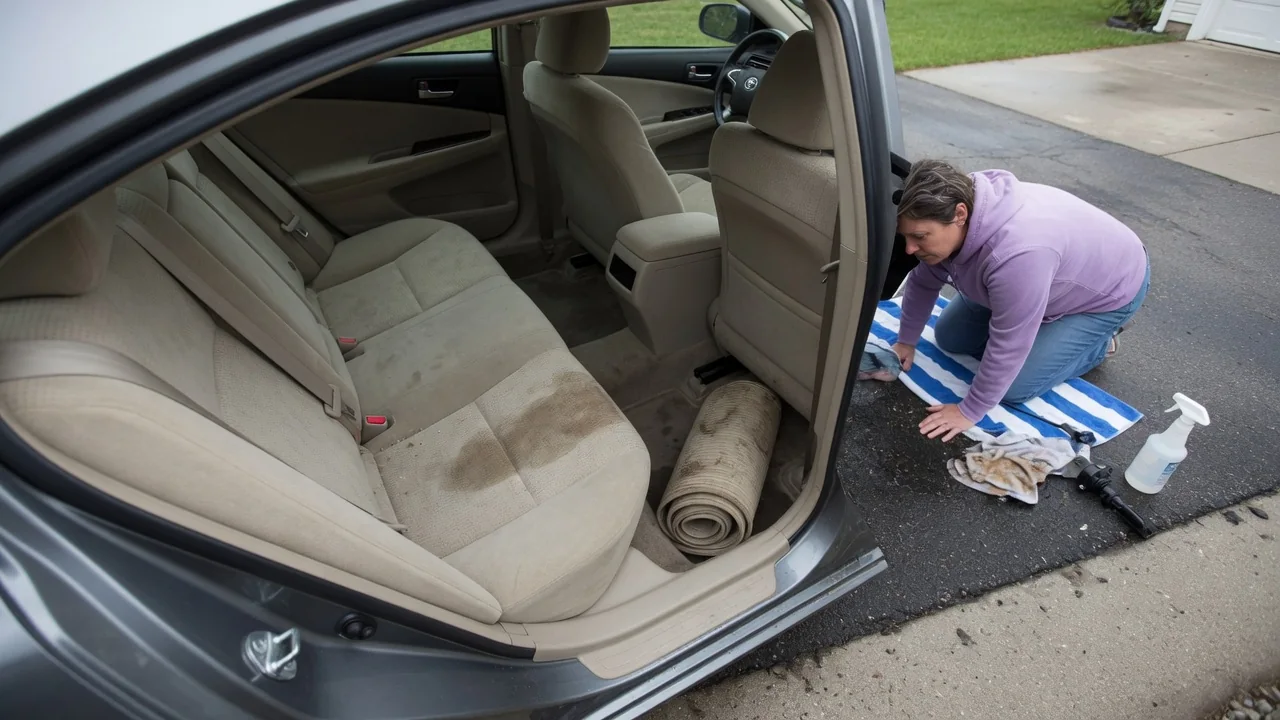
A seat or carpet can look spotless right after shampooing, then show the same mark a day later. Anyone wondering why do car stains return after cleaning is usually seeing wick-back: residue left in the foam or padding below the fabric travels upward as moisture evaporates. Understanding that movement explains why surface scrubbing alone so often disappoints.
Source depth
Automotive upholstery is a layered assembly. A cloth seat typically has a woven or knit face fabric bonded to a thin scrim, sitting over thick polyurethane foam. Carpet has fibers tufted into a backing, with jute or synthetic padding underneath and sometimes a sound-deadening layer against the floor pan. A spilled coffee or soda rarely stops at the top layer. Liquid follows gravity and soaks downward, so the visible mark is often only the top of a much larger deposit.
When cleaning treats only the face fibers, the deeper deposit stays in place. Adding cleaning solution rewets it, and as the surface dries first, liquid moves upward through the fibers by capillary action, carrying dissolved sugars, tannins, and soil with it. Those solids are left behind at the tips when the water evaporates, which is why a returning stain often appears as a ring or a slightly larger shadow than the original. Thicker seat cushions and heavily padded carpets hold more hidden residue than thin trunk liners.
Moisture control
The amount of water used during cleaning largely determines how much wick-back occurs. Saturating a seat with spray cleaner or pouring solution on a carpet pushes liquid deep into foam, where it dissolves old residue and then has a long drying path back to the surface. Using a lightly misted cleaner, working it in with a brush or microfiber towel, and extracting promptly keeps the wet zone shallow. Foaming upholstery products are popular for this reason, since they carry less liquid into the padding.
Drying speed matters just as much. Slow drying gives dissolved soil more time to travel upward, while fast drying limits migration. Blotting firmly with dry towels, running a wet vacuum or extractor over the area several times, opening the doors, and directing a fan across the surface all shorten that window. Humid weather, a closed garage, or a cold cabin extend it. A patch that still feels cool or damp to the hand hours later is a sign the padding underneath remains wet.
Repeat or professional care
A stain that returns once is not necessarily permanent. Each controlled cleaning pass removes some of the residue that wicked up, so a second or third light treatment after full drying often fades the mark progressively. The key is patience between attempts: clean, extract, dry completely, then judge the result. Pressing a clean, dry white towel onto the damp area and weighting it down while it dries can also help, because migrating soil transfers into the towel instead of settling on the fabric.
Professional detailers address the same problem with stronger tools. A hot water extractor flushes and recovers solution with far more suction than a household wet vacuum, pulling contamination out of the padding rather than rearranging it. Some spills, such as milk, pet accidents, or a leaking drink that reached the carpet underlay, may justify removing a seat or lifting carpet so the pad can be treated or dried directly. How easily that can be done varies by vehicle, especially where seats contain airbags, heaters, or occupancy sensors.
Everyday Use and Observations
Daily use offers clues about whether wick-back or something else is at work. A mark that reappears within a day or two of cleaning, in the same place and with a defined edge, points to residue rising from below. A spot that returns gradually over weeks and looks gray or dingy more likely reflects leftover detergent. Soap residue stays slightly tacky and attracts fresh dirt from clothing and shoes, so the area resoils faster than the surrounding fabric even though the original spill is gone.
Location also tells a story. Driver seat bolsters and cushions pick up body oils and dye transfer that continually renew themselves, which can be mistaken for a returning stain. Footwell carpet that marks again after every rainy week may be collecting water from wet shoes, a saturated floor mat, or a leak, with the moisture drawing old soil upward each time. Light-colored interiors show these rings sooner than dark ones, and tightly woven fabrics often reveal tide lines more clearly than plush carpet.
Limits and Next Steps
Not every recurring mark can be cleaned away. Some spills chemically change the fibers: bleach, strong cleaners, and certain dyes alter color permanently, and sun-faded fabric around a protected patch can look like a stain. Leather and vinyl behave differently from cloth, since liquids usually enter through perforations and seams instead of soaking the surface. Perforated, heated, or ventilated seats call for particular caution with liquids, and the owner's manual is the right reference for material-specific care guidance.
If a mark keeps coming back despite careful low-moisture cleaning and thorough drying, the next step is to look for an ongoing source. A musty odor, damp underlay, or fogged windows suggest water entering the cabin, which should be diagnosed before any further shampooing. Persistent odors from organic spills indicate contamination still in the padding. At that point a professional extraction, or replacement of the affected pad or foam, is usually more effective than repeating surface treatments that only rewet the problem.